Posts Tagged ‘The Big Bundle’

Everything Old Is “New” Again

Tuesday, September 27th, 2022
Eliot Ness and the Mad Butcher
Paperback: Indiebound Purchase Link Bookshop Purchase Link Amazon Purchase Link Books-A-Million Purchase Link Barnes & Noble Purchase Link
Hardcover: Indiebound Purchase Link Amazon Purchase Link Books-A-Million Purchase Link Barnes & Noble Purchase Link
E-Book: Amazon Purchase Link Google Play Purchase Link Nook Purchase Link Kobo Purchase Link iTunes Purchase Link
Digital Audiobook: Amazon Purchase Link Google Play Purchase Link Kobo Purchase Link
Audio MP3 CD: Indiebound Purchase Link Bookshop Purchase Link Amazon Purchase Link Books-A-Million Purchase Link
Audio CD: Indiebound Purchase Link Bookshop Purchase Link Amazon Purchase Link Books-A-Million Purchase Link

Audio Sample:

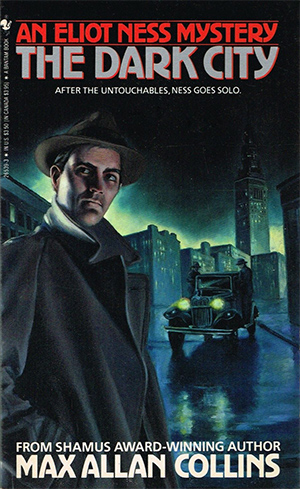
The Dark City
The Dark City, 1987 Bantam Paperback

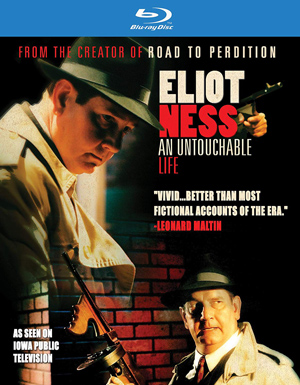
Eliot Ness: An Untouchable Life Blu-Ray
Eliot Ness: An Untouchable Life
2007 Blu-Ray, VCI

A new book is out about Eliot Ness and the Mad Butcher. I’m not going to share the name or much information about that book with you, because the book you should be buying and reading is the 600-page Eliot Ness and the Mad Butcher by A. Brad Schwartz and me, available now in a handsome and inexpensive ($15.49) trade paperback.

This other Ness/Butcher book (350 pages) is about as redundant and unnecessary a volume as I can imagine. But history is fair game, true crime included, and it’s not like this hasn’t happened to me before.

My theories developed about various unsolved or controversially solved crimes in my Nathan Heller novels have paved the way for non-fiction writers who didn’t have to (and didn’t) credit me, since I had merely written a novel. That those novels are crammed with research, often aided by George Hagenauer and done on site and in libraries and raiding old bookstores at much time and expense, didn’t matter a whit.

My novel Butcher’s Dozen, published in 1988, was the first book-length look at Ness and the Mad Butcher case, and George and I did much on site research about the case, and at Case Western Reserve Library found the massive Ness scrapbooks that hadn’t been seen since 1961 when Oscar Fraley wrote Four Against the Mob about Ness in Cleveland, the only book about Ness in Cleveland prior to my The Dark City in 1987. Since then have come any number of books about the case, including a graphic novel by a guy who used to write fannishly to the letter column of Ms. Tree (where Butcher’s Dozen was announced, advertised and discussed); there have also been scads of movies announced but never made.

Fair game, all of it. Dirty pool, at times, but within the rules.

And I am not here to cry plagiarism against the author of this new Ness/Butcher book. Maybe to cry “foul” a little. Here’s why. As part of the promotion of the book, the Smithsonian announced the author’s appearance for an event called “Eliot Ness: An Untouchable Life,” featuring an actor playing Ness (as well as the author).

Some of you may know that I wrote a play that I adapted into a 2005 film for Iowa PBS of that very name – a one-man show with the late Michael Cornelison as Ness. I wrote the Smithsonian and complained. The author wrote me an e-mail saying the title hadn’t been his idea, and that he really admired my work very much. But he assured me that his September 2022 book had not been influenced by the Collins/Schwartz August 2020 book because, after all, he had concluded his research in 2019.

Uh, right.

The author claimed to have great respect for me, but the only book about Ness of mine that is (minorly) referenced in his new book is the Collins/Schwartz Scarface and the Untouchable (2018). There is a vague reference by this self-professed longtime Ness buff in the new book’s prologue (without mention of my name) to my Ness/Batman graphic novel, Scar of the Bat. No mention of Ness being a character in True Detective and subsequent Nate Heller novels. No mention of the four Eliot Ness in Cleveland novels, which have often been prominently mentioned in lectures and in print by Cleveland’s predominant Ness expert, Rebecca McFarland. And of course no mention of either An Untouchable Life or Eliot Ness and the Mad Butcher.

It’s a tad hard to imagine that an Eliot Ness buff would never have heard of me or my pioneering research efforts (initially with George Hagenauer and later with Brad Schwartz, the latter the major Ness expert on the planet).

And it’s been frustrating to see friends and friendly acquaintances of mine extolling the virtues of this competitive book with no mention (or possibly awareness) of our book. The MWA Edgar committees did not acknowledge either of our massive, and frankly ground-breaking books, but the author of this new Ness/Butcher book seems a shoo-in, as he’s won before. That howl of anguish you will hear, should this author be nominated or win, will (I assure) you have emanated from Iowa (and Princeton).

When we queried the publisher (also the publisher of four Nate Heller novels, the most recent, Do No Harm, featuring Ness prominently…in Cleveland!) with questions about research material from our book that seemed to have made its way into this new one, we were assured that the author simply used the same sources we had. We were unable to confirm that, but we have been assured that future editions of this rival book will have some mention of ours, perhaps in a “recommended further reading” manner.

We appreciate that.

We don’t intend to take this any further. But if you are thinking about reading – or recommending – a book on this subject, please consider doing what the author of this new Ness/Butcher book doesn’t do: mention Eliot Ness and the Mad Butcher by Max Allan Collins and A. Brad Schwartz.

[UPDATE to this week’s UPDATE written 9/25/’22:] In the Smithsonian event last night (9/26/’22), the author of the Ness/Butcher book did, if belatedly, acknowledge the two Collins/Shwartz Ness non-fiction books, giving them a full screen to themselves. He also listed me as one of “many” who have written Ness novels. That I was the first was not mentioned, nor was my role in rediscovering the Ness scrapbooks. Nor was the one-man show/feature presentation, Eliot Ness: An Untouchable Life. But it’s a start.

* * *

On a happier note, I’d like to share a wonderful (starred!) review from Publisher’s Weekly of the forthcoming new Nate Heller novel, The Big Bundle due out Dec. 6.

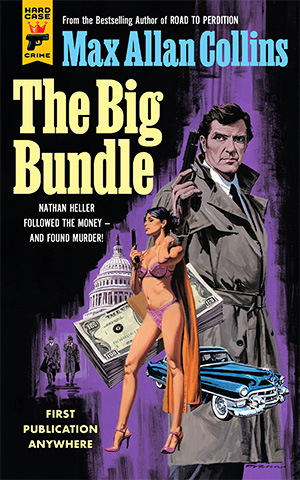
The Big Bundle: A Nathan Heller Novel

Max Allan Collins. Hard Case Crime, $22.99 (304p) ISBN 978-1-78909-852-5

In MWA Grand Master Collins’s superb 18th Nathan Heller novel, (after 2020’s Do No Harm), the PI crosses paths with Robert Kennedy and Jimmy Hoffa. It’s 1953 in Kansas City, Mo., when millionaire Robert Greenlease retains Heller’s services after his six-year-old son, Bobby, is kidnapped and ransomed for $600,000. Greenlease makes the payment, but the kidnappers delay returning the child. Heller uses his underworld contacts to try to get a lead on Bobby’s whereabouts by attempting to trace the marked bills used for the payoff, though he fears that the boy is already dead. Flash forward to 1958. Heller is working both for Hoffa, the corrupt Teamsters leader, and Kennedy, then chief counsel for the Senate Rackets Committee, who’s looking to nail Hoffa. With half of the ransom never accounted for, Kennedy hopes Heller can help him prove it ended up in the Teamsters Pension Fund. Heller’s search for the money and the truth behind Bobby’s abduction proves perilous. Collins again artfully uses a real-life crime, one now obscure but headline-making in the 1950s, as the springboard for a crackerjack plot. This is another standout in a consistently good series.

And I have to share this nifty Big Bundle review from the great Ron Fortier, whose “Pulp Fiction Reviews” column is always a fun, informative read.

THE BIG BUNDLE
by Max Allan Collins
Hard Case Crimes
Arriving Dec 6th 2022
295 pgs

This is the 20th in the Nate Heller historical crime series by Collins. If you are unfamiliar with them, the conceit is simple enough. Collins, either working alone, or with other collaborators, researches an actual American crime and then drops his fictional private eye into the tale as either an investigator or actual participant in the events. In this case, he becomes both. The story revolves around the 1953 kidnapping of young Bobby Greenlease of Kansas City. The six year old was the son of Robert Cosgrove Greenlease Sr, a multi-millionaire auto dealer. His kidnappers were paid a ransom of $60,000, the largest ever paid out in American history at that time.

Collins splits the book in two parts. The first has Heller hired by Greenlease Sr. to help find the kidnappers and rescue his son. We’ve always admired Collin’s ability to empathize with his characters and that is never more evidenced than here. Believing the boy is already dead, after finding Hall, Heller’s emotional restraint is nothing short of painful as his desire to blow away the scumbag killer is kept in check with having to learn the truth. His portrayal of Carl Hall is both deft and creepy at the same time.

At the time of the couples’ eventual arrest, only half the money was recovered. Five years later the mystery remains as to where it went and who ended up with it. Reporters and police investigators suggested the funds had been laundered through organized crime and ended up in Jimmy Hoffa’s Teamsters Union Fund. Thus Greenlease Sr. once again hires Heller; this time to find out where it went. Not because he needs the money, but is sickened by the thought that unknown lowlifes profited from his son’s abduction. Like his previous Heller books, Collins skillfully weaves his protagonist through the documented historical facts having him cross paths with such players Hoffa and Bobby Kennedy.

“The Big Bundle” is classic Max Collins, that alone should have you pre-ordering it. Of all his Heller novels to date, this one will leave you feeling as if you’d been sucker punched. Since the Garden of Eden, evil has existed in our world. In 1953, it reared its head tragically.

A final note. We rarely mention of the covers of books we review. Hard Case Crime is one of the few publishers out there that always delivers stunning paintings reminiscent of the early 50s paperbacks. Paul Mann does the honors on this title offering up a Nate Heller who looks a whole lot like the late actor Robert Lansing. What we’d call brilliant casting, Mr. Mann.

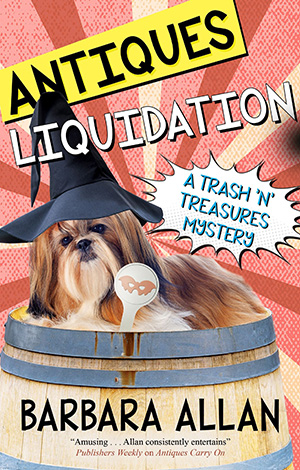
And the love fest continues with this great Library Journal review of the about-to-be-published (Oct. 4) new Barbara Allan novel, Antiques Liquidation.

Antiques Liquidation Cover
Antiques Liquidation
by Barbara Allan
Severn House.
(A Trash ’n’ Treasures Mystery, Bk. 16).
Oct. 2022. 208p. ISBN 9780727850911. $29.99.

Brandy once again finds herself an unwilling partner to her septuagenarian mother’s antiques subterfuge in Allan’s 16th “Trash ’N’ Treasures” mystery (following Antiques Carry On). Awoken early in the morning by Vivian for a shady antiques shopping trip, Brandy is prepared for something to go wrong. With a little blackmail, Vivian has secured access to the auction goods before the auction happens. She has her choice of deadstock, and after an encounter with the police, is able to take it safely home. However, murder is never far behind where Brandy and Vivian are involved, and the auctioneer soon turns up dead. Vivian adds her own interpretation of events throughout the book, often to humorous effect. Readers will also find several recipes and Vivian’s tips for buying and selling antiques. Brandy’s asides about events in the previous novels will help new readers to enjoy this installment without having read the rest of the series. Fans who are returning to the series will continue to find humor in Brandy and Vivian’s relationship and will enjoy seeing favorite characters return.
VERDICT: Best for readers of cozy mysteries who enjoy small-town living, humor with a side of murder, and cute canine companions.
Reviewed by Tristan Draper, Aug 26, 2022

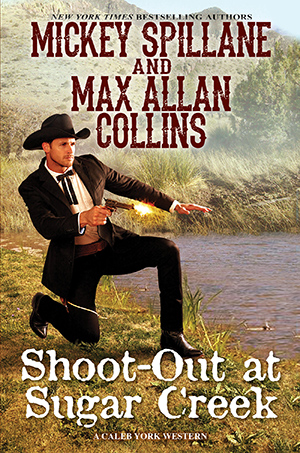
Our old pard Caleb York is getting a boost from Kensington, who will run price discount promotions on the York novels during October at major eBook retailers. For example, Shoot-out at Sugar Creek will be promoted with a BookBub blast on 10/8/2022 – a rootin’ tootin’ 99-cents!

* * *

The aftermath of the presentation here in Muscatine, Iowa, on September 17 of Gary Sandy in my play, Encore for Murder (developed from a Mickey Spillane synopsis), has been gratifying. The people who saw it have approached me with praise, and others with regret that they didn’t see it.

We have just started to scratch the surface of the voluminous footage we gathered on HD of the performance. Excerpts (and interview footage of Gary Sandy and the Velda and Pat Chambers actors) will be included in the new version of my 1999 Spillane documentary, in progress. And I am hopeful we will have a complete feature version of the recorded play as well. I haven’t spent much time in editing suites in recent years and can’t wait to get back in there with Phil Dingeldein and our new buddy Chad Bishop.

* * *

Finally, Craig Zablo gives The Big Bundle a big boost here!

M.A.C.

Hear Me If You Can

Tuesday, August 30th, 2022

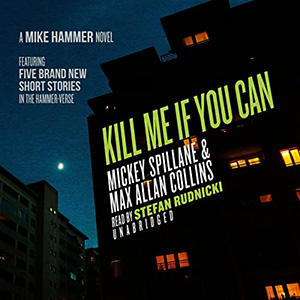
The Skyboat audio version of Kill Me If You Can is available now, ahead of the September 20 release of the Titan hardcover edition. Stefan Rudnicki again narrates the novel as well as the five bonus Spillane/Collins short stories (two of which are Mike Hammer yarns) that are part of the 75th anniversary package.

I can’t say enough about the great job Stefan does. Having to fill the shoes of Stacy Keach is hardly an enviable job, but Stefan pulls it off. Skyboat has been a big supporter of my work, and recently signed to do new audio versions of Regeneration and Bombshell by Barb and me.

Kill Me If You Can audiobook cover
Digital Audiobook: Google Play Audiobook Store
Audiobook MP3 CD:
Audiobook CD:
* * *

Rehearsals are heating up for our local Muscatine, Iowa, presentation of Encore for Murder featuring Gary Sandy as Mike Hammer. (For those of you in the area, or considering a road trip, here’s the info.

We had a table read with Gary joining us by phone – a conference call set-up – and it went well. My co-director Karen Cooney has done a great job casting and getting the show on its feet. I’m getting more involved now, doing some fine-tuning, but this is a strong local cast and I’m very pleased. Karen and several others of us mounting the production were able to look at the auditorium and do some in depth planning – it’s a great venue, seating 600.

We start working with sound effects and music (the latter culled from Mickey’s 1954 record album, Mickey Spillane’s Mike Hammer Story) this coming week, with a second Gary Sandy table read on Thursday.

* * *

A number of things are coming out soon – the aforementioned Kill Me If You Can and, on Oct. 4, Antiques Liquidation, which just got a snark-free review from Kirkus. Check it out:

Antiques Liquidation cover
ANTIQUES LIQUIDATION
BY BARBARA ALLAN

The mother-daughter pair of Vivian and Brandy Borne may appear to be simple antiques dealers, but there’s more to them than meets the eye.

When Vivian wakes Brandy at 2 a.m. to get a jump on a warehouse full of things that are going to be auctioned off soon—thanks to some sensitive information Vivian has about Conrad Norris, the auctioneer—Brandy gathers up her dog, Sushi, and they all drive to the warehouse where Norris awaits. They leave with a barrel of pearl buttons that Sushi picks out, two valuable toy arks, and a set of dishes. When the auction itself takes place, Norris is drunk and many people are left unsatisfied. Vivian does buy something, though—she couldn’t resist attending the auction, even having picked off some items beforehand—and when she and Brandy return to the warehouse to pick it up, they find Norris dead. Naturally, Chief of Police Tony Cassato—Brandy’s fiance—is called in. Vivian fancies herself a sleuth, and she and Brandy have solved quite a few murders together—a fact that does not incline Tony to want their help. Vivian drags Brandy along on her investigations, knowing that Norris was far from beloved by many people. Someone steals the ark Brandy had given to her best friend’s daughter, but Brandy is hesitant to finger the two collectors she knows fought fiercely to buy the remaining arks at the auction. Vivian and Brandy may be amateur detectives, but they know a hawk from a handsaw and are determined to track down the killer, especially once a skeleton is found in their button barrel, opening up a long-dead case.

Amusing mystery chockablock with antiques lore.

We intend to have book giveaways on both Kill Me If You Can and Antiques Liquidation, so stay tuned.

Before too very long we should be seeing the publication of Fancy Anders for the Boys and Cut-out from Neo-Text. These will be available both as e-books and physical books. (Cut-out is a Barbara Collins and Max Allan Collins collaboration.)

And the new Nate Heller, The Big Bundle, will be out in hardcover from Hard Case Crime in early December.

I am about to begin the writing of Too Many Bullets, the RFK assassination Heller novel, after months of research. Those months will mean that the flow of books out of here will lessen next year, probably to just three. Some of this has to do with me deciding to slow down because I’m (damnit) 74. Some of it has to do with the amount a research that goes into any Heller novel, but this one has been unexpectedly onerous.

Like a lot of Americans, I assumed the Sirhan Sirhan assassination of Robert F. Kennedy was an open-and-shut case. I knew there were doubts and expected to explore them. But I did not (although I should have) expect the number of rabbit holes I’d be drawn down into.

After filling three notebooks, I have fashioned a rough synopsis, which I will be refining and expanding starting this afternoon. I hope to be writing this week.

As I’ve mentioned, I had intended this novel to cover Jimmy Hoffa material in a lengthy (middle section of the book) flashback. But as an echo of what happened to me writing True Detective in 1981 and ‘82, I found myself facing a book of potentially 1000 pages and had to retool.

(What happened with True Detective is that it turned into two books, the second one being True Crime, the first section of which was planned as the final section of True Detective.)

So Hoffa will probably become a separate book, out of chronology (although there hasn’t really been a linear chronology for Heller since after Neon Mirage).

I know some of you would prefer I write about Quarry or even Nolan (a few still request Mallory). I will indeed write about Quarry again, if I’m able, though I’ve stuck a fork in Nolan with Skim Deep. Of course, if the Lionsgate production of a Nolan film actually happens, I’ll be tempted to sell out. There’s always another story to tell if there’s money involved.

Mallory seems almost certainly a “no.” He was too on-the-nose “me.” I prefer the slightly off-kilter “me” of Heller and Quarry. And of course I’m occasionally called upon to channel Mike Hammer.

* * *

Speaking of Nate Heller, here’s an essay that includes the Heller saga as among the best novels that deserve to be made into TV shows.

Road to Perdition is recommended as one of the best movies to watch on Paramount+ right now.

An in-depth and very positive overview look at my series of Quarry novels – something that has rarely been done – can be found here.

M.A.C.

Mike Hammer, John Shaft & James M. Cain

Tuesday, July 12th, 2022
Kill Me If You Can Audiobook cover
Hardcover:
E-Book: Google Play Kobo
Audiobook: Google Play Audiobook Store

Coming in August, by Mickey Spillane and Max Allan Collins, is Kill Me If You Can, the 75th anniversary Mike Hammer novel (Hammer debuted in I, the Jury in 1947). It includes five Spillane/Collins short stories, two of which are Mike Hammer, both significant additions to the canon.

Kill Me If You Can will also appear on audio, read by the great Stefan Rudnicki, who for the past several Hammer novels has performed the impossible task of stepping in after Stacy Keach. The five short stories are included.

I have now done the commentary for the ClassicFlix Blu-ray 4K/3-D release of the 1953 I, the Jury. I think it went well, although I can’t compete with the likes of Tim Lucas and Tom Weaver (much less Eddie Muller) in their Blu-ray commentaries. Lucas and Weaver and Muller are always extremely well-prepared and organized, while I just watch what’s on the screen and blather on about all the useless information I’ve gathered and opinions I’ve formed over the years. I worked with my pal and partner Phil Dingeldein on this one – he shares credit but no blame. The Blu-ray comes out in early December.

Phil and I are preparing to shoot new material for an expanded Mike Hammer’s Mickey Spillane (1999) documentary as well as introductory material for the Brian Keith/Blake Edwards written-directed 1954 Mike Hammer pilot, which will be a bonus feature on the I, the Jury disc.

We are in the early stages of mounting an amateur stage production of Encore for Murder and are hoping to entice Gary Sandy to come to Muscatine, Iowa, to again play Mike Hammer. A few years ago, Gary starred as Mike in pro productions of Encore in Owensboro, Kentucky, and Clearwater, Florida. The play is performed in the style of a ‘40s radio show. Much more to follow, but the date to save is September 17.

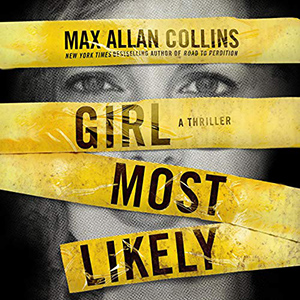
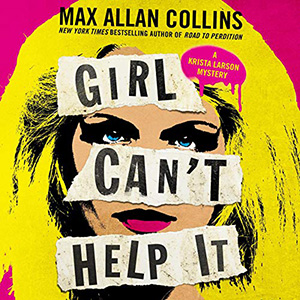
A reminder – the Kindle editions of the two books in my Krista and Keith Larson series, Girl Most Likely and Girl Can’t Help It, are on sale this month – right now through July 31. You can buy them as a pair for $1.98, or 99-cents each.

They are not on sale, but both Girl novels are also available on audio, read by my other favorite Collins narrator, Dan John Miller. [The Girl audiobooks are only $1.99 each if you own the eBooks. –Nate]

* * *

If you swing by here now and then – or, God help you, on a regular basis – you will have noticed I seldom review books but frequently talk about movies and TV – of late, streaming mini-series more than anything. This week is no exception.

But first let me explain that I am indeed still reading books. Right now I am swimming in them, preparing to write Too Many Bullets, the RFK Heller novel that will cover both Jimmy Hoffa and Sirhan Sirhan. I am dizzy from it and driving Barb nuts with my ever-shifting notions about how I will approach this thing.

The degree of difficulty may make this the final Nate Heller novel, or at least one of such size and sweep. I can imagine doing shorter ones, more the length of a Quarry or Caleb York, which if Heller’s home remains Hard Case Crime makes sense. But the upcoming The Big Bundle was meant to be a “short” Heller and it ran over 400 pages in manuscript. As we say in the funnies, Sigh.

During intense research phases, little recreational reading happens. My brain wants something less proactive than reading, hence film and TV. I do read before bed and chip away at books. And my ambition is to read the entire Tarzan series by Burroughs and dig seriously into the complete Race Williams stories by Carroll John Daly and also the Zorro stories by Johnston McCulley. I read most of Burroughs’ Tarzan novels as a kid, but only recently have the complete Race Williams and Zorro stories been collected in book form.

Also on my reading list are books on Anthony Mann’s crime films, the handful of Willam March-penned novels I haven’t got to, a few remaining items by F. Hugh Herbert (creator of Corliss Archer), and autobiographies of Mel Brooks, Chuck Berry and Brian Cox. I’m also salivating to read Hell’s Half Acre about Kate Bender, one of my favorite true crimes of the Lizzie Borden era.

Am I alone in noticing that time is the enemy?

On the streaming front, Barb and I greatly enjoyed The Dropout, the jaw-dropping story of Elizabeth Holmes and her blood-exam scam. Stranger Things wrapped up in excruciatingly self-indulgent over-stuffed style – the Duffer brothers have got to stop writing teen romance! – but the horror aspects remained strong. And Star Trek: Stranger Worlds ended its season boldly going, and we continue to consider it the best post-Shatner/Nimoy/Kelley iteration.

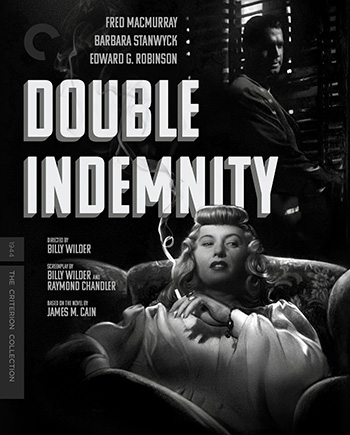
Of course I am a hopeless addict of physical media, and snapped up two great Criterion 4K Blu-rays on their current Barnes & Noble 50% off sale – Shaft (1971) and Double Indemnity (1944).

Shaft is one of my favorite private eye films and it shows what might have been done with a Mike Hammer film had it been shot on gritty NYC locations (the 1982 I, the Jury remake comes close). Richard Roundtree is the most charismatic screen private eye since Bogart, and the Issac Hayes score ties with Mancini’s Peter Gunn for best P.I. theme. It’s really a pretty standard private eye yarn and very much on the Mike Hammer template – Shaft has a Homicide detective pal who scolds and yet uses him, and there’s a regular girl friend who the detective cheats on without a twinge, the violence is shocking and the P.I. is almost supernaturally tough, though he gets beat up before the end. Standard. But the Black twist on everything, those stark NYC locations, the pulsing soul score, the magnetic Roundtree…changes everything.

The movie looks great, sounds better, and the bonus features go on forever, though none of the experts mention Mike Hammer (the original hardcover novel had presented Shaft as the Black Mike Hammer) with no sense of the debt to Spillane on display here. There’s lots of feminist blather from a Black perspective, apologizing and rationalizing for what if this were a Hammer film would be labeled misogyny. But there’s a lot of good bonus material just the same, with Roundtree and Gordon Parks interviewed and much more. That includes the snappy quick sequel, Shaft’s Big Score (1972), on Blu-ray; it lacks the grit of the first film but has an incredible if absurd climax. Sadly M.I.A. is the underrated Shaft in Africa (1973). And if I’d have been in charge I’d have cherry-picked an example of the short-lived Shaft TV series, the episodes of which were movie length.

Double Indemnity blu ray cover

James M. Cain was one of the four writers who (sixty years ago) inspired me to go down the hardboiled path (the others being Hammett, Chandler and Spillane). Double Indemnity is generally considered the best of the screen versions, and was Cain’s own favorite. I could build a case for The Postman Always Rings Twice (1946) because it really does have a love story at its twisted heart. Double Indemnity, wonderful though it is, is cold at the center. Ironically (intentionally), the real love story is between Fred MacMurray’s Walter Neff and Edgar G. Robinson’s Barton Keyes, the insurance investigator who leads Neff and Barbara Stanwyck’s Phyllis Dietrich to their well-deserved fates.

It’s a great film, with Raymond Chandler’s crackling dialogue staying just to one side of self-parody; then there’s the prison-stripe window-blinds cinematography of John Sietz and march-to-doom direction of Billy Wilder. As Hammett’s The Maltese Falcon did with the private eye novel, Double Indemnity seems to invent, define and perfect the post-war film noir. Eddie Muller and Imogen Sara Smith do right by the film in their terrific bonus-feature discussion (accomplished by editing together craftily two sides of a chat shot in separate locations).

I disagree with them on only one thing: they describe both Neff and Phyllis as sociopaths. I think Double Indemnity is a dance between a guy who’s been getting away with things and a woman who’s been getting away with murder. There’s a throwaway line very early on where MacMurray mentions having sold vacuum cleaners door-to-door; this is code for the traveling salesman who is on the make for available housewives. He sizes Stanwyck up as one of those, with no idea how in over his head he is. He’s a regular guy with a sleazy streak who gets pulled into a murder plot because (a) he’s hot for the dame, and (b) he’s always dreamed of putting one over on the insurance company he works for. Stanwyck, on the other hand, has immediately sized him up as a horndog who is a perfect candidate for the inside-man accomplice she needs.

Muller and Smith discuss the difference between Cain’s novel dialogue and Chandler’s film dialogue, and are again on the money; but they don’t share the key anecdote in full.

Here’s what Cain himself said in that regard: “When they were making Double Indemnity in Hollywood, Billy Wilder complained that Raymond Chandler was throwing away my nice, terse dialogue; he got some student actors in from the Paramount school, coached them up, to let Chandler hear what it would be like if he would only put exactly what was in the book in his screenplay. To Wilder’s utter astonishment, it sounded like holy hell. Chandler explained to Wilder what the trouble was that Cain’s dialogue is written to the eye. That ragged right-hand margin that is so exciting and wonderful to look at can’t be recited by actors. Chandler said, ‘Now that we’ve got that out of the way, let’s dialogue it with the same spirit Cain has in the book but not the identical words.’ Wilder still didn’t believe him. They got me over there, purportedly to discuss something else, but the real reason was that Wilder hoped I would contradict Chandler, and somehow explain what had evaporated. But, of course, I bore Chandler out….”

* * *

Lots of lists of the best Film Noirs have popped up lately, but this one is solid, and does a fine job discussing Kiss Me Deadly. And, of course, Double Indemnity is on it.

M.A.C.

Sand Sale, Perdition, Hammer Theme, Spillane, Crusin’

Tuesday, June 21st, 2022

There is another John Sand bargain this week – I believe it goes to the 15th of next month (July) – for the audio of To Live and Spy in Berlin. For only 99 cents! Brian J. Gill reads this (and the other two Sand novels) in a nice English accent that suits the material; really a great job.

To Live and Spy in Berlin Audiobook
* * *

Several friends and fans wrote me about a Daily Atlantic newsletter essay that selected Road to Perdition as an ideal Father’s Day movie. I liked the piece, even though it neglected to mention me, and was touched that the photo running with the article was from the sequence directly based on my first driving lesson with my late father. No bank robberies were involved in real life, however. I also like John Rooney being based on John Looney got a mention.

Here it is:

‘He Was My Father’

Sometimes at the Daily we step back at the end of the week’s blizzard of news and current events and suggest something for your leisure time. It’s Father’s Day weekend, and so I want to recommend to you one of my favorite movies, a meditation on generations and fatherhood and loyalty and duty, a warm, nostalgic look at families during a simpler time, starring two of America’s most beloved actors.

I am talking, of course, about Road to Perdition.

If you have not seen it, Road to Perdition (based on the graphic novel of the same name, and widely available to stream) is a 2002 film about Irish gangsters in the 1930s. But it’s really about fathers and sons. A mob leg-breaker named Mike Sullivan, played by a bulked-up Tom Hanks, is fiercely loyal to his boss, John Rooney (played, in his last role, against type and with regal Hibernian menace by Paul Newman); indeed, Sullivan and Rooney have a father-son relationship.

But Rooney already has a son, played by Daniel Craig, and that son is a murderous psychopath. (People wonder why I had a hard time accepting Craig as James Bond. It’s because I saw Road to Perdition first.) Without giving away too much, Sullivan and his own young son, Michael, have to go on the lam. It’s a father-son road-trip movie, except with tommy guns and stone killers.

You may find this an unusual recommendation. Bear with me.

When Father’s Day rolls around, I naturally think of my own father. I have never been able to relate to all those Hallmark-card, Ward Cleaver images. My dad was a complicated man, which is what sons say when we mean “He was terribly flawed in a lot of ways, but he loved me.” He bore a lot of sins and had a lot of shortcomings, but he had a consistent code of ethics in dealing with others and he was known for it. He kept his word, paid his debts, and treated others with respect. He was the kind of man who would walk into a local bar and his peers would call him Nick but younger men would unfailingly refer to him as “Mr. Nichols.” Even our younger neighbors called him “Mr. Nichols,” with great affection. (When he died, I sold his house to one of the children who’d grown up next door to him.)

I think most of us had fathers who weren’t perfect. Mine wasn’t, and yet he taught me important things: Do an honest day’s work. Love your country. Do things you have to do even if they’re unpleasant. Never back down if you know you’re right. Be courteous in public.

He also taught me how to gamble and showed me how to spot someone dealing off the bottom of a deck of cards.

He wasn’t the blueprint for a good husband or father, and he knew it. When I was in my 30s, he admitted to my mother that he thought I’d grown up to be a better man than he was. This is a hard thing to learn about your father, a source of both pride and sadness. (I will have more to say about fathers, and the men I knew growing up, over on my Peacefield newsletter this weekend.)

Which brings me back to Road to Perdition. When Sullivan has to go on the run with Michael (played by a young Tyler Hoechlin), the son finally learns what the father he idolizes actually does for a living. He also learns that Rooney—based on the real-life Irish godfather John Patrick Looney—is not a kindly grandfather but a cold-blooded killer. These men (and this is very much a man’s movie) are scoundrels, but they have a code, and their obedience to that code leads them to tragic choices.

The last line of the movie (again, without spoiling anything) is what ties it all to my memories of my own boyhood. Young Michael reminisces, and says: “When people ask me if Michael Sullivan was a good man, or if there was just no good in him at all, I always give the same answer. I just tell them: He was my father.”

That is the most honest thing most of us can say about our fathers. We love them, and they love us, and that’s enough.

* * *

My Brit pal Andrew Sumner, who edits my Mike Hammer novels at Titan (including the upcoming Kill Me If You Can), sent this great video.

He explains: “Due to my regular attendance at London’s finest jazz clubs, I’ve become friendly with a well-known UK swing/jazz R&B performer called Ray Gelato. Ray leads a band called Ray Gelato and the Giants and they essentially channel the energy of Louis Prima & Louis Jordan – they played Paul McCartney’s wedding, they’ve supported Queen, etc. They’re in a similar wheelhouse to Brian Setzer and Big Bad Voodoo Daddy.”

Andrew was nice enough to request that they play “Harlem Nocturne,” Mike Hammer’s theme in the Keach era, and dedicate it to me. Have a listen and look (or is that a butcher’s hook?).

* * *

If you’re a huge Spillane fan or huge Collins fan or just huge masochist, you may wish to watch this entire ninety-minute interview of me (on the subject of Mickey) by Dan Scheider (he’s very’s good) featuring the great Kevin Burton Smith of Thrilling Detective fame and accomplishment.

* * *

On another musical note (or two or three or four), my band Crusin’, 2018 inductees in the Iowa Rock ‘n’ Roll Hall of Fame, will be playing four dates in Eastern Iowa this summer and early fall.

First up, on Friday June 24 from 6 to 9 p.m., is the Ardon Creek Vineyard in the gently rolling farmland of “76 Township” in Eastern Iowa, approximately 30 minutes southeast of Iowa City, Iowa, 15 minutes southwest of Muscatine, Iowa and 5 miles north of Letts. Here’s the address: 2391 Independence Avenue, Letts, IA 52754. Their phone is (563) 272-0028 and more info’s available here, including a map.

On Saturday July 2 we’ll be at Proof Social in Muscatine, from 5 to 8 pm. We’ll be on the patio unless there’s rain, in which case we’ll be inside. This is a lovely venue, and the patio overlooks the Mississippi.

On Sunday August 14 we’ll again be appearing as part of the Second Sunday Concert Series at Musser Public Library, 408 E. 2nd Street in Muscatine, IA. Sometimes it’s held indoors and other times, weather allowing, with an outdoor stage in the parking lot. Hours are 6 to 8 p.m.

Finally, we’ll be appearing at the Muscatine Art Center’s yearly Ice Cream Social, which runs from 1 till 4 p.m. (Our times are 1:15 to 2:10 and 3 to 3:45.) 1314 Mulberry Ave, Muscatine.

Yes, our “season” is short, which is on purpose. Again I wonder if this will be the last year for Crusin’ appearances. And my memory fills with my departed bandmates, including the most recent and cutting loss, bass player Brian Van Winkle. I hope he’s somewhere arguing with Paul Thomas, Chuck Bunn, Bruce Peters, and Terry Beckey who among them gets to play bass if that Rock ‘n’ Roll Heaven gig comes through. But knowing Brian, he’d just smile and wait his turn.


Crusin’ at the Moose in January 2022
* * *

Check out this wonderful Quarry’s Blood review at the web’s definitive genre book review site, Bookgasm.

Here’s a nice Goodreads review of the graphic novel, Road to Perdition.

And finally here is The Big Bundle at the Hard Case Crime web site.

M.A.C.