Posts Tagged ‘Mike Hammer’

Nate Heller, Mike Hammer and a Friend of Theirs Passes

Tuesday, July 7th, 2026

If you’re a fan of my Nathan Heller books – or just a dedicated reader of mine – and you have not yet ordered True Noir: The Assassination of Anton Cermak, well…you are missing out. Director Robert Meyer Burnett directs an amazingly stellar cast with full sound effects and a terrific score by Alexander Bornstein, all in service of a script by me from my novel True Detective. It’s just under five hours.

I think this is the best dramatic adaptation of my work, ever. You can get the download, the Audio CD (four CD’s) and an MP3 CD right here.

The portrayal of Nate Heller by Michael Rosenbaum is key to the enterprise. He totally “gets” Nate Heller. If you don’t recognize the name, here’s a pic he sent me the other day after I sent him the physical media version (the 4-CD set).
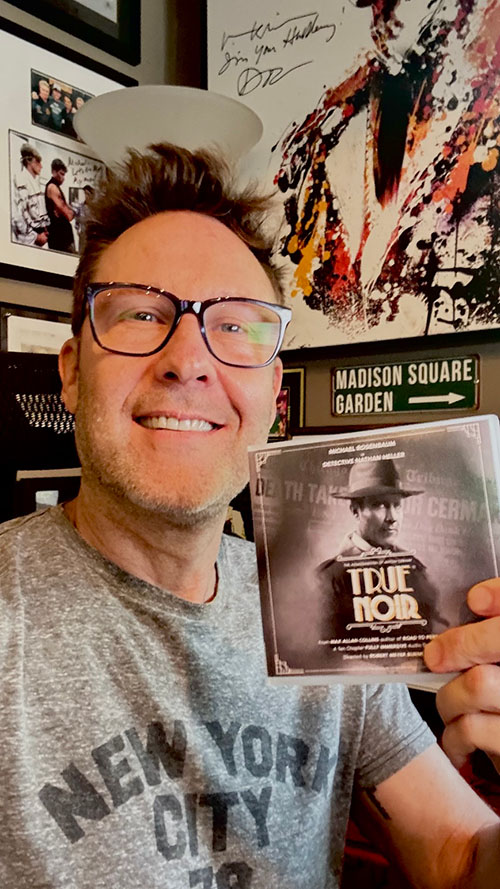
Michael Rosenbaum, True Noir

Michael is probably best-known for his iconic portrayal of Lex Luthor on the hit CW series Smallville, but also his and his voice work as The Flash in the DC Animated Universe. Beyond his numerous acting roles, as in Guardians of the Galaxy Vol. 2 and Vol. 3, Michael is also the host and creator of the celebrity interview show Inside of You – one of the most entertaining podcasts around with a star-studded array of guests. He also happens to be a genuinely nice guy.

Here’s some of the rest of the cast, by the way:
David Strathairn; Anthony LaPaglia; Jeffrey Combs; Thomas Howell; Adam Arkin; Katee Sackhoff; Vincent Pastore; William Sadler; Jesse Spencer; P.J. Byrne; Saverio Guerra; Louis Lombardi; Bill Smitrovich; Patton Oswalt; Curtis Armstrong; Barry Bostwick; Bill Mumy; Renée Taylor, Don McManus; Devon Conrad; and Richard Portnow. And that’s not everybody.

What are you waiting for?

* * *

Last week I discussed, somewhat off the top of my head, my favorite portrayals of Mike Hammer on TV and in the movies. I made an egregious omission: Armand Assante in the 1982 version of I, the Jury. I am a big fan of Assante’s Mike Hammer and, in general, of the film itself, which is violent and sexy in a way no previous version had attempted (or any since, for that matter). Hammer’s relationship with Velda (Laurene Landon, whose blondeness we’ll forgive) is spot on, and the classic ending (and last line) is restored.

The movie got lost in the shuffle because the production company behind it went bankrupt. Terry Beatty and I drove from Muscatine, Iowa, to Chicago, Illinois to see it – driving in and back the same day/night. A six-hour round trip, not factoring in bathroom breaks and food. Later, to get the 1982 I, the Jury on physical media, I paid over a hundred bucks (a kajillion dollars in today’s money) for a Japanese laser disc (I owned the VHS, too, and of course the later blu-ray.) I wrote rather glowingly about it in Spillane on Film and Spillane: King of Pulp Fiction.
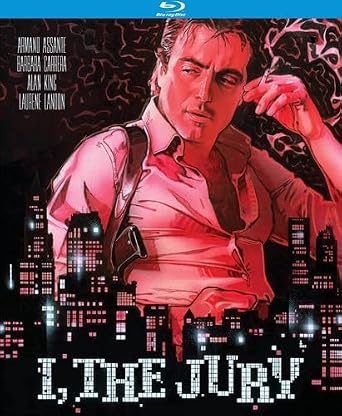
I, The Jury (1982)

So why, other than feeble-minded old age, could I forget about it last week?

It was easy. I, the Jury (1982) was a (at the time) modern take on Mike Hammer and his debut novel. It holds a unique place in the Hammer filmography. The earlier TV and movie renditions were fifties and early sixties animals. When Hammer was done on TV in the ‘80s and ‘90s, he was done in a contemporary fashion but as a man out of time – as if Mike Hammer had jumped into a time machine around 1952 and emerged in that later era, where he was presented as a glorious dinosaur. (It’s not unlike what I did with Hammer’s protype Mike Danger, having him wake up in a politically correct future in the comic book Mickey and I developed for Big Entertainment.)

How to do Hammer on film – whether to make him a version of Mike in modern day (whatever modern day that happens to be) or to approach him in period, for example adapting one of the early novels with a ‘50s setting – is a conundrum Hollywood is still facing. Much discussion among movie folk has gone on about how to present Hammer today, including the notion of doing him in his original time frame. I see some real advantages to doing that, but usually the discussion comes around to the need (for all sorts of reasons) to do him modern-day. The Keach version managed to split the difference, in a way – but that was in the ‘80s; now the man-out-of-time approach would have a 1940s/1950s character operating over 70 years later.

A new Hammer movie is still percolating and the most recent script I saw worked pretty well, but the political mood of the country makes the character problematic. Even back in the day critics saw Hammer (wrongly) as a fascistic figure; today, if he mirrored (for example) Donald Trump’s world view, that would put him on the side of ICE agents. Yet Mickey’s Mike Hammer has friends of all sorts of ethnicities.

Hammer’s vigilante tendencies don’t transfer well to today. So it’s at best tricky, and at worst impossible, to do the urban avenger in any way that isn’t offensive to somebody. Ironically, Spillane was never really political with Hammer. Take One Lonely Night: the bad guys are “Commies,” but the top Commie turned out to be the Senator Joe McCarthy figure! Mickey always went for the surprise.

Yes, Mickey leaned into Ayn Rand territory in his Tiger Mann books; but political themes were rare in the Hammer novels.

I would vote for a period Hammer, but it will almost certainly not happen.

Anyway, Assante’s Hammer was a glorious success (artistically speaking) of bringing him effectively into the early 1980s. But, due in part to the meager release the movie got, that version didn’t get anywhere near the pop cultural purchase of Stacy Keach’s Mike Hammer.

Let’s talk, for a moment, about lists of favorites – whether it’s candy bars or movies. There is a difference between “best” and “favorite.” My favorite Hammer (not counting Mickey) is Darren McGavin. Why? Largely because he was my introduction to the character. Also, that TV show was set in – produced in! – the 1950s. Mike Hammer’s era.

Who was the best Hammer? Mickey wouldn’t agree, but Assante would be a contender on the big screen – he was the most authentic in terms of sexuality and violence and a genuinely conveyed thirst for vengeance.

An argument could be made for Biff Elliott because, again, he was operating in the 1950s and was a hot-headed roughneck right out of the original novels.

But the best Mike Hammer? Even Mickey came to think Ralph Meeker was the best movie Hammer, despite the film turning its source on its head. Meeker was a terrific actor in the Method mode whose best role was Hammer, and he inhabited the best Hammer movie, which is even fairly faithful to the novel. No movie, to date, has captured Spillane better, despite its agenda to criticize Mickey.

As far as TV goes, I would say “best” has to be shared by Keach and McGavin.

But my favorite? I told you last week.

* * *

My pal and sometime collaborator Matt Clemens interviewed me on his podcast recently about Return of the Maltese Falcon. Here it is.

And here Road to Perdition makes a list of the six “darkest comic book masterpieces.”

* * *

I lost a colleague last week. You meet all sorts of people in publishing, and many of them are worth knowing, but few have been as delightful to deal with as Titan’s publicist, Katharine Carroll.

Only the most financially successful writers – at least those of my generation and the one or two after it – could afford to hire publicists. So a writer is dependent on the publisher’s publicist, and this is very much a hit-and-miss affair. Frequently only the most successful writers get the kind of attention from a publisher’s publicist that proves fruitful.

Katharine was an exception. She was always open to considering my wildest suggestions. For example, she got us enormous attention for Mike Hammer’s 75th anniversary and Mickey Spillane’s 100th birthday. She would kick ideas around with me and then follow through. I had many wonderful, positive conversations with her. We were just starting work on Quarry’s 50th anniversary.

But that’s business. In the lonely writing game, the friendly voice on a telephone and the lighting-fast e-mails in reply to whatever screwy notion I might have, these are things that can’t be measured.

I’ll share a little about her below. But it’s not enough.
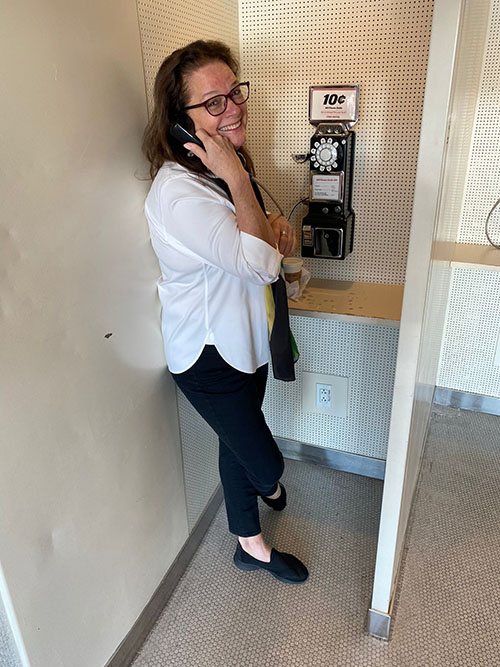
Katharine Trowbridge
U.S. Publicist for Titan Publishing, Dies at 68

Jim Milliot/Jul 06, 2026

Katharine Trowbridge, who oversaw the U.K.-based Titan Publishing Group’s U.S. publicity effort for 18 years, died on June 28. She was 68.

Known professionally as Katharine T. Carroll, Trowbridge began her publicity career with Time Inc. in 1980, spending a decade working across campaigns with Time, Life, People, and Entertainment Weekly. In 1990, she launched her own publicity firm, KTCommunications, where she worked with a range of magazines, authors, and publishing companies.

She joined Titan in 2008 and is credited by the company owners with helping to grow the publisher in the U.S. She was particularly instrumental in helping to revive the respected Hard Case Crime imprint founded by Dorchester Publishing and acquired by Titan in 2011. A native New Yorker, Trowbridge was a regular at New York Comic Con, where she connected U.S. journalists and booksellers with Titan titles such as Dreadful by Caitlin Rozakis, Titan’s first-ever U.S. original fiction title to hit the New York Times bestseller list.

“We are devastated by the loss of Katharine,” said Titan Entertainment Group co-owners Nick Landau and Vivian Cheung in a statement. “She had the warmest of personalities and cared deeply for all her authors as well as her colleagues on both sides of the Atlantic. Her contribution to Titan enabled us to grow far faster in the U.S. than we ever thought possible. We will miss her dearly.”

Trowbridge is survived by her three children and her mother.

M.A.C.

Ever Wonder Who My Favorite Screen Mike Hammer Is?

Tuesday, June 30th, 2026

I guess I haven’t talked as much about Mickey Spillane’s Mike Hammer here as you might expect. But my pal Andrew Sumner – also my editor in the UK at Titan Books – sent me this fun audience-recorded clip of Ray Gelato and his band performing “Harlem Nocturne,” which was the theme of the Mike Hammer TV show. It’s a lovely job of it.

For Andrew and a lot of Hammer fans, the entry point for Mickey and Mike seems to be the three TV series and the various TV movies starring Stacy Keach, which were the last time Hammer hit the popular culture hard in the late twentieth century, a time when Mike Hammer ruled until James Bond came along, an imitator of sorts who usurped the original. Stacy was Mike starting in 1983 and as late as 1998 (not counting the early 2000’s audios I did with him).

You might expect my entry point to have been the novels themselves, and I started reading those and Mickey’s other books at a very young age. But my introduction to Hammer was through the 1958-1959 syndicated series starring Darren McGavin. Mickey Spillane’s Mike Hammer was a tough show with episodes written by various pulp writers and adapted from pulp stories with McGavin extraordinarily hardhitting and violent with just enough tongue-in-cheek humor to get past the censors despite the bevy of sexy ‘50s starlets who also inhabited the series.

Pat Chambers was present, played mostly by Bart Burns, but Velda – mentioned a few times – was not. (In my fannish mind she was absent because, in the books, she disappeared behind the Iron Curtain for a decade or so.) At times, in interviews, McGavin disowned the character, but the persona he developed on the series was one he carried with him into The Outsider, The Night Stalker and countless other TV appearances post-Hammer.

The series was mostly shot on the Republic backlot but with enough location shooting in NYC to sell it. McGavin was a great Hammer, though Mickey was unhappy that a .38 replaced the trademark .45. Part of what made McGavin work for viewers at a time when Spillane himself was a big media figure was McGavin’s physical resemblance to the character’s creator.

Check out this complete rendition by Martin of the full Riff Blues/Hammer theme, with some cool images.

Hammer on screen was always a problem. The first-person nature of the novels meant that everybody had a mental image of who this tough private eye was. That included Mickey, who didn’t think the original screen Mike Hammer, the still underrated Biff Elliot, was big enough. Mickey lobbied for his cop pal Jack Stang, who did a test film directed by Mickey and whose image appeared as Hammer here and there in the mid-‘50s.

But Stang was no actor. In the film Ring of Fear (1954), Stang was implied to be Hammer under an alias, but it was Mickey playing himself – famous mystery writer Mickey Spillane – who seemed like Hammer come to life.

That led to Mickey taking over the role in the first movie following McGavin’s TV run, The Girl Hunters (1962). Though not everyone agrees with me, I’ve always felt Mickey did a terrific job, and one that was actually compatible with McGavin’s take. Mickey also fit in well with the other accurate screen Hammer, the aforementioned Biff Elliot, who was the first motion-picture Mike in I, the Jury (1953).

Already you may have noticed there’s a small army of actors who have portrayed Hammer. Ian Fleming was lucky the producers of Dr. No (also 1962) stumbled onto Sean Connery. And a question I am often asked is: who’s your favorite Hammer on screen?

First, let’s rule Mickey out. Obviously he’s my sentimental favorite – The Girl Hunters (1963) is the most faithful to the character and the novels, and Mickey was and is Mike Hammer, so let’s set that aside.

Who are Hammer actors that are not favorite Hammers of mine? Robert Bray is physically correct but overacts blusteringly throughout the rather dismal My Gun Is Quick (1957). A bare-headed Brian Keith played Hammer well enough in the abortive pilot that preceded the McGavin series; but he’s not really Hammer. Kevin Dobson in Margin for Murder (1981) was just okay (Cindy Pickett was badly miscast as Velda). Rob Estes was Hammer in name only in Come Die With Me (1994).

Now it gets tricky.

Ralph Meeker is the best big-screen Mike Hammer, but his take – and director Robert Aldrich’s and screenwriter A.I. Bezzerides’ – is so counter to Spillane’s intention as to be irrelevant to this discussion. Meeker and Kiss Me Deadly (1955) are oranges while we are discussing apples. I love the movie – it’s my favorite Hammer film by a country mile – but it sits in a niche of its own, the anti-Spillane movie that nonetheless captures Spillane’s mood, sex, violence, pace and tone better than any other.

Who does that leave?

Stacy Keach did the impossible – he lightly kidded Hammer while remaining tough; in this he’s similar to McGavin. But McGavin – and Biff Elliot, Ralph Meeker and Mickey Spillane himself – were of the original Hammer era. The Keach Hammer is a man out of time, a motif the series effectively played with in its best episodes. I’m honored to have worked with this great actor on two audio dramas and hold his Hammer in high regard.

I have to rule out Gary Sandy, who appeared in the only stage version of Mike Hammer to date – in three live productions at three venues, the final time in Muscatine, Iowa, and captured on camera in Mickey Spillane’s Encore for Murder, which I wrote and directed.

But it was Darren McGavin’s Hammer who captured my adolescent imagination. And the episodes hold up. A good half dozen of the 78 episodes were rage-filled, vengeance-fueled visits to Spillane’s world at its harshest.

So, with my arm twisted, I have to tip my invisible fedora to Darren McGavin. And admit that Skip Martin’s “Riff Blues” – the Mickey Spillane’s Mike Hammer theme – will always take my personal first place over the great “Harlem Nocturne.”

Listen and look: here is the McGavin opening followed by the three Keach openings with some of the greatest private eye music you’ll ever hear.

M.A.C.

Return of the Maltese Falcon Pub Date

Tuesday, January 6th, 2026

Despite the title this week, I am not suggesting we all go down to the local pub and discuss Dashiell Hammett’s The Maltese Falcon.

No.

It is the publication date of my sequel to The Maltese Falcon that we are celebrating on January 6, 2026 (not the sixth anniversary of the Insurrection at the Capitol, either).

The celebration actually began last week, when I announced a book giveaway for copies of the hardcover Hard Case Crime first edition of Return of the Maltese Falcon. I offered 20 copies but expanded that to 25 from my personal stash. All 25 copies were gone on the first day. My thanks to all of you who entered and won, and especially to those I had to turn away.

Tomorrow as I write this (and today as you read it), you will be able to send a review to Amazon and other of the usual on-line suspects (Amazon doesn’t allow pre-pub reviews). I have been asked what it feels like to have this dream project actually come to fruition, and I have replied thusly: I am waiting to see it displayed among the New Releases at the Davenport, Iowa, Barnes & Noble – then I will believe it. And savor it.

Yes, I have long been dreaming about doing my own Sam Spade novel, and I can pinpoint when that desire began: 1961. I was thirteen, still in junior high, specifically the 8th grade. I saw the movie on TV that same year – I believe I did so on a Sunday morning, having convinced my parents that I was sick and couldn’t go to Sunday school or church.

I’ve done several interviews, including one on YouTube, wondering if the idea of specifically doing a Maltese Falcon sequel was something I’d had in mind from the start. The truth is: no. I just wanted to do a Sam Spade novel. The idea for the sequel was what I came up when I made my pitch to Titan Books in March of 2024. I think the whole pitch was, “I’d like to do a sequel to The Maltese Falcon.”

Doing so was gratifying and enjoyable, but hard. Hammett’s brilliant novel was a contemporary work; mine was a period piece. I had plenty of experience in the latter, having done all those Nathan Heller, Eliot Ness and “disaster series’ novels (like The Titanic Murders). So I was something of an old hand at historical fiction, which this would be in a way.

Hammett’s sly, spare style had to occasionally give way to describing places in a historical context – fortunately I had WPA Guides to both San Francisco and California, Don Herron’s excellent The Dashiell Hammett Tour, and several other reference works to call upon. Internet research also came into play. I think – hope – I hit the right balance.

When I completed the novel – having read it through to my satisfaction, doing any necessary tweaks – I was ready to send it to editor/publisher Charles Ardai at Hard Case Crime (Titan is the parent company) – my wife Barb (a writer herself) took me gently aside.

“You’d better prepare yourself,” she said, “for attacks. Not by everybody, but you will be seen by some as exploiting a classic.”

I’d known that going in, but hearing Barb say it was damn near bone-chilling. And last year, as word about my novel got around, I was in fact attacked several times, before the book had even come out or been read by anybody.

I have run into this before. It’s likely, if you’re reading this, that you are aware of my love for Mickey Spillane as a man and a writer, and that – at his request in his final days – he honored me by asking me to complete various works of his that were to be found in his three home offices. He did not put this in motion for his glory or mine, for that matter; but to generate income for his widow, Jane Spillane.

And yet.

There are hardcore Spillane fans who refuse to read the Spillane/Collins byline books or say disparaging things about them. This despite every one of the 16 novels (14 Mike Hammer) having significant Spillane content. The first ten or so were manuscripts well in progress by him, 100 manuscript pages (and notes about endings in some cases). One reader posted a review of Complex 90 (in which I show Velda and Mike in an overtly sexual relationship), accusing me of doing explicit material in a way that Mickey supposedly never would have.

Apparently that huge Spillane fan had never read either The Erection Set or The Last Cop Out. Hint: The Erection Set has erections in it, and I don’t mean buildings.

A key part of my approach to the Spillane co-bylined novels was to determine when he had written the partial manuscripts (and other material), so I could place the book at hand in the context of where Mickey was as a writer and as a man at that moment.

Much of the Spillane unpubbed material was developed during the (ahem) long wait between Kiss Me, Deadly (1952) and The Deep (a non-Hammer followed a year later by Hammer’s return in The Girl Hunters). But Mickey didn’t stop writing during that period – he published a dozen novellas, usually in the men’s adventure magazine Cavalier – works that are a window into his thinking and his evolving literary style.

Here’s the thing about The Maltese Falcon and public domain: somebody was going to do it. Other things that have gone into the public domain have led to such wondrous creative projects as horror films featuring Popeye the Sailor, Winnie the Pooh and Steamboat Willie. I wanted to make a respectful, serious attempt to do Sam Spade correctly. Faithful to Hammett. Others will no doubt follow me, and some may do a better job of it. But I wanted to be first and do it right.

After all, we can’t be far away from James Patterson bylining a novel in which Sam Spade meets Hercule Poirot and Jane Marple, perhaps among Father Brown’s congregation or maybe in the waiting room of Sherlock Holmes, possibly to solve the murder of C. Auguste Dupin.

Anyway, you can imagine how relieved I’ve been at getting such great reviews from the three major book reviewing services: Publisher’s Weekly (a starred review), Booklist and even Kirkus, who in the past have often indicated that humanity would have been better served if I’d just stayed at sacking groceries (I was goddamn good at that).

The first review not from one of those reviewing services has popped up, and it’s worth sharing with you.

Return of the Maltese Falcon
Reviewed by James Reasoner

I’m starting the new year off well with an excellent novel from Max Allan Collins. I’ve been a fan of THE MALTESE FALCON since I read the novel in high school, the first thing by Dashiell Hammett I ever read, I believe. Needless to say, I was hooked. Now the original magazine version of the novel, as serialized in the iconic pulp BLACK MASK, is in public domain, and that’s what Collins has used as the starting point for his new novel RETURN OF THE MALTESE FALCON, which, as he points out, is a continuation rather than a true sequel.

And if, by some chance, you’ve never read Hammett’s novel, stop right now and read it before you read this review, and absolutely don’t tackle Collins’ novel until you’ve read the original, because they’re both, of necessity, full of spoilers. I mean it!

The action starts a week after the end of THE MALTESE FALCON, in December 1928. The dead Miles Archer’s desk has been removed from the office of Spade & Archer, and Effie Perrine, Sam Spade’s secretary, has put up a Christmas tree in its place. (Does that make this a Christmas novel? It sure does!)

A potential client pays a visit to Spade’s office. She’s Rhea Gutman, Casper Gutman’s daughter, and she wants to hire Spade to find the real Falcon. The one in Hammett’s novel was a fake, remember? Rhea is the first of four clients who give Spade a retainer to find the dingus. The others are Chicago gambler Dixie Monahan, Corrine Wonderly, the younger sister of femme fatale Brigid O’Shaughnessy, and Steward Blackwood, an official from the British Museum who claims that institution is the true owner of the Falcon.

Spade plays all these characters against each other. He has run-ins with the cops. A dead body turns up. Spade is hit on the head and knocked out, and he’s captured by a gunman who wants to kill him. This is great stuff in the classic hardboiled private eye mode, the kind of thing that Dashiell Hammett invented, along with Carroll John Daly. Stylistically, Collins’ fast-moving, straight-ahead prose isn’t quite as stripped down as Hammett’s, but it’s certainly in the same ballpark.

Being constrained to use only the elements to be found in the original novel’s pulp serialization turns out to be a good thing. Collins is able to bring on-stage characters who were only mentioned before and invent new ones who fit perfectly in that setting. The resolution of the mystery and the way the book wraps everything up are extremely satisfying.

A number of years ago, I read and loved Joe Gores’ prequel novel SPADE & ARCHER. RETURN OF THE MALTESE FALCON is even better. I’m glad Max Allan Collins wrote it, and I’m grateful to Hard Case Crime for publishing it. It’ll be out officially in e-book and hardcover editions tomorrow. For hardboiled fans, I give it my highest recommendation.

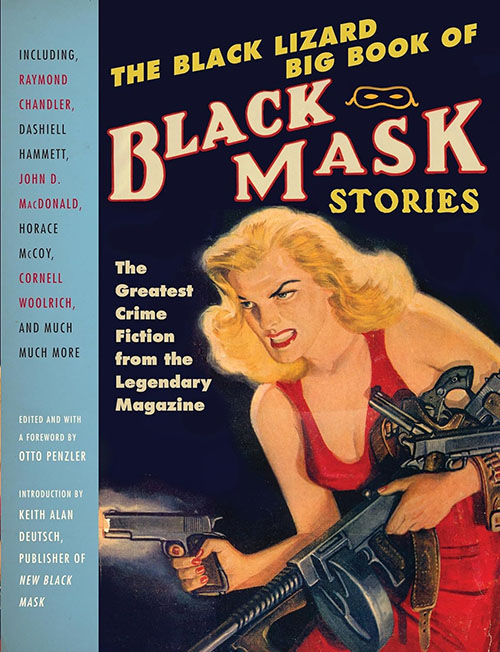
This is, obviously, a lovely review. James Reasoner, a top-notch word smith himself, is incorrect about one thing: while I re-read the serialization of The Maltese Falcon (in Otto Penzler’s The Black Lizard Big Book of Black Mask Stories), the basis for my sequel is the published novel (Knopf, 1930). The serialization did not go into the public domain till last year, as its final installment appeared January 1930.

Trust me – I kept an eye on that.

Nonetheless, Mr. Reasoner liking my novel means a lot to me, as he is about as seasoned a pro in the fiction game as anybody I know of.

If you are familiar with the Bogart-starring film adaptation of The Maltese Falcon, a re-reading of that novel before reading the sequel isn’t necessary. A few readers have already told me they plan to re-read the original after they’ve read my sequel. Or that they will view the 1941 film either again or for the first time, in preparation of reading Return of the Maltese Falcon.

That my book will bring some new readers to Hammett’s masterpiece (The Glass Key is next best) is incredibly gratifying.

* * *

My pal Robert Meyer Burnett – who so masterfully directed the audio drama True Noir: The Assassination of Anton Cermak, adapted by me from my novel True Detective – is a well-known YouTube pundit (among much else) with two long-running shows on that platform: Robservations and Let’s Get Physical Media.

On the first weekend of January, 2026, I appeared on episodes of both of those shows.

I caution you: these are lengthy episodes. The Robervations is an interview of me by Rob about (largely) Return of the Maltese Falcon). It runs around two hours!

The Let’s Get Physical Media has Rob, co-host Dieter Bastion, and me discussing our top ten favorite physical media releases of the year – it’s well over three hours with many excursions into this and that, including my most recent battle with Rob over Never Say Never Again, the film missing from the Sean Connery “James Bond” 4K set.

The interview:

The Favorite Blu-ray and 4K releases of 2025 from Burnett, Bastion and Collins:

Amazingly, one of the outstanding reviewers of physical media on the Net, That Damn Fool Idealistic Crusader, has done a very smart deep-dive into my novelization of the Dick Tracy movie, and goes into my misadventures writing it.

Even more amazingly, Spencer Draper, The Damn Fool Idealistic Crusader himself, has done the same for my two hard-to-find Tracy novels, Dick Tracy Goes to War and Dick Tracy Meets His Match.

He’s articulate and very, very smart, but again, a warning: these ain’t short shows. The novelization episode is about half an hour, and the Tracy novels episode is about forty minutes.

Damn that Damn Fool Idealistic Crusader! He makes me want to try to get the rights back to reprint the two rare Tracy novels he discusses!

* * *

Here’s another one of those articles about movies from comics that aren’t about superheroes.

* * *

Let’s make 2026 a much better year than the last.

M.A.C.

Best Crime Novel Honor & Christmas Gifts for Everybody!

Tuesday, December 23rd, 2025

Some announcements as we head toward Christmas 2025, after which I have some presents for you to unwrap.

Barb and I have been invited to be guests of honor at this year’s Star City Film Festival, where last year Death by Fruitcake won Best Feature. Mickey Spillane’s Cap City, which I co-produced and wrote, will be an official entry.

Last year we went to Waukon, Iowa, for the fest; but this year festival chair Dr. Katie O’Regan is moving the proceedings to Des Moines and the terrific Fleur Theatre, which is very supportive of Iowa filmmakers. More about this later, but if you’re within driving distance, mark your calendar for Valentine’s Day weekend 2026.

I’m pleased to say that the great Borg web site has named Baby, It’s Murder the Best Crime Novel of the Year. If you go to the link, you’ll need to scroll down to read this nice honor for my final Mike Hammer collaboration developed from unpublished Spillane material.

And out of the blue comes this interesting review of Seduction of the Innocent, the third of the Jack and Maggie Starr mysteries (and likely the last).

If you haven’t seen my movie Blue Christmas, and would like some low-budget holiday cheer, it’s available on various streaming services, most recently You Tube.

* * *

Now my Christmas presents for all of you who stop by here. These are performances from some of my favorite musical artists – many of you will be familiar with most if not all. But I encourage everyone to enjoy these, possibly with some rum-spiked egg nog.

This rendition of “Lazy River” starts out slow but really, really builds, as Bobby Darin so often did. Stick around for the whole performance and you’ll likely understand my obsession with BD that dates back to when I was eleven years old.

Introducing the Beatles doing “Ticket to Ride,” which I loved performing with the Daybreakers and Crusin’.

If you’ve never witnessed Vanilla Fudge in action, here’s their mind-boggling classic appearance on Ed Sullivan with “You Keep Me Hangin’ On.”

What James Bond fan can resist a great live performance of “Thunderball” by Tom Jones?

The most underrated female artist of the ‘80s – Kim Wilde. Feast your eyes and ears.

This, my friends is rock ‘n’ from the king – Elvis…Costello.

And here is Debbie Harry on The Midnight Special making America fall in love with her:

And my favorite non-Beatles British invasion group in a Rock ‘n’ Roll Hall of Fame performance.

Finally, last and least, here are the Daybreakers in 2008, the original band regrouped for their induction into the Iowa Rock ‘n’ Roll Hall of Fame. Say what you will about the goofy song I wrote in 1967 – which became the only national release by my first band, the Daybreakers – it did go on to be one of the most anthologized garage band singles, covered by bands around the world, including (but not limited to) The Outta Place, The Tellers and the X-Ray Harpoons.

You’re welcome. Now, let’s have a better 2026, everybody!

M.A.C.