Posts Tagged ‘Reviews’

A Book Giveaway & A Preview of the Spillane Blu-Ray & DVD

Tuesday, September 5th, 2023
Too Many Bullets cover

Too Many Bullets, my new Nate Heller novel from Hard Case Crime, will be out on Oct. 10. I am offering ten copies of the trade paperback ARC (the actual book is hardcover) to the first ten of you who request it in exchange for a review at Amazon and/or Barnes & Noble or Goodreads (or your own reviewing site, if you have one).

[All copies have been claimed. Thank you for your support! –Nate]

This is for American readers only. That’s only because mailing outside the USA has become so expensive. Keep in mind you can’t review at Amazon until the book is actually available, which (again) will be Oct. 10.

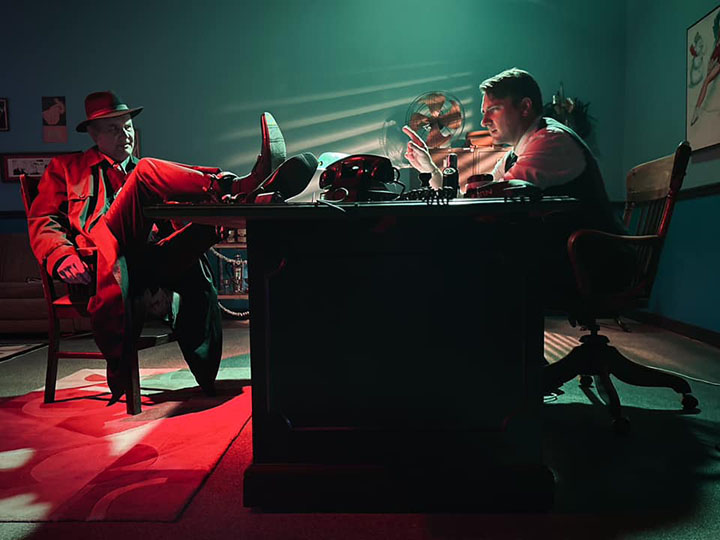
I also want to share with you the front jacket of Mickey Spillane’s Mike Hammer (the expanded documentary), a Blu-ray release from VCI that includes the 90-minute Mickey Spillane’s Encore for Murder with Gary Sandy in a Golden Age Radio-style live performance. When I say Golden Age Radio, I don’t mean this is audio only, but a movie experience much like being in the audience at a radio show of the ‘40s. Gary, who appeared in Encore at Owensboro, Kentucy, and Clearwater, Florida, is the only actor to date to portray Mike Hammer on stage.

Encore for Murder will be available separately on DVD and I’ll share that front jacket art with you, too.

These are teasers. We don’t have release dates yet, but it will be yet this year.

* * *

I want to share with you a particularly nice review of Dig Two Graves from the Crime Fiction Lover website.

Dig Two Graves by Mickey Spillane and Max Allan Collins
By Paul Burke 29 August, 2023

Once, when someone complained that Mickey Spillane had eight books in a top 10 chart, he replied along the lines that the reader should be thankful he didn’t write two more. It’s hard to overestimate Spillane’s popularity in the 1950s and 60s. He has sold over 225 million copies and when he died in 2006 left a wealth of unfinished stories, many of them featuring his hardboiled PI, Mike Hammer. That’s where Max Allan Collins comes in. A crime fiction author with a solid record of his own, including Quarry and The Road to Redemption, he was invited to carry on Spillane’s legacy and Dig Two Graves is the 14th Hammer novel he’s developed and finished.

The story is set in 1964 and Allan Collins has slotted it into place in the series at the appropriate point. Velma is Mike’s girlfriend, and the US has government borrowed her for a little job behind the Iron Curtain because she’s a former cop and secret service agent, but nobody told Mike. He hits the bottle hard thinking Velma has been kidnapped or, maybe worse, killed. Then Velma just turns up, Mike pulls himself around and they’re a team again.

There are other bridges to be mended though and Velma is about to meet up with her mother to smooth over her disappearing act. At the rendezvous the woman is mowed down in front of Velma and Mike. The Chevy responsible crashes a little bit further up the road and Mike is on the driver immediately but can’t squeeze anything out of the man before he dies.

Clearly it’s no accident. In the hospital Velma’s mother suddenly confesses that Velma’s father is not the man she grew up with, who died in the line of duty. Instead, it was a gangster named Rhinegold Massey – AKA Rhino. Is this somehow connected? Mike pumps his police friend Captain Chambers for info. It turns out Rhino died in an armoured car robbery and his then girlfriend, Judy, vanished years ago. But that’s all a cover and actually Rhino was placed in witness protection, the first such programme set up.

Rhino is linked to a retirement village in Phoenix called Dreamland Park so Mike decides to head out there, and there’s no way Velma will be left behind. When they arrive, it turns out a lot of people with connections to Rhino have been dying in mysterious circumstances lately. Mike books himself into the village and it’s not long before he’s being shot at and, naturally, he shoots back.

Blood and bullets are easier to come by than answers for much of the novel. A game of cat and mouse ensues, played out against the backdrop of lies, secrets, conspiracy and revenge. And, did I mention a double cross love betrayal? Allan Collins and Spillane riff nicely on a theme that goes back to Confucius: “Before you embark on a journey of revenge, dig two graves.”

Spillane wrote page turners and some of the best action scenes in crime fiction and that’s his great strength. Max Allan Collins knows that Mike Hammer readers want more and there’s no shortage of it here. He’s a subtler writer than Spillane so he nuances the plot, refines it for modern sensibilities without gutting the style. The characters have a little more depth but not too much.

The action is propulsive and the bodies drop regularly. It’s a deft art to recreating a novel that has to slot into a particular time in the Hammer cycle but the fact that Hammer has an arc means it’s crucial. In this case it’s Velma’s Russian sojourn and Mike’s descent into alcoholism in her absence. They add some humour to the plot, with references to his fitness and jibes along the lines of, “You used to be Mike Hammer.”

There’s a hint of sex smouldering behind the scenes and some cracking one liners in the snappy dialogue that give off a hardboiled vibe. Early in the book, the pace is a little more sedate than expected but it’s smoking by the denouement. Max Allan Collins really gets what makes Mike Hammer fun and never loses sight of that in the narrative. It’s a juggling act refreshing the form but maintaining the original ethos and mood, but mostly it is mission accomplished here. Hardboiled is alive and kicking; for a pulp fix this nails it pretty good.

For more revitalised Mike Hammer, see Murder Never Knocks.

As I say, a lovely review, but…the common mistake in reviews these days is calling Velda “Velma.” Apparently Mickey Spillane is getting confused with Scooby Doo.

* * *

Serious pre-production continues on Blue Christmas. We are hoping to secure Gary Sandy for the role of Jake Marley (the source novella is entitled A Wreath for Marley and is featured in the Wolfpack anthology, Blue Christmas).

We do need to raise some more money (having already raised $7000 from an indiegogo crowdfunding campaign). I am willing to dig into my stash of my stuff if you are missing anything in your M.A.C. collection. Tell me what you need and I will give you a price (it will not be outlandish) (maybe landish, though). Go this route and you’ll be listed in the credits.

* * *

Barb and I, as some of you may recall, are what might be called first generation Star Trek fans. We began watching when it was still on NBC, caught up with the first season via the James Blish short story collections (based on episodes), went to great lengths to see William Shatner in The Seven Year Itch at Pheasant Run outside of Chicago, saw Leonard Nimoy in The Fourposter at another dinner theater and also at a McGovern political event (recounted in Quarry in the Black), and cultivated a friendship with Walter Koenig.

Also, we stood in line for over an hour in the cold and snow to see, on opening night, Star Trek: The Motion Picture. We still consider it the best of the Star Trek films, not a widely held opinion, but Robert Meyer Burnett – who knows Star Trek as well as anyone alive – agreed with me when I shared this opinion with him. He feels it’s far and away the best original cast Star Trek film. So there.

Anyway, we did not watch Star Trek: The Next Generation when it aired. (I watched the opening episode and bailed.) But we did go to the four TNG motion pictures in the theater (usually on opening day) and liked all four, particularly the second one, First Contact. We also watched the handful of TNG laser discs that were issued, back in my laser collecting days. Liked those, too.

We have finally gotten around to watching the entire series – we started with Season Seven and worked our way back, for reasons too idiotic to share – and have more than warmed to TNG. We like it, perhaps even love it, and consider it a worthy continuation of the original series. We had been spurred to watch TNG by the excellent third season of Picard, which was essentially a long-form final movie for the original cast. (Picard season one was good, but the second season was dire, and like a lot of watchers, we only tuned in to season three because it restored the original TNG cast.)

Then Barb and I revisited the four TNG features, which we’d seen several times on Blu-ray and then 4K discs. And we discovered these films were much richer for us, a much more satisfying experience, having seen the entire run of TNG series.

And Star Trek: First Contact ties for second place (with Wrath of Khan) after Star Trek: The Motion Picture in our estimation.

Your warp speed may vary.

M.A.C.

William Friedkin, Collector Burn-Out, Bargains & Batman

Tuesday, August 15th, 2023

First, I want to share two very good deals with you.

Spillane: King of Pulp Fiction cover

Spillane – King of Pulp Fiction by Jim Traylor and me is 50% off (!) at Barnes & Noble. Going for a mere $13.47 for this hardcover thing of beauty. If you’ve been waiting to spring for a copy, now’s the time.

The Long Wait cover

The Long Wait, one of the best Spillane movie adaptations (it stars Anthony Quinn!) is on sale, a combo 4k and Blu-ray package. Even if you don’t have 4K, the Blu-ray alone is well worth the price. I did the commentary and provided an extensive gallery of stills. From Classic Flix, $21.98 (regularly $39.99).

* * *

I’ve fallen a little behind writing Quarry’s Return because of what I’d been told would be a simple out-patient procedure. First of all, that may have been simple for the surgeon but for me it was a long day of assorted inconvenience and unpleasantness.

Then I was sent home with a complication waiting to kick in — bleeding that wouldn’t stop — but an ER trip the next day to get some stitching up (in a good way) has me doing much better. But I have had to recuperate all (and some of next) week.

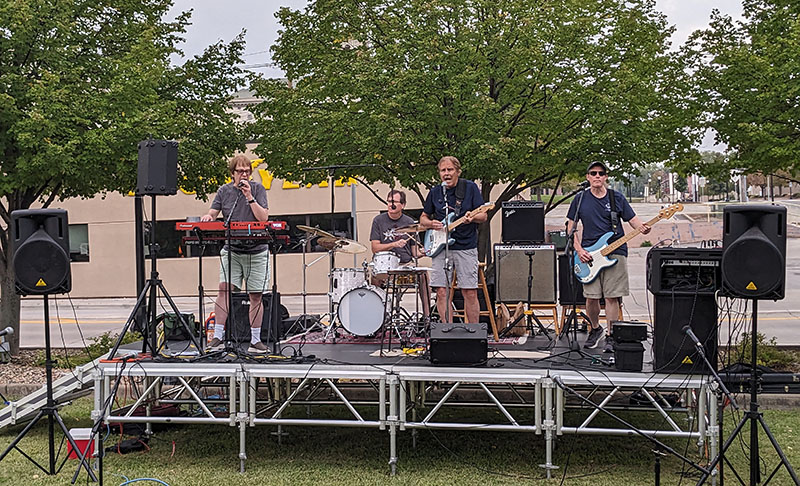
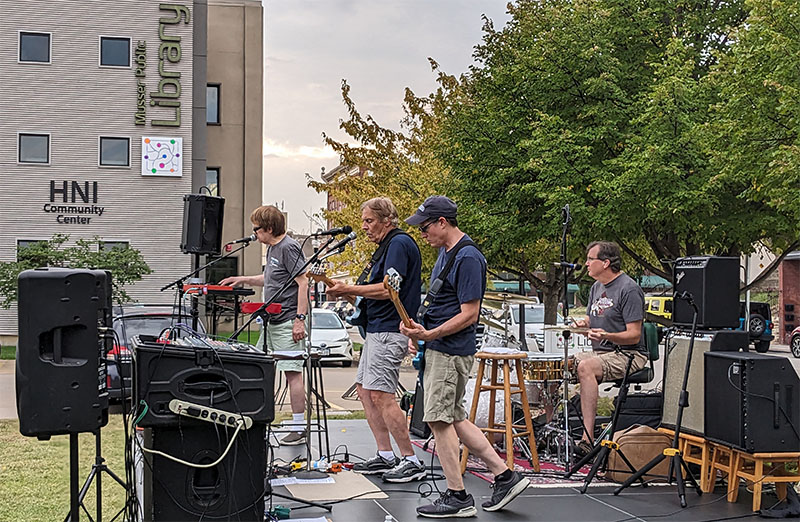
For the first time since 1965 (!) I had to cancel a band job (actually, we were able to swap places on the roster of Second Sunday concerts here in Muscatine, allowing me to trade August for September (not a bad trade generally). Crusin’ will appear at 5 pm on Sunday September 10.

* * *

Robert Meyer Burnett, one of my two favorite pop culture podcasters, discusses Friedkin below. He also discusses Friedkin on his weekly Midnight Musings, but that goes far afield including a discussion of the anniversary of Hip Hop.

Here’s my mini-memoir about Friedkin, which I shared with Burnett the night of my hospital procedure – hence a tad fried.

I Slept in William Friedkin’s Guest House

My wife Barb and I were guests of Friedkin by way of his then-wife Kelly Lange, the LA newscaster. Miguel was going with (they were engaged at the time) Kelly Lange’s daughter, whose name was also Kelly (her mother’s real name was, I believe, Dorothy). Kelly Jr. was funny and sweet and a babe, and I thought Miguel had done very well for himself. No idea what happened there, but Miguel and BIll Mumy and Steve Leialoha and I were at the time in the process of putting our band Seduction of the Innocent together to play at San Diego Comic Con. We’d go on to perform there around half a dozen times and at a few other comics cons and once for a comic book shop that rented out the Ferris Wheel hall for us at the Santa Monica Pier. One of our roadies was Brandon Lee.


Seduction of the Innocent, Santa Monica Pier

I am, as you know, from a small town in Iowa. I never did the con circuit, just San Diego Con. There is little reason why I should have otherwise encountered anybody famous. But my early Nate Heller novels had ridden my comic book Ms. Tree’s coattails to some geek recognition; so had the fact that I was the second guy after Chester Gould to write the Dick Tracy strip. How Bill, Miguel, Steve and I got together is for another time. (Chris Christensen came a little later.)

Where he hell is Billy Friedkin in this? Patience.

Kelly Jr. gave us a tour of Friedkin’s house. He and Kelly Sr. were away. (Honeymooning, my memory wants me to believe.) I remember a vast ornate bed with black sheets. In the living room were a few huge framed vintage movie posters from famous films…of the ’20s and ’30s.

By way of thank you, I left a copy of the first Heller, True Detective, for Friedkin with a fannish inscription. And of course I hoped he’d read it. He got in touch with me by phone, leaving a message, wanting to inform me of something. For that to mean anything, I have to describe the first section (briefly) of True Detective.

Young police detective Nate Heller is drinking rum out of a coffee cup in a speak when the cops known as the Two Harrys come in and grab him to come along on a bust, telling him nothing more. They are Mayor Anton Cermak’s two-man “Gangster Squad.” In a sports book on a high floor of a Loop building overlooking the Chicago River, the Two Harrys roust Frank Nitti himself. They shoot him several times in the neck and back, leaving him to bleed and die. They send the horrified and very pissed Heller (he will have to share the blame for this!) in to make routine arrests in the sports book, but a guy heads for a window and the fire escape. Heller tells him to stop and he doesn’t and Heller shoots him (“He wasn’t in the window anymore”). Heller decides to quit the force, not because it’s corrupt or even because for the first time he’s killed somebody (the graft is why he had a rich uncle get him on — it’s the Depression) and, in exchange for providing building security for his childhood friend, boxer Barney Ross, he gets a one-room office over Barney’s speak (aka Blind Pig) where he works as a PI (and sleeps on a Murphy bed).

Where the fuck is Friedkin?

So the two Harrys come around in the middle of the night at Heller’s flop, having heard Heller quit the force, and drag him to see Mayor Cermak at the Congress Hotel. Heller, who is young and tough and has scruples when necessary, is asked by Cermak why he (Heller) quit the PD. Heller turns down an offer to become the third man on the mayor’s Gangster Squad; but promises if his new one-man PI business is left alone, he’ll say whatever is necessary at the inquest and later trial. Having made this deal, Heller leaves but knows he’s now on Frank Nitti’s shit, er, hit list. Middle of the night, he’s hauled by Outfit gangsters to a suburban hospital to see Nitti…WHO HAS SURVIVED (historically, this happened — the whole Nitti roust is real, except for my substituting Nate Heller for the compromised young cop). Nitti gives Heller a pass, because it’ll give him an inside man with Cermak, who is soon to head to Miami (where of course history thinks the assassination target was FDR when it was actually Cermak).

That’s all 1933.

Around 1987, William Friedkin contacts this punk kid mystery writer in Iowa who somehow — it’s crazy — not only slept in his guest house, but knows about his Uncle Harry! Harry Lang, who was a Chicago cop in the ’30s! And he wants to know all about the Nitti hit. Friedkin told me his uncle was exactly that guy, the Harry Lang was who half of the two Harrys (I used photographs in the book, and Friedkin said he was flipping through and saw his uncle’s picture!).

There was talk of Friedkin making True Detective but that obviously didn’t happen. He was making TV movies at time — C.A.T. Squad…with Miguel.

Now they are both gone.

There’s a bittersweet postscript: Jason Miller was one of the stars of my little indie feature Mommy.

* * *

Heath Holland (my other favorite pop culture podcaster) at Cereal at Midnight discusses collecting burn-out, and I am given an extensive shout-out.

I wrote Heath with the following response:

I am honored to have been invoked on Cereal at Midnight. Got a real kick out of it.

And what an excellent, frank discussion of a real problem. I wrestle with the collecting bug constantly. And, despite a decent income, I spend way too much. My wife sees me watching you or Burnett or another three or four unboxing type podcasts and says, “This doesn’t mean you’re getting more ideas about what to buy, does it?” Not in the most loving voice.

@fiendformojitos: So you purchased 4 new Blu rays in the July Barnes and Noble Criterion sale, correct? Yes that's accurate. But isn't it true you haven't even opened any of the Blu Rays you purchased in the November sale?

What resonated with me most was one word you used: obligation.

This is when your collection starts to own you. This sounds ridiculous, but the main thing I am trying to do is not buy anything I don’t like or am probably not disposed to like. For example. Jess Franco — I have bought a lot of Franco stuff because of the enthusiasm of so many for his work in this hobby. There’s a line of European horror that came out some time ago that I was (wait for it) attempting to get every numbered spine, which meant every damn release. That line-up included at least half a dozen Franco titles. How could I not own them? They had numbers on the spine that I needed!

But I freed myself and got rid of them. Jean Rollin is constantly hyped and I know smart people who like those movies, but I am not one of them. Yet I bought them (and have since dumped them). I see podcasts from people, like Brandon Chowen (I think is the spelling), whose enthusiasm I get a kick out of…but he’s clearly not watching much of what he’s buying. He’s collecting stuff by directors he’s heard are good and intends to watch one day…but shouldn’t we be collecting because we like something already? Or contains cast/director/writer/genre that means we’d probably be inclined to like it?

That doesn’t mean I am entirely rational. I will get a film noir I don’t particularly like, because that’s a collection I want to maintain. I will hold onto any Hitchcock title, whether I like it or not, because I generally love him and I have a completist streak. Ditto Joseph H. Lewis or Sam Fuller or Brian DePalma. But if it’s a journeyman director, who is sometimes good, sometimes okay, sometimes bad, why not keep just the good?

And as you point out — time is distressingly, frustratingly limited. I am in my seventies…who am I trying to kid about ever watching a fraction of what I’ve collected?

This is art we’re collecting, not baseball cards.

But it’s hard. So hard. I hated To Live and Die in L.A. when I saw it in the theater. Hated it so much it pissed me off. And then I hear Rob Burnett enthuse over it, rhapsodize over it…and I ordered a copy. Arggggggh!

That’s the new rule I want to follow, and it is stupidly obvious: only buy, only keep, what you like. You don’t even have to love it. But at least like it.

* * *

This is a long overdue (in my biased opinion) discussion of why I deserve some credit for the popular Batman character, Harley Quinn.

And the same site, apparently taking the unpopular stand of defending my Batman run, discusses my Robin and how he and I are misunderstood.

Finally, here’s a great review of Fancy Anders Goes to War.

M.A.C.

Get Fancy, Stream at Your Own Risk & Plot, Plot, Plot

Tuesday, July 18th, 2023

Out of the blue, two nice reviews of my novella Fancy Anders For the Boys popped up on the Internet.

Here’s one from that pro’s pro, writer Ron Fortier, at his Pulp Fiction Reviews site. Ron has, in part, a very personal response that is quite fascinating.

FANCY ANDERS – FOR THE BOYS
By Max Allan Collins
Illustrated by Fay Dalton
Neo Text
118 pgs

This is Collins’ second book featuring Hollywood debutante turned detective, Fancy Anders, set in the early days of World War II. What with Pearl Harbor fresh in the minds of most Americans, the people in Los Angeles right worry about a possible Japanese invasion and the Army quickly establishes military outpost in the hills overlooking the city. Many of these set up with anti-artillery installations.

With that many boys in uniform soon flooding the streets of Hollywood, the movie community comes together under the leadership of actors John Garfield and Bette Davis to open a canteen exclusively to cater to these servicemen and staffed by cinema stars and young, beautiful ingénues.

When Army Intelligence learns of possible enemy saboteurs targeting the famous Hollywood Canteen, Fancy is recruited, along with several of her girl friends, to pose as canteen hostesses and ferret out the foreign agents. Once again, Collins uses his considerable imagination to drop the reader into the middle of one of Hollywood’s most memorable locales. Through his words, it is so easy to see the beautiful ladies, the eager young men away from home and hear the big band music. It all comes alive against a backdrop of a world turned upside in the throes of war.

“Fancy Anders – For the Boys” is a fun read. Especially for this reviewer, whose father, Pfc. George Fortier served on one of those gun crews and spend his 1942 Thanksgiving, along with two other men, at the home of crooner Bing Crosby and his family. All before he shipped out for the Philippines and three years of hell.

And here is another great review, this one from GoodReads (unfortunately, unsigned):

Fancy Anders plays hostess at the Hollywood Canteen where soldiers and sailors about to ship out mingle with movie stars in this second of three thrilling mysteries by Road to Perdition creator Max Allan Collins, with stunning illustrations by award-winning artist Fay Dalton.

October 1942. With her private detective daddy in the OSS chasing saboteurs, Fancy is stuck playing receptionist/cleaning-gal at the empty Anders Confidential Inquiries office. But then the 24-year-old Barnard grad – expert in shooting, flying and jujitsu – is recruited back into action.

Hollywood, with Bette Davis and John Garfield leading the charge, has put together a night club where servicemen are served by waiters and waitresses with famous faces, from Gable to Dietrich, from Abbott to Costello. With starlets acting as hostesses, gorgeous Fancy fits right in. But this pistol-packing mama knows her real job is solving the murder of Who Killed the Hostess – a Victory Girl who became an LA battle casualty. In the meantime, saboteurs are targeting the Canteen for maximum damage, hoping to wipe out half the stars in Tinsel Town and blast a hole in America’s morale.

Portraying the times vividly with his trademark historical accuracy, Mystery Writers of America grandmaster Max Allan Collins has created a series protagonist both of her time and far ahead of it. Lavishly illustrated by James Bond artist, Fay Dalton.

The three Fancy Anders novellas are designed as essentially a serialized novel, in the hope they will be collected (Fay Dalton’s great illos and all). My structural pattern was Hammett’s great The Glass Key. Fay is working on the third novella’s illustrations right now (Fancy Anders Goes Hollywood).

Fancy Anders Goes to War cover
E-Book: Amazon Purchase Link
Trade Paperback: Amazon Purchase Link
Digital Audiobook: Amazon Purchase Link
MP3 CD: Amazon Purchase Link
Fancy Anders For the Boys cover
E-Book: Amazon Purchase Link
Trade Paperback: Amazon Purchase Link
Digital Audiobook: Amazon Purchase Link
Audio MP3 CD: Amazon Purchase Link
Audio CD: Amazon Purchase Link

Neo Text bought them as e-books but, at my request, have also made them available in book form. This has caused some confusion from readers who can’t figure out why the books are so short, although the books at Amazon are clearly listed as novellas.

Fay’s illos (cover excepted) appear in black-and-white in the physical books and in color in the e-books. My hope is that they will be in color when the three novellas are eventually collected, and in fact I’ll probably insist they do. We have not gone out to publishers about the collected novel version as yet.

This was a Covid lockdown project, largely, and one I truly loved doing, from the research through the writing. Fancy is sort of a young Ms. Tree, though she definitely has her own personality. Within the context of my work, the novellas are reliably tough, though not as extreme in that regard as Mike Hammer, Nate Heller and Quarry.

You can get them at Amazon. Here’s Fancy Anders Goes to War.

And here’s Fancy Anders For the Boys.

As I’ve mentioned here before, Skyboat Media has done phenomenal audiobooks of the Fancy novellas, with full sound effects, music and a fine female narrator in Gabrielle De Cuir.

The Amazon links I provided will also take you to ordering info on the e-books and the audios mentioned above. But of course my preference is physical media.

Fancy Anders Goes to War is $6.99 and Fancy Anders For the Boys is $5.99 in physical book form.

* * *

My ongoing rants about my love of physical media and disdain for e-books and streaming video probably needs some clarification.

Nothing wrong with e-books. If I were younger, particularly if I were commuting by train to work or doing a lot of flying on commercial airlines for business, I would certainly have a Kindle. My son Nate has long read books on Kindle and, when he really likes them, gone on to buy those books in their proper physical media form.

A great deal of my income comes from e-books, as the links I provide here to Amazon sales on a fairly regular basis indicate. I have been very fortunate to have been one of the authors who early on was approached by Amazon, and they have kept me in print (and have sent regular checks) at a time in my career when that comes in very handy indeed. They publish physical media versions, too, but the e-books are the moneymakers.

Frankly, I was one of the handful of living authors approached by Amazon for my backlist – which included not only Nate Heller but Mallory and the “Disaster” series and a few standalones. Ian Fleming was one of the others, for example, all deceased except me. For a while they were publishing new novels of mine – including the very successful Reeder and Rogers political thriller trilogy, co-written by my pal Matt Clemens – though the current editorial staff expresses no interest in publishing new material by me.

No harm, no foul. What they already have continues to generate sales. The most recent titles are the two Krista Larson novels, Girl Most Likely and Girl Can’t Help It, which continue to sell if not at a clip at a steady pace.

But my frustration with the streaming services continues, and the writers and actors who are on strike are actively seeking help in that area, understandably. As a consumer, I am angry – but not even a little surprised – to see them (post-Covid lockdown) eliminating all sorts of stuff that I might have wanted to watch, and this includes things I bought for my library. Things like the 1950 Li’l Abner and the Sidney J. Furie The Lawyer have disappeared after I bought them, supposedly permanently.

If you drop by here regularly, you’ll know I set out to show Barb and myself every Raymond Burr-era Perry Mason episode that was based on an Erle Stanley Gardner novel or story. We have completed that mission, and I think it adds up to 90 episodes or so (remarkable that an American series did so many adaptations of the source material).

But during the relatively short time it took to do that, a whole season (season 7) disappeared from Paramount+, and a number of episodes from the other seasons disappeared without a trace much less a warning. These tended to be Gardner-derived episodes.

Fortunately, I owned the entire nine-season run on DVD and had been watching the Paramount+ episodes only because they were of the higher high-def quality. You haven’t lived till you’ve examined the wrinkles on the faces of Hamilton Burger and Lt. Arthur Tragg in high-definition.

“Incompetent, irrelevant and immaterial!” you say.

Well, I’m fussy. And some who’ve been witnessing these irrational tirades of mine frown and waggle a finger – maybe it’s all well and good for an incredibly wealthy, world-famous author (pause for my hysterical laughter) to spend some of his endless funds on one Blu-ray and actual physical book after another. And it’s true that I wallow in laserdiscs, DVDs, Blu-rays and 4K discs, and that books are stacked everywhere around here waiting in hopeless desperation to be read.

But I never meant to imply that the unreliability of the streaming services and the convenience of e-books meant that I expected you to spend your food money on physical media. Only an obsessive idiot like myself – and I am not alone, I assure you – would buy as many discs and books as I do, despite the dwindling number of years that I face ahead to actually watch or read them.

What I mean to suggest about DVDs, Blu-rays and 4Ks is that if you like a movie or TV series, if it’s one of your favorites or even if it’s just something you might think revisiting is a distinct possibility, buying those movies (and/or TV shows) on physical media is well worth considering.

And as for e-books, my son Nate’s approach makes a world of sense – read it on Kindle (or whatever), and if you really, really like it, invest in a physical copy for your book shelf.

Books by me, for example.

* * *

I intend to start writing a new novel tomorrow (Monday, July 17, as I type this) – Quarry’s Return. It is, not surprisingly, for Hard Case Crime.

I spent all of this past week (including earlier today) on plotting the novel – specifically, writing a 2500-word synopsis. In the past, I have not always plotted in this much depth. My first few novels – Bait Money, No Cure for Death, and The Broker (aka Quarry) – were not plotted at all. I just flew by the seat of my pants.

No Cure for Death – a mystery – found me having to write two chapters to explain what the eff had been going on. I swore to never put myself in that position again, and never did. Crime novels were less a problem, because they don’t always include a strong mystery element. But as the years passed, and boy have they passed, I gradually began to need to plot.

It begin with plotting just a few chapters ahead. By recent years, I’ve come to need a full chapter breakdown. On the other hand, I frequently depart from the synopsis when the characters decide to come up with things of their own to do that I hadn’t anticipated. So I almost always have to re-plot a few times during the writing of a novel.

The more detailed plotting began with True Detective in the early ‘80s – I was dealing with history and a certain amount of plotting had already occurred by way of events. Surprisingly, the historical nature of the material did prevent the need to re-plot as I went along, because the characters would again surprise me and, because I continue to research as I write, new information would present itself and demand attention.

* * *

The ESO network has published another Ron Fortier review, of the Spillane/Collins The Menace, a book you should consider picking up. It’s a horror novel, Spillane-style, plus two bonus stories. From Wolfpack.

Finally, this is a rather wonderful review (in French – you may have to rely on your browser to translate) of the graphic novel, Road to Perdition. One of the smartest, most in-depth reviews of that work I’ve seen.

M.A.C.

Dig the New Mike Hammer Novel & The Real Perry Mason

Tuesday, June 13th, 2023
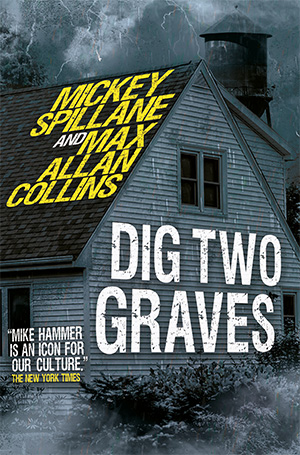
Dig Two Graves cover
Hardcover:
E-Book: Amazon Google Play Nook Kobo iTunes

Over the years, I’ve had many a bad review from the notoriously tough Kirkus book reviewing service. Lately they have liked me more – perhaps it’s my age. I keep remembering John Huston as Noah Cross in Chinatown observing, “Politicians, ugly buildings and whores all get respectable if they last long enough.”

Dig Two Graves, the new Mike Hammer – right now scheduled to be the penultimate book in Titan’s Mike Hammer Legacy series – will be published August 22nd and can be pre-ordered now.

Here’s how Dig Two Graves is described at the Amazon site:

Mike Hammer, the iconic PI created by the master of noir Mickey Spillane, takes on the mob in the first of two gripping final novels for the deadly private eye.

Winter 1964. After a hit-and-run accident nearly kills her mother, Mike Hammer’s partner (both in life and the PI business), Velda Sterling, learns her father is not who she thought he is. Seeking to uncover her true, troubling heritage, Velda and Mike travel to Phoenix, Arizona – and sunny Dreamland Park, where retired law enforcement officers protect and corral notorious criminals held under Witness Protection.

Mike and Velda find themselves swept up in escalating violence, fueled by the missing millions from an armored-car robbery, which leads them to a deadly midnight confrontation in a cemetery – where secrets are buried and open graves await.

Speaking of Mike Hammer, a Facebook scribe in the midst of a bunch of nice praise by others for the Spillane/Collins novels tried to dissuade Spillane fans from reading these novels, thusly: “The parts by Mickey are great, (but) when it shifts, it stops reading like Mickey and I’ve studied Mike hammer novels for my own writing back when and can tell the difference. I like when Collins writes his own characters but not much on the hammer.”

Here’s the thing: this reader makes the assumption that when Mickey’s material runs out, I take over and finish up the book. Some of you may recall, from previous posts and from an essay in the back of Spillane – King of Pulp Fiction – that this assertion is as inaccurate as it is confident. With the longer Spillane manuscripts – the 70-page to 100-page ones – I expand the material to fill to double that length. So my work is interspersed with his from the start. That’s partly to create a consistently shared voice that I can continue when the Spillane material runs out.

But that’s an over-simplification, because I have used the material in Mickey’s extensive files in a bunch of ways. For example, I sometimes combine manuscripts – Lady Go, Die! is mostly from the late ‘40s, but I weave in a similar serial killer chapter from the ‘60s to provide more genuine Spillane material. In Complex 90, the books begins with Spillane (expanded by Collins), then flashes back to a Hammer in Russia sequence I wrote, then when we come forward and Mike is back in New York, I’m working from Mickey’s material again.

Also, I have scraps of Spillane, paragraphs that he jotted down – descriptions of Manhattan, action scenes – that I weave in when I can. Sometimes he has provided plot and character notes that I use; other times he has written a rough draft of the ending. I worked from the more extensive manuscripts at the beginning, because I wanted to get that stuff out there – The Goliath Bone; The Big Bang; Kiss Her Goodbye; Lady, Go Die!; Complex 90; King of the Weeds; Kill Me, Darling; Killing Town. Murder Never Knocks had several chapters and a last chapter from Mickey; The Will to Kill had a few opening chapters but the mystery was wholly set up as if a blueprint had been given me; Murder, My Love and Masquerade for Murder came from Spillane synopses with scraps of description and action by him from the files woven in.

Both Goliath Bone and Kiss Her Goodbye had two versions of their partial manuscripts, which in both cases I combined. The former also had half a dozen versions of the first chapter. The latter shared the same basic premise but went off into two entirely different mysteries, which I combined. Kill Me If You Can utilized an unproduced TV pilot Mickey wrote. The upcoming Dig Two Graves combines two unfinished manuscripts, including a first pass at Dead Street, and this – Dreamland Park – was the major building block of Graves. But the other unfinished manuscript suggested an evocative back story involving a gangster who had fathered Velda.

A lot of work and, frankly, ingenuity goes into this process, and I frankly resent it when supposed hardcore Spillane fans turn their noses up because I’m involved and not every word choice sounds to them like Mickey would have made it.

I don’t try to write like Mickey – I don’t have to. I took in his words like vitamins starting when I was 12. I concentrate on getting Hammer himself right – Mickey considered character all important. Now and then I have a spooky burst like he is taking over. I was watching TV one Sunday morning (during the writing of Goliath Bone) and I suddenly reached for a scrap of paper and in a blistering array of words recorded the last few paragraphs of the novel. To me, they read like the Mick. It felt like automatic writing.

Here’s the thing: when Mickey, not long before his passing, asked me to complete the unfinished material in his files – in part to keep his name out there, but primarily to provide some income for his wife, Jane – he made it clear that these would be collaborations. When Jane reminded Mickey that I was not a Jehovah’s Witness and would likely indulge in more sex and violence than had been in his more recent work, he was fine with it.

Listen, these books are not pure Spillane. They are Spillane/Collins collaborations. I am not writing them by working with a Ouija board. I bring my own sensibilities in, but do not let them swamp Mickey’s. There are differences between Spillane and Spillane/Collins, just as in any good collaboration the end result is two plus two equals five. My Hammer novels reflect my wise-guy sense of humor more than Mickey’s Howard Hawksian male kidding. I do some of the latter, but I am not about to leave my wit behind when I work on Hammer.

I also tend to give Velda more to do. Mickey created a great character in her that I like to utilize, particularly in the post-Girl Hunters material. I also pay more attention to continuity than Mickey did. Like Rex Stout, Mickey paid scant attention to the details of continuity, though time-passage shifts in character (echoing his own over the years) are a huge part of his work.

I have tried to make sense of some things, to make them hang together. The origin for Velda (in the LP Mickey Spillane’s Mike Hammer Story) I re-reworked giving her a vice cop background that made it possible for Velda to get a PI license in New York state, and for her to have a reason to abruptly abandon Mike (in Kill Me, Darling) to pursue her vice cop boss’s murderer in Florida. (That novel, by the way, combined two Spillane manuscripts.)

So, yes, to some degree this is my take on Hammer, not Mickey’s. But, as I say, my mandate is to be consistent with the character as Mickey conceived him. And, further, to keep each Spillane/Collins novel in the context of when Mickey wrote the material I am working from. This means when I write King of the Weeds, I’m doing the older, Killing Man/Black Alley Mike Hammer; and when I’m putting together Kill Me, Darling and Killing Town, it’s the young Hammer of I, the Jury and My Gun Is Quick. Many of the books – The Big Bang, Kiss Her Goodbye, Complex 90 – were begun by Mickey in his “comeback” period, after The Girl Hunters (1962).

Some Hammer fans only like those first wonderful six ‘40s/’50s novels, from I, the Jury to Kiss Me, Deadly. Understandable, as those are masterpieces of the genre. I most enjoy writing about early, psychotic Hammer – from the very first novel about him (Killing Town) to exploring his descent into the bottle (Kill Me If You Can). But my job was to complete the books Mickey began – so if it was a ‘60s manuscript, the ‘60s Hammer was who I wrote about; if it was an early 21st Century manuscript, I wrote about that older Hammer. It was Mickey, not me, who put a cell phone in his hero’s hands.

I don’t mean to suggest that I’ve had a lot of criticism from Hammer fans – quite the opposite. And the reviewers have largely come around to the once reviled Mickey and Mike, through my efforts. It’s gratifying.

Still, it’s disappointing that a few hardcore Spillane/Hammer fans are denying themselves these novels, particularly ones like The Big Bang and Complex 90, which were announced during Mickey’s lifetime. When I remember how frustrating it was to be waiting for those books to come out – waiting and waiting and waiting – and now to glance across my office to the bookcase where the shelf of the Spillane/Collins hardcovers reside, and see those very titles looking back at me…wow. The long wait is over.

* * *

Elsewhere – and here, a little – I’ve discussed the HBO reboot of Perry Mason. And I’m going to do that again – right now.

First, an interesting take on reboots from my eight year-old grandson, Sam. His father, Nathan, was telling him about the upcoming Teenage Mutant Turtles movie. Both Nate and Sam are Turtles fans, you see. Sam has a remarkable sense of what he’s ready for, in terms of pop culture that may not be appropriate for a boy his age.


Sam Collins is astonished to see his grandfather’s name on a book at the local library.

When Nate told Sam about the upcoming Turtles movie, Sam thought it might not be right for him. Nate asked him why.

“It’s a reboot.”

Nate said it was a reboot, yes.

“Well,” Sam observed, “reboots are dark.”

And isn’t that the truth. The Michael Keaton Batman, decades ago, started the trend – reboots had to be dark and serious and grown-up, even when the subject matter was inherently juvenile.

The HBO Perry Mason, which has considerable merits, is a case in point, sort of. Erle Stanley Gardner was one of the best mystery writers of his day, and remains eminently readable. His Mason novels are like James M. Cain stories combined with a mystery – the same Cain-like subject matter, sex and money, and (again, like Cain) display a genuine interest in how businesses work. Perry and his secretary Della Street had a warm relationship that one assumed was sexual, away from work…but we rarely saw them away from work. Mason and his detective, Paul Drake, reflected the way criminal lawyers work, i.e., with an investigator or investigative staff.

Mason, well into the 1950s, was something of a sleaze. Remember the line in Better Call Saul? “You don’t need a criminal lawyer…you need a criminal…lawyer.” Perry hid clients, messed with evidence, switched guns, broke and entered, and it was just delightful.

A lot of that went into the first few seasons of the original Raymond Burr series. Some of that gets into the good but not great HBO reboot. The second season of the new Mason was a big improvement, but it still suffers from anachronisms (it’s set in the early ‘30s) and with a subservience to current sensibilities. Some of that doesn’t hurt, even helps. Paul Drake, for example, is Black here, and lives in a Black part of town; this puts flesh on the Gardner Drake’s bare bones and is an enhancement. But do both Della and Hamilton Burger have to be gay? Isn’t one of them enough? Must Della be Perry’s pal and not sly lover? Must she really be a superior lawyer to Perry, even though she isn’t one? Did I really see him (and an unsympathetic judge!) allow her to handle a key courtroom cross-examination in a murder trial? In 1934?

Yikes.

But if you’re young enough, you won’t care; and if you’re old enough, and haven’t thrown anything through the screen yet, you’re in for some good acting, crafty plot twists and great production values.

My advice to the producers of this series (which will not be heeded) is to at least make Della bisexual so she and Perry can be more than good buddies. And stop using phrases like “throwing shade” and “gaslighting,” and instead make use of actual colorful ‘30s argot.

Also, read some Gardner and watch some Raymond Burr Perry Mason episodes. (I did a project with Burr and he was a wonderful, smart man with a great sense of humor. He was planning to have Perry marry Della in the final of the later TV movies.) Right now Paramount Plus is running the first eight (of nine) Perry Mason seasons. The series is also available on DVD.


Raymond Burr and Barbara Hale as Perry Mason and Della Street

To you mystery fans out there, I would recommend the many episodes based directly on Gardner’s novels. The non-Gardner-derived episodes are entertaining but cookie-cutter, where Gardner is a wild, unpredictable ride, rarely telegraphing which character will be the murder victim. The first season of the series consists almost entirely of adaptations of Gardner Perry Mason novels (or short stories) – something unique in the history of American broadcasting. The second season is about half Gardner adaptations, and then after that it’s more sporadic. As it progressed, the show was actually adapting Gardner novels within a year or so of publication! Toward the end of the long run of the series, remakes of adaptations were also made, under new titles.

I tried hard to find a list of the Gardner adaptations on the Internet, to no avail. I decided to put just such a list together, for myself and Barb and, dear reader, you. You are very welcome.

Perry Mason Episodes
Based on Erle Stanley Gardner’s Novels and Short Stories

Season 1 (1957 – 1958)
1. The Case of the Restless Redhead
2. The Case of the Sleepwalker’s Niece
3. The Case of the Nervous Accomplice
4. The Case of the Drowning Duck
5. The Case of the Sulky Girl
6. The Case of the Silent Partner
7. The Case of the Angry Mourner
8. The Case of the Crimson Kiss
9. The Case of the Vagabond Vixen
10. The Case of the Runaway Corpse
11. The Case of the Crooked Candle
12. The Case of the Negligent Nymph
13. The Case of the Moth-Eaten Mink (pilot)
14. The Case of the Baited Hook
15. The Case of the Fan-Dancer’s Horse
16. The Case of the Demure Defendant
17. The Case of the Sun Bather’s Diary
18. The Case of the Cautious Coquette
19. The Case of the Haunted Husband
20. The Case of the Lonely Heiress
21. The Case of the Green-Eyed Sister
22. The Case of the Fugitive Nurse

23. The Case of the One-Eyed Witness
25. The Case of the Empty Tin
26. The Case of the Half-Wakened Wife
28. The Case of the Daring Decoy
29. The Case of the Hesitant Hostess
30. The Case of the Screaming Woman
31. The Case of the Fiery Fingers
32. The Case of the Substitute Face
33. The Case of the Long-Legged Models
34. The Case of the Gilded Lily
35. The Case of the Lazy Lover
37. The Case of the Black-Eyed Blonde
38. The Case of the Terrified Typist

39. The Case of the Rolling Bones

Season 2 (1958 – 1959)
41. The Case of the Lucky Loser
44. The Case of the Curious Bride
45. The Case of the Buried Clock

50. The Case of the Perjured Parrot
52. The Case of the Borrowed Brunette
53. The Case of the Glittering Goldfish
54. The Case of the Foot-Loose Doll

58. The Case of the Caretaker’s Cat
59. The Case of the Stuttering Bishop
62. The Case of the Howling Dog
63. The Case of the Calendar Girl
65. The Case of the Dangerous Dowager
66. The Case of the Deadly Toy
68. The Case of the Dubious Bridegroom
69. The Case of the Lame Canary

Season 3 (1959 – 1960)
72. The Case of the Garrulous Gambler
79. The Case of the Lucky Legs
86. The Case of the Mythical Monkeys
87. The Case of the Singing Skirt

Season 4 (1960 – 1961)
111. The Case of the Waylaid Wolf
121. The Case of the Duplicate Daughter

Season 5 (1961 -1962)
139. The Case of the Shapely Shadow
144. The Case of the Mystified Miner

Season 6 (1962 – 1963)
166. The Case of the Shoplifter’s Shoe
175. The Case of the Velvet Claws

Season 7 (1963 – 1964)
184. The Case of the Drowsy Mosquito
187. The Case of the Reluctant Model
188. The Case of the Bigamous Spouse
197. The Case of the Ice-cold Hands
204. Case of the Woeful Widower (Fiery Fingers)

Season 8 (1964 – 1965)
224. The Case of the Blonde Bonanza
235. The Case of the Careless Kitten
239. The Case of the Grinning Gorilla
241. The Case of the Mischievous Doll

Season 9 (1965 – 1966)
244. The Case of the Candy Queen (Silent Partner)
246. The Case of the Impetuous Imp (Negligent Nymph)
255. The Case of the Golden Girls (Vagabond Virgin)
258. Case of the Vanishing Victim (Fugitive Nurse)
260. Case of the Sausalito Sunrise (Moth-eaten Mink)
265. Case of the Fanciful Frail (Footloose Doll)

M.A.C.