Posts Tagged ‘Dick Tracy’

Fruitcake on the Loose & the Great Cavern of Comic Books

Tuesday, April 14th, 2026

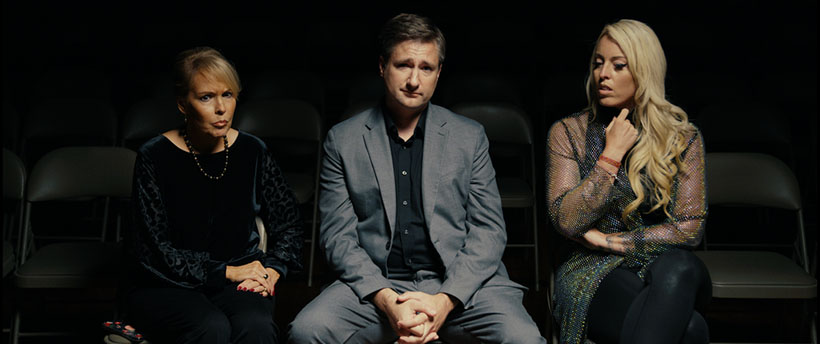
Our movie Death by Fruitcake, based on the mystery novels by “Barbara Allan”), is now available to stream FREE on Prime Video, The Roku Channel, and Apple TV.

Please support our effort. I am aware that not everyone who likes my work connects with (or has even tried) the Antiques novels that Barb and I write. Yes, they are cozy mysteries but with a subversive tongue-in-cheek edge. I love the books and enjoy being able to lean into the comedy, and the series must be pleasing someone because we just deliver book #20 in the series.

If you like it, leave a thumbs up or, if you’ve bought the DVD from Amazon, please leave a nice review.

* * *

Barb and I have spent the better part of a month in our basement dealing with comic books, hardcover and paperback books, DVDs and other assorted collectibles gathered over my lifetime. The collecting urge began probably when I was five or six, fed by a junky antique shop within easy walking distance where comic books could be traded two for one. It gave me admission to a world where the first Captain Marvel comics were still being published and Mad and the EC horror comics were available to rend and tear my childhood sensibilities.

The first comic book story I remember reading was in a coverless copy of Vault Horror: “All Through the Night” by Johnny Craig. That’s the one about a serial killer dressed as Santa Claus.

Three people shaped me (not including Johnny Craig).

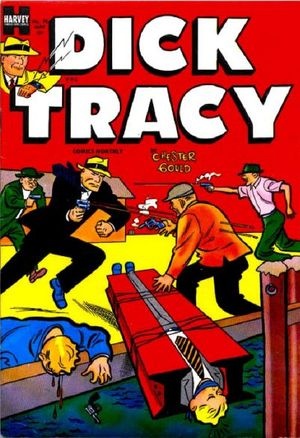
First, my mother read me Edgar Rice Burroughs Tarzan novels at bedtime, and encouraged my comic book reading. She had been a fan of the Dick Tracy strip when my father was in the Navy out of San Diego. Here is the cover of one of the first two Dick Tracy comic books I read at age six.

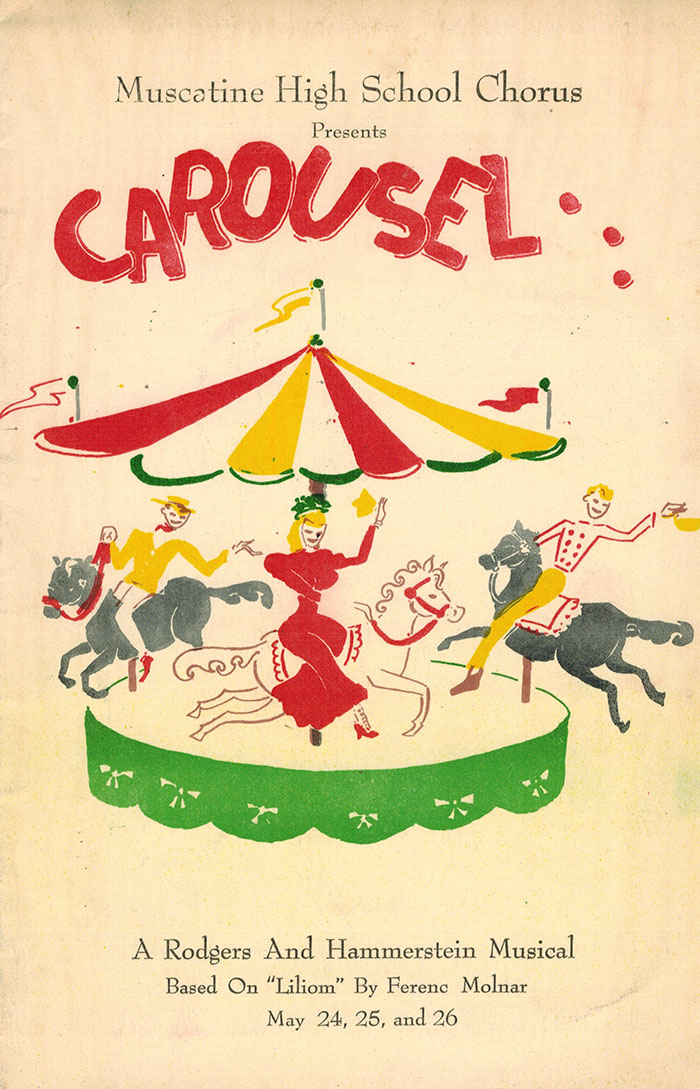
Of course my father was hugely instrumental (kind of a pun) in shaping me as regards music. For the first phase of his career he was a high school music teacher, celebrated as a chorus man throughout the state of Iowa (with his brother Mahlon, an incredible band man). This was in the early 1950s and Dad’s high school productions of Oklahoma and Carousel were among the first – if not the first, as the Des Moines Register claimed – such productions anywhere. He and a mentor of mine, Keith Larson, put on an original musical (Annie’s Musket) during this period.

I was in most of Dad’s productions, of which Carousel is the one I remember most vividly, because he arranged to have a working carousel on stage. He was an amazing vocalist and vocal teacher who gave up teaching to become an executive in industry, a career shift he did not love but paid well; on the side, he directed a national championship Elks male chorus for fifty years to exercise his creativity and stay sane.

Sidebar: in high school, as a sophomore, I was put in a vocal quartet (soprano, alto, tenor, bass) to try out for All-State, the winners being part of a massive chorus at a concert in Des Moines every year. Our young choral teacher – perhaps unaware that my cronies and I had mounted two musicals in junior high – said he couldn’t afford to spend time with us. He would be too busy coaching the three other quartets of upper classmen, who had a genuine chance of being selected All-State; but he was letting us attend the competition for the “experience.”

I went home, told my father, and he gathered my fellow quartet members (I was the tenor) and coached us, which exposed me first-hand to what a great teacher he was. We won State (the other three quartets did not) and our same quartet went on to win as juniors and seniors, as well – I believe the only quartet in the state to do so.

Not all was sunny between my father and myself. He went to college on a split sports/music scholarship, and was a huge sports fan. I was not. I was a little kid who did not get his growth till junior high kicked in. I went out for football, to please Dad, and did well. By high school, as a defensive lineman, I had the most tackles in the Little Six (our conference).

Why I liked football was that I could strike metaphorically back at the bullies who had made my childhood miserable. I was a scrappy kid, as a skinny good student in glasses had to be, and had something like half a dozen fist fights between junior high and high school. There was just something about my face, and attitude, that begged bullies to take a punch.

Still, in those days fathers and sons were rarely close, and I was closer to my mom than to my dad. He was quietly dismayed that I would go to movie matinees on the weekends with my mother and not stay home and watch sports with him. I was a story guy, a book reader, and had (and still have) little interest in watching people play games. I liked to participate in football, where I could clobber somebody and get away with it, and scant interest in watching it.

My father and I developed a much better relationship as adults. He was supportive of my rock ‘n’ roll efforts and got my band the Daybreakers an invite to Nashville because of a successful former student of his who became a country western recording artist (Jack Barlow); that led to our record contract with Atlantic’s Dial subsidiary. But I think my thematic obsession in my writing of fathers and sons, parents and children, flows from my uneasy relationship with Dad.

The other major influence on me, growing up, was my late uncle, Richard Rushing. My uncle was an insurance investigator who had ambitions to be a writer, and that likely planted a seed. He was funny, in a dark way, and that seed probably got planted in me as well.

In his basement he had a 1950s man cave, with a TV and a fridge of beers (an alcoholic, clearly, but I didn’t realize that till later). We watched movies on the little black-and-white TV and he would cackle, “It’s a gobbler!” when a flick was bad. Yes, I learned about some movies being turkeys from Uncle Richard. He had Playboy centerfolds on the wall – these were those early, discreet nudes; but this was still bold for the times. And, yes, another seed was planted in me.

I have three really vivid memories of Uncle Richard.

The key one had to do with the Great Cavern of Comic Books. When I was five or six, and obsessed with comics, we sat in my uncle’s back yard and he gestured, with beer can in hand, toward the exterior cellar doors of his little bungalow. He told me, his eyes gleaming, that through a passage therein was a tunnel leading to a massive cave where all the back issues of all the comic books were stored – not just Donald Duck and Superman, but EC horror and Mad and…any title a child in 1954 could imagine.

The existence of this cavern seemed doubtful to me, even at six. So I would beg Uncle Richard to take me through those outside cellar doors and prove his tale true. He would refuse. Simply too dangerous to put his favorite nephew at risk. Trolls and hounds from Hell guarded the passage, after all.

Within a year or two, I understood this was bullshit courtesy of my beer-guzzling uncle. But for years – even today – I could and can picture this treasure trove of four-color wonder.

The other vivid memory of Uncle Richard came when I was starting to write crime fiction at age 14 or so, very much in Mickey Spillane’s sway. My insurance investigator uncle showed me (inappropriately) photos of crime and accident scenes he had investigated. One was of a fat man who had drowned in his car, eyes bulging, arms reaching for the sky through the busted glass of the submerged windshield in which he was trapped and getting nothing but more water.

“That’s what death is really like,” my uncle told me.

The other memory is even worse. As the years passed, Uncle Richard’s mental illness asserted himself. I don’t know when this happened, probably at least thirty years ago; but I was called to the psyche hospital in Iowa City to be told how serious his condition was. Maybe I had to sign off or something, as a representative of the family. I don’t remember.

What I do remember is the sight of my uncle strapped down to a table, stark naked (as Mickey would say), and giggling and laughing hysterically. He confided in me, spitting as he spoke, that he had completely fooled these doctors into thinking he was crazy.

What has brought all of these memories swirling to the surface?

Well, as I said at the outset, Barb and I have been dealing with my sixty-plus years of collecting, and it’s been sobering and illuminating. For one thing, I discovered things I thought lost, like several zippered storage cases of CDs for the car (one consisting entirely of Christmas titles); last week I mentioned finding letters I thought were gone, like the nice one from Ross Macdonald that I have since tucked inside my copy of The Blue Hammer. For another, I’ve had to deal with unceremoniously dumping precious but now water-damaged items.

And I didn’t even know I still had my Rootie Kazootie 3D comic book.

It has been, and still is, a lot of work. I am waiting for word to come in a writing project and taking advantage of the down time to deal with this basement from heaven and Hell. Barb has been doing amazing things – just now she interrupted the writing of this to say she’d got our jukebox working! It has been dead for years, but thanks to her now is experiencing a late Easter resurrection.

Coming across a Dick Tracy comic book I know my mother bought me (the one pictured here)…finding the poster I made for Camelot, when in my junior year I played King Arthur, and made my father proud…I have finally entered the Great Cavern of Comic Books my uncle teased me with, with only memories stirred and no trolls or hell hounds. I feel like I have performed an autopsy on the life that I am still living.

And other than the dust inhalation and the coughing, it doesn’t hurt at all.

M.A.C.

The Writing Life

Tuesday, September 16th, 2025

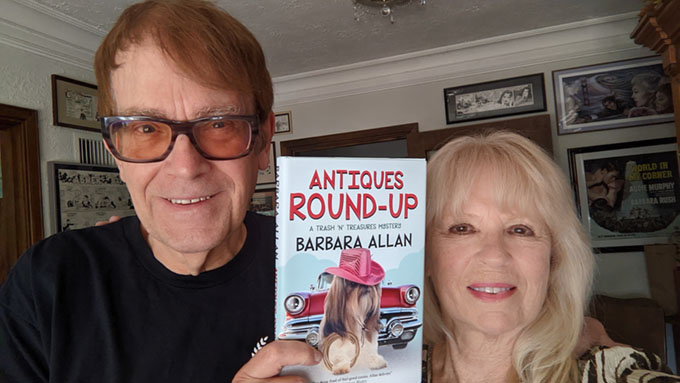
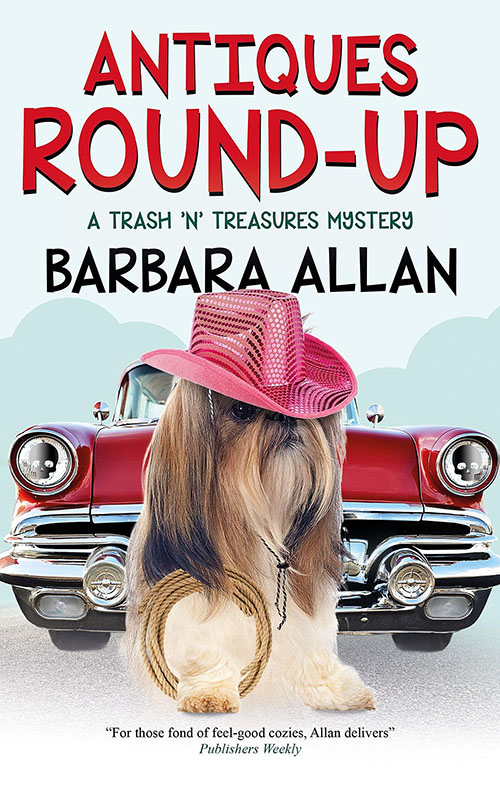
A box arrived from the UK with a few advance copies of our new Antiques/Trash ‘n’ Treasures mystery, Antiques Round-Up. When I say “our,” of course, I mean Barb and my latest novel in the now long-running series.

Barbara Allan and Antiques Round-Up

I have watched, I guess it’s been for decades now, Barb developing into a terrific writer. She was good out of the gate, and like most of us, her improvements are somewhat incremental and don’t make themselves clear until some time has passed and those improvements have accumulated.

I know I still think I’m improving as a fiction writer even at this late date. I’ve been writing long enough to have no doubt lost my fast ball here and there, but certain craft things have improved. Or at least I’m still trying to have them improved.

Barb and I have different approaches. She is slow-and-steady wins the race. Even now, I may not spend more than two months writing a novel (depends on the novel of course), but she spends most of her writing year on one book in the series. Fiction writing is a love/hate affair, but I have always loved it more than hated, and often Barb seems to be the other way around. She always talks about the current book being the last one she’s willing to do, while I’m always looking for more books to write, as if as long as I have a book contract, that God or the Grim Reaper or whatever will wait for me to finish the current novel.

If there’s a point to this ramble, it’s how proud I am of the way Barb has risen to a truly professional level, and this latest book – which will be published a couple of weeks from now – is evidence of that.

We were published for years by Kensington, but our current home is Severn House, a UK publisher that puts a lot of their emphasis on the United States market. But we do hear from readers who dropped away at the point Kensington stopped publishing us, largely because – thus far – the series has been tricky to find in Barnes and Noble, and BAM and other of the surviving brick-and-mortar book stores.

Some of these readers don’t even know the series is continuing, and when they find out it is, want to know where they can get back onboard. Both Amazon and Barnes & Noble have the Severn House books in hardcover and e-book; and all of them eventually become available from those sellers in handsome trade paperback editions.

We have had a lot of Hollywood interest in the Antiques novels – specifically for TV – over the last fifteen years. It’s gotten very close – very – but as yet no cigar. That’s why we made an Antiques movie ourselves, Death By Fruitcake, with Paula Sands (legendary Midwestern broadcaster) as Vivian Borne and Alisabeth Von Presley (Midwest pop superstar) as Brandy Borne. We’re proud of our little movie – I scripted it from a Barbara Allan novella (Antiques Fruitcake) and Barb co-produced and served as production manager.

This past week Chad Bishop, our co-producer (and Director of Photography and Editor) and I began dealing with the “deliverables” (the things a distributor requires) for Twin Engines Global. This ranges from getting trailers and the film itself to them and making closed-captioning happen and taking lawyer meetings about getting an LLC put together and a hundred other things.

Certainly easier to just write a damn book. It was however a fun, hard, unforgettable experience, shooting and editing it and all, and I wouldn’t trade it for anything.

Meanwhile, I am almost half-way through the new Quarry novel, Quarry’s Reunion, which will be the 50th anniversary book in a series that I thought Berkley Books had killed 49 years ago…but thankfully Hard Case Crime unexpectedly resuscitated it in 2006 with the help of filmmaker Jeffrey Goodman, who made a short film from my script (A Matter of Principal) and a film version of The Last Quarry (The Last Lullaby). Fans also helped keep it alive.

I mentioned that fiction writing is a love/hate affair. Though she seldom grouses, I know Barb finds writing difficult. Funny thing is, after all this time, so do I.

I will spend a full day writing two or three pages of description and set-up for a chapter, or an hour on one paragraph; fortunately for me, the rest goes a lot faster, and dialogue scenes fly, as they need to when readers encounter them. Most of my novels are mysteries, obviously, and I re-plot them constantly as I go. Quarry’s Reunion had five or six preliminary overview outlines, and I’m on the fifth or six chapter breakdown now.

Part of this is my approach being half planning, half improvisation. I try to know enough about the story I am about to tell without mounting my horse and riding in all directions. So I know major things – like who-dun-it and why. Then I come up with a plan, a road map, a structure, that may be twenty pages long. But I try to keep it loose enough to make discoveries as I go. This has me revising the plan, changing and tweaking the trip I’m taking, as I go.

Here’s another difference between writers. Though we come up with the “Barbara Allan” basic ideas together, Barb rarely asks me for an opinion or plot help or anything while she’s writing her draft. I’m willing to help, and often offer – but I have too many ideas, too many ways to solve a problem, to do anything but frustrate her, throw her off-track. So except in cases of emergencies, I keep tabs on what she’s doing on her draft, but don’t interfere. And when I do my draft, she gets out of my way. She does read my chapters as I go, so can catch anything I’m doing that will upset the plot applecart.

I mentioned above that I sometimes spend a day on a few scene-setting opening paragraphs, or an hour or more on a transitional paragraph between breaks within a chapter. And in recent years – due, I’m afraid, to all the media around us dumbing everybody down – I get some (not a lot) of readers and reviewers complaining about what they see as needless description. I will defend that only with this: I have to see a scene in my mind before I write it; and in description – yes, even clothing – I am writing about character as much as anything.

Still, as I said to Barb the other day, “It’s frustrating to spend so much time on the stuff some readers skip.”

Here’s where you can pre-order Antiques Round-Up; it’s out on Oct. 7. It’s likely also available via the Net at anywhere else you like to buy your books.


Hardcover:
E-Book: Nook Kobo Google PLay
* * *

Here’s a review of The Two Jakes 4-K Blu-ray (from Kino Lorber) that is a comprehensive look at the film and the disc, and includes the commentary by Heath Holland and myself about the film. You have to scroll down to read that, but the whole review (my opinion is higher than the reviewer’s of the film itself, but the review is thoughtful and fair, even when I don’t entirely agree with it).

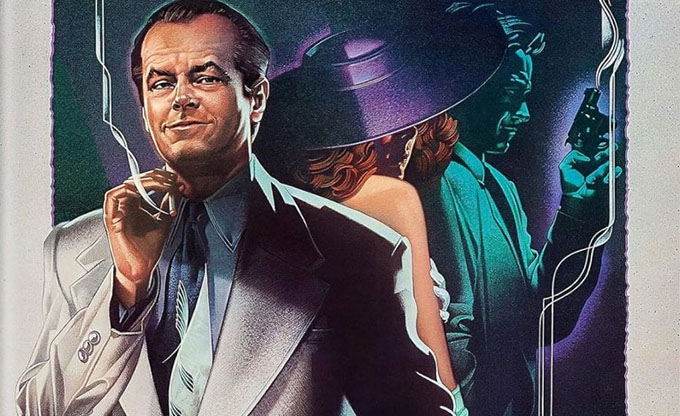
The Two Jakes poster excerpt

This a new bio of me at a Dick Tracy Wiki site. Looks extensive, though I admit not reading it yet.

M.A.C.

Another Film Fest Award and…A Tricky One

Tuesday, September 9th, 2025

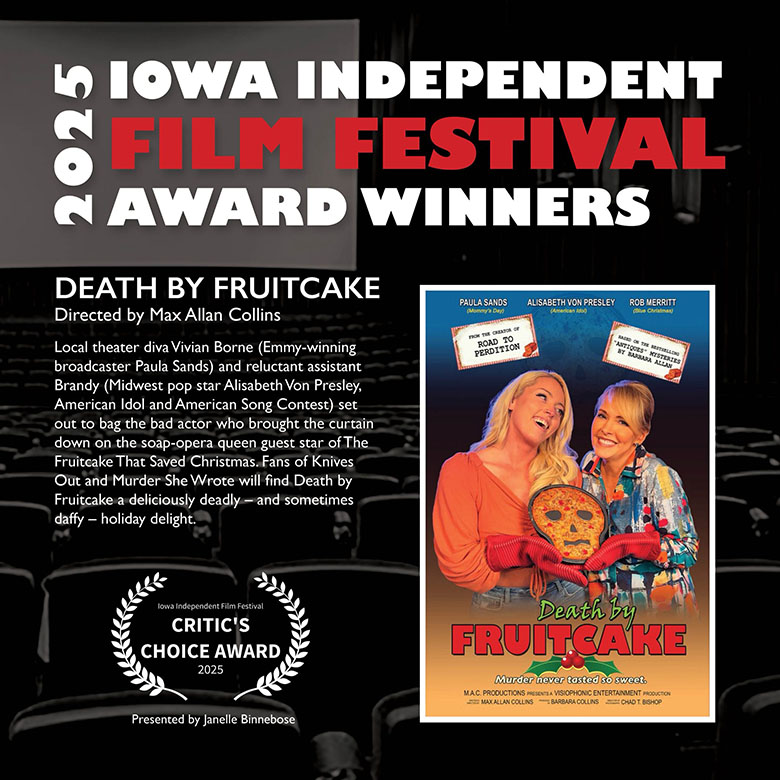
I wasn’t able to attend the Iowa Independent Film Awards, as I’m still in recuperation mode. I’m disappointed I couldn’t be there Saturday for our screening. But Death by Fruitcake did well just the same.

Death by Fruitcake IIFA award
* * *

This is a tricky one for me, because I try to stay away from politics here. And my wife Barb, wisely, reminds me that people don’t come to this update/blog for such things. It’s difficult to restrain myself, sometimes; but mostly I do.

Let me say at the outset that I feel a need to let you know how events of the day have impacted my plans for the next Nate Heller novel. That’s what makes this germane, because I have mentioned, even discussed, that prospective novel several times. I’ve even presented it as my last Heller novel, and one I’ve in some respects been leading up to.

Now I may not write it at all, and you – those of you who are generous enough to follow my work – have a right to know why this book has been (at least) shelved for now or (at worst) never will get written. If there’s a silver lining, it’s that it basically means I’m considering two more Heller novels, not just one.

Also, I’m not fishing for a conversation or exchange of opinions here. Few facts are immutable, but this one is: no one ever won an argument on Facebook (or other Social Media); no one ever changed anybody’s mind on those platforms. I’m not going to try to. How you think, what you believe, is not my business.

Here’s how this transpired.

I was watching TV and saw Robert F. Kennedy, Jr., and wondered if he had, if not damaged, the Kennedy name, brought it into a kind of doubt. He strikes me as a crank, and a dangerous one; some smart people disagree, but enough people share that view – that as Secretary of Health and Human Services he is a threat to health and human services – that the Robert F. Kennedy name is not something I dare, at the moment, hang a Heller on. It may already have hurt Too Many Bullets, my Heller RFK assassination novel.

I don’t do this lightly. I first asked Barb if she agreed that this was a bad time to embark on an RFK novel (the theme was to be RFK/Hoffa, as my previous Kennedy-oriented novels have more than hinted at). She immediately agreed and said, “Write something else.” I called my editor, Charles Ardai, at Hard Case Crime and asked if he thought I should do a different, non-Kennedy novel instead of the one we’d been planning (and that I was contracted to deliver). He was thrilled I was setting that subject aside (for now anyway). I asked my longtime researcher, George Hagenaur, what he thought. He, too, said it was a bad time to do a Kennedy book.

So. I am instead going to write a Watergate novel, which was already one of two Heller novels I was considering doing, for quite a while now. It seems like a good time to deal with a cover-up.

* * *

This article celebrates the marriage of Dick Tracy and Tess Trueheart 75 years ago. You’ll have to scroll down to get to the meat of it, but it’s a nice piece.

Speaking of anniversaries, next year (2026) will mark Quarry’s 50th anniversary. The Broker, the first book’s title imposed on me (it’s now titled correctly as Quarry) went on sale in 1976. I had actually started it at the University of Iowa’s Writer’s Workshop in 1972 and finished it in 1973; but the anniversary is of the publication, not when I completed it.

Here is an audio review of The Wrong Quarry. A very nice one at that, and for one of my favorite novels in the series.

This will lead you to the wonderful blog, The Stilleto Gumshoe, where several Mickey Spillane articles appear and one of them is for Spillane, the bio by Jim Traylor and me. Good Spillane/Hammer/Velda stuff in general, but the bio review is a honey.

M.A.C.

Damn Fool Crusader, Dick Tracy, Wayne Dundee R.I.P.

Tuesday, June 10th, 2025

Through my dalliances with YouTube, I’ve been able to connect with some interesting people, who have become my friends or at least friendly acquaintances. I spend a little more time watching YouTube than I should, because my wife Barb and I almost always watch a movie in the evening, and sometimes my son Nate comes over (after he helps his wife Abby get his two kids to bed) (Sam and Lucy), making it a double feature. My beddy-bye time is, roughly, midnight and I sometimes have an hour or so to fill before closing out my day. The morsels of entertainment I encounter on YouTube are fun, often informative and, usually, not demanding.

This past week I did a commentary with Heath Holland of the respected Cereal at Midnight on the Chinatown sequel, The Two Jakes, which is one of my favorite movies but not a terribly well-regarded film. It was my opportunity to defend the film and explain myself. This commentary was for the upcoming 4K Blu-ray to be released by Kino Lorber.

Heath is a knowledgeable pop culture expert with an emphasis on film and music, as well as a winning presence on Cereal at Midnight, which appears sporadically but frequently on YouTube. We’ve done several movie commentaries together for Kino, and have several more to do. He’s a pleasure to work with.

I of course have a great creative relationship and friendship with Robert Meyer Burnett. Here’s him talking about our collaboration, True Noir: The Assassination of Anton Cermak, as a guest on a YouTube show dating back a few months (we hadn’t announced Michael Rosenbaum as our Nate Heller yet). The passion, talent and skill that director Rob Meyer Burnett brings to True Noir: The Assassination of Anton Cermak is on full display in this interview (done while we were stilling working on the True Detective adaptation – available at truenoir.co). (Not “com” – “co”!)

More recently I connected with one of the most unique presences on YouTube, Spencer Draper, who calls himself The Damn Fool Idealistic Crusader. He discusses pop culture with an emphasis on genre movies (and books), but has become known, well outside YouTube circles, as a watchdog for flaws on DVDs, Blu-rays and 4K discs. He points out mastering problems and particularly hones in on audio blunders. He is focused, relentless and very, very smart.

I reached out to him to inquire about his experiences on the Warner Bros “DVD rot” problem, which has to do with a batch of 2007-2008 DVDs that are out there rotting even as we speak. He’s been key in alerting collectors and a sometimes (sometimes) cooperative Warner Bros customer service about the problem, and the need – moral responsibility for – replacing defective discs.

There’s a spooky aspect to the contact between Spencer and me. I’ve never gotten in touch with him before, and I don’t believe he’s ever covered anything of mine on his YouTube offerings. I had no reason to think I was on his radar.

But it turns out he was, at that moment, doing a deep dive into my involvement with the Dick Tracy movie, studying my novelization and doing his general thorough digging job. We have now corresponded several times and the experience has been pleasant, even if the Warner Bros aspect hasn’t been. (I am definitely not talking about Warner Archive!)

For Spencer, and for those of you who are new here (even relatively so), I am reprinting an article about how I intersected with the Dick Tracy movie, Warren Beatty’s people, and the Good Folks at Disney. It’s an excerpt from an article I wrote for Lee Goldberg’s Tied In – The Business, History and Craft of Media Tie-In Writing. It is the behind-the-scenes amusing and horrifying story of my writing of the movie tie-in novelization of Dick Tracy.

I wanted to write the Dick Tracy tie-in novel because I’d been the writer of the syndicated strip since 1977, plus I was a mystery novelist. Landing the Dick Tracy strip was my first really big career break. I got the job after trying out for it, writing a sample continuity. I got the opportunity to try out chiefly because of some mystery novels I’d written as a kid that had a strong comics element (Bait Money and Blood Money, both 1973).

My re-boot of the strip got a lot of positive attention, and I loved the job, having been a stone Dick Tracy fanatic since childhood. Before getting the strip, I had even developed a friendship with creator Chester Gould – a rarity, because he was very private – although Chet played no role in my landing this plum assignment.

Some time in the ’80s, I was shown a potential screenplay for Dick Tracy, shared with me by my Chicago Tribune Syndicate editor. I thought it was lousy, and told him so, and he agreed. I figured that was the end of it.

But the Dick Tracy film was a project that wouldn’t die – Clint Eastwood was going to be the square-jawed dick for a while, which was exciting, and then finally Warren Beatty got obsessed with it, and it became a Disney project and a very big deal. I offered to do the novel version and, thanks to my credentials as the writer of the strip, got the gig. I was thrilled.

Then they sent me the screenplay – it was virtually the same lousy one I’d read seven or eight years before! I was shocked and dismayed. Lots of the classic characters, villains and good guys alike, some good situations…but no story. Not really.

I asked my agent what to do about it, wondering what kind of novel I could fashion from such weak material, and he said, “Just do whatever you want with it. Nobody’s going to read it at Disney – this is just small change to them.” Did I mention that my usually very savvy agent had never sold a tie-in before? And that this was the worst advice he ever gave me?

So I wrote a novel very loosely based on the screenplay. I added more characters from the strip, provided a story, even replaced what seemed to me to be unimaginative death traps with my own better ones. It was a terrific little novel, designed by and for a Dick Tracy fan like me.

I sent it in, went on about my business, and several months later my wife Barb and I were preparing to go on a research trip to Nassau (for my Nate Heller novel Carnal Hours) when my agent called with bad news. The Disney people hadn’t even made it through my book – got maybe a third of the way – before saying a faithful-to-the-screenplay page one rewrite was needed.

In seven days.

Dick Tracy is legendarily a movie that Warren Beatty micro-managed. Every tie-in aspect was overseen by Beatty and his top people. The novel I’d written was inappropriate for any film. To have taken these liberties on Dick Tracy was a blundering piece of farcical arrogance on my part that makes Fawlty Towers look like a documentary.

So with a 1989-era laptop (think about it), I went to Nassau and spent 70% of my time in the hotel room salvaging what little I could from my first version. Maybe 25% of it was workable. Actually, some of my non-screenplay stuff made it in, because it didn’t contradict anything (Vitamin Flintheart is in my novel, for instance, but not in the film, not even deleted scenes).

Barb and I were in Nassau four or five days, and I came home and wrote the rest of it, just blazing. What I came up with was pretty good. I was as happy with it as possible, considering the weak screenplay that was my source. But that, as they say, was just the beginning….

I spent many, many hours on the phone with the producer of the film, Barry Osborne (later involved in The Lord Of The Rings trilogy), a gracious, intelligent man, and way too far up the food chain to be giving a lowly tie-in writer such instructions as, “The chair on page 223? It’s green not red,” and, “You have 88 Keyes standing up from the piano too soon on page 187.” Most of the changes I was asked to make had to do with such surface things, and many substantial changes I had made in character motivation and dialogue were overlooked.

This was perhaps the most instructive thing I learned from the experience – if you follow the screenplay out the door, and do the surface of it accurately, you can slip in all kinds of substance where characterization and fleshing out of scenes are concerned.

Osborne actually liked the novel a lot, and he told me on several occasions that I had solved plot problems for them, which they had fixed by way of dialogue looping – and indeed the film has five or six lines I wrote.

Also, he asked me about a scene involving Tracy’s girl friend Tess and her mother, where Mrs. Trueheart says a lot of negative stuff about Dick, how she is delighted that Tess and Dick have broken up and how selfish the detective is, etc. I had softened this scene, making Tess’s mother much more positive about her potential son-in-law. The producer asked me why I’d done that.

“Because,” I said, “Tracy joined the police force to avenge the death of Mrs. Trueheart’s husband – Tess’s father, who ran a deli and got shot by robbers. Mrs. Trueheart adores Dick Tracy. Every Dick Tracy fan knows that.”

And they re-shot the scene along my lines.

So I take a certain pride in knowing that Dick Tracy is a film in part based upon its own novelization. The final battle, however, reached new heights of absurdity, and involved phone calls with high-level folks at Disney. How high level? How about Jeffrey Katzenberg? The “surprise” ending of Dick Tracy is that the mysterious masked bad guy called the Blank is actually Breathless Mahoney. Sorry to ruin it for you, but, yes, Madonna did it.

This surprise seemed painfully obvious to me, the kind of shocker you can damn near figure out in the opening credits. But Beatty, Disney and all associated were convinced they had a surprise on the level of The Sixth Sense (I figured that out, too, about five minutes in). So I was instructed to remove it from the novel.

Wait a minute, you’re saying. Remove what? The identity of the masked bad guy. The solution to the mystery. You know…who the killer is.

This surprise ending, the Disney folks told me, had to be guarded like the Coca Cola recipe or the unretouched Zapruder film. And when I pointed out that Dick Tracy was a mystery story, and that leaving the ending off a mystery story just might disappoint a few readers, this seemed of no particular import.

I did half a dozen rewrites of the ending, sneaking in hints of the Blank’s identity, such as, “Why, look who it is under the mask…” said Tess, breathlessly. No sale. About a page was cut from the book.

I won only one small concession – that any printings after the film came out would include the full ending. Only one small print run represents the complete novel (the sixth, distributed to school book clubs).

There can be no doubt that I hold a singular honor among mystery writers – I wrote a bestselling whodunit… without revealing whodunit.

Perhaps by way of apology, the Disney people flew my wife, son, mother and father and me to the film’s premiere at Disneyworld in Florida. They treated us great. Everybody attached to the movie treated us great, including Warren Beatty. We did a big press get-together with many of the stars. I was doing a Mumbles continuity in the Dick Tracy strip at the time, and Dustin Hoffman (who played Mumbles in the film) read me that day’s strip from a local paper, doing Mumbles’ dialogue in character. Doesn’t get much better than that.

Two postscripts: in our Disneyworld hotel, a coloring book on sale – an item that (it turned out) had been available to the public for several weeks – included the Breathless-is-the-Blank ending. As we say in the funnies, “Sigh….”

Also, the wonderful actress Estelle Parsons (who played Mrs. Truehart in the film) wandered into a bookstore at Disneyworld, where I was signing copies of my open-ended novel. We spoke, and she was very sweet, and I said to her, “You had to re-shoot your big scene, didn’t you?”

She looked at me, amazed. “How did you know that?”

And I told her.

* * *

I have no idea how long I’ve been writing these Update/Blog entries, but it’s been long enough that I’ve had to mark the passing of friends and heroes, as well as friends who were heroes.


Wayne Dundee

I can’t say Wayne Dundee, who passed away recently, was a close friend. There was a time when we were. Seeing him gone does make me feel like the Last Man Standing – of my closest mystery crew, we’ve lost Ed Gorman, Bob Randisi, Steve Mertz, John Lutz, Bill Crider and probably more that I am criminally forgetting.

Wayne was the founding editor of the long-running fan/prozine Hardboiled (more “pro” than “fan” because it was always a paying market). He was one of the first fans who reached out to me, and he specifically wondered if I had anything in my drawer that he might print in his ‘zine, which ran mostly to (as you might imagine) hardboiled crime and detective fiction. As it happened, I did. A novel called Mourn the Living with a character initially called Cord and later Logan and even later (and permanently) Nolan had been stored away long ago.

I got the moldering manuscript (literally, not figuratively) out of a box in the basement and talked Barb into retyping it for me. She did this, gracious partner and writer that she is; and I did a light edit, not wanting to interfere with what the young writer (I’d been 19 when I wrote it) had in mind. Wayne, who specifically described himself as a Nolan fan, eagerly took it and had me break it into several parts for serialization.

Eventually it was collected into a book, and it was recently a bonus feature of sorts in Mad Money, the latest reprint of my Nolan-heists-a-shopping-mall novel, Spree.

Thanks, Wayne.

I vaguely recall reading Wayne’s early work in manuscript, and providing some notes and encouragement; but that memory is vague. I do know he went on to do nine Joe Hannibal mysteries, wracking up several Shamus nominations. A career as a private eye writer is hard to maintain (tell me about it!) and he eased quite naturally into becoming a highly regarded western writer. The last time I heard from him, and it was a post here, was him encouraging me to show my grandson western movies, and to agree that Costner’s Horizon was woefully under-appreciated.

Wayne also appeared in one of my movies! He was the hulking, bearded prison guard who backed up the great Del Close in the scenes regarding the botched attempt to execute Mrs. Sterling (aka Mommy).

James Reasoner, one of the other last men standing, writes a brief but lovely tribute to Wayne here.

* * *

I seem to be a more or less contributor of a segment to Rob and Dieter Bastian’s infectious YouTube show, Let’s Get Physical Media. I’m on as a noir/crime/mystery expert. The weekly episodes usually are on Sunday afternoon, and I have been coming on around 2 pm Central for half an hour or so.

M.A.C.