Posts Tagged ‘Stolen Away’

Nate Heller – History or Mystery?

Tuesday, November 18th, 2025

I occasionally get a nice e-mail from a reader who likes one thing or another of mine (or several things, which is really nice) and I do my best to answer all of these. I don’t mean to imply I’m swimming in praise, but sometimes I mean to respond and don’t get around to it. Things can get lost in the shuffle when you’re busy writing or getting a pacemaker put in.

For that reason, if you happen to be one of those who’ve written and been ignored, you weren’t really being ignored, your missive just got away from me. Please know I appreciate hearing from you. And I’m pleased to say I rarely get a negative letter from a reader.

Same goes for the comments that appear below each of these Update/blog entries. I read everything and usually respond, but not always.

Recently a reader who obviously read a lot of my stuff said the Heller novels didn’t trip his trigger like Quarry and Nolan. I get that, particularly when a reader doesn’t care for a book of the kind of length that Heller usually runs. Quarry and Nolan tend to appear in books that are quick reads – 50,000 to 60,000 or so. And Heller tends to appear in books of 80,000 words or more. True Detective was the longest first-person private eye novel ever written, until I wrote the even longer Stolen Away.
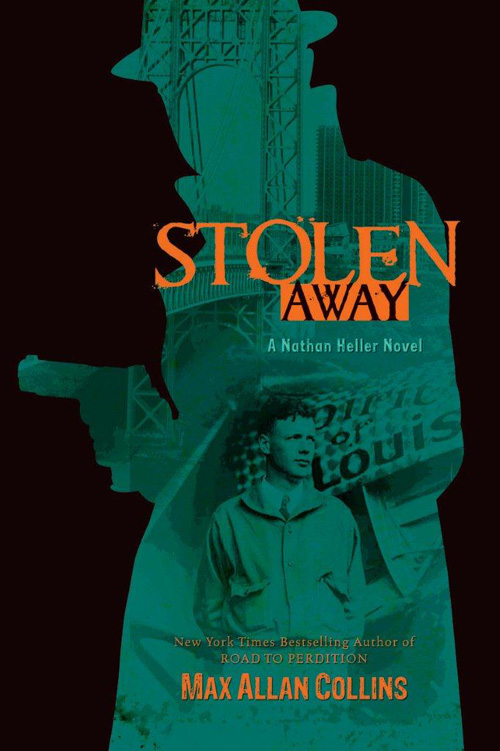
I myself find that Heller is rather daunting for me at this age. The breadth of research is staggering and the many chapters a challenge. In some ways I am a better writer now than I ever was. Mickey Spillane felt a writer should get better with age, because of being at it longer and gaining more experience in both art and life.

But in other ways I’m not the writer I was.

It isn’t just age. But the experience part Mickey mentioned applies to just being on the planet a while, and the fiction writing – like reading – depends on where you are in this string of seconds, minutes, days and years called time.

I recently re-watched The Verdict (1982) starring Paul Newman and written by David Mamet. I revisited it in part because I had been responsible in a way for the last motion picture this great film actor ever made, and had met – and been intimidated – by him. (I’ve written about that here before.)

But I am no fan of David Mamet. I find him mannered and pretty much despised his screenplay for The Untouchables. It has that great “Chicago way” speech of Sean Connery’s, but is a knuckle-headed and lazy take on Eliot Ness and Capone. I even turned down the novelization (stupidly, because it would have boosted sales of my Eliot Ness novels).

I had seen The Verdict when it came out and thought it good but overrated. Barb and I, pre-Covid lockdown, would go to at least one movie a week; and I sometimes went alone, too. So I find now, in my dotage, that I often remember nothing about a movie I saw twenty or thirty or more years ago except (a) that I saw it, and (b) remember my opinion of it.

The Verdict this time around seemed a near classic, a terrific courtroom drama and a fantastic character study from Paul Newman, who had a drinking problem in life that he explored in this particular performance. Fucking brilliant. And Mamet’s script didn’t strike me as mannered at all, and extremely well-constructed.

I am a different person going to the movies than I was years ago.

Right now I’m not going to theaters much at all, and doing considerable watching at home. You probably are the same. I’ve seen some stellar flicks in 2025 – Sinners, Weapons, One Battle After Another – and encountered some of the best TV ever, notably Slow Horses and the under-seen Chantal.

But I am also at odds with some things that a lot of people, smart people, really like – we walked out of the new Predator movie, and would have walked out on Guillermo del Toro’s Frankenstein if we weren’t home streaming it. In any case, we didn’t make it past an hour. We found it a precious thing, the kind of movie where you walk out humming the costumes.

Your mileage may vary, of course, but my point is that we see things at a specific point in time and who we are at that time – this obviously goes for books, too – impacts how we take things in. Barb and I – both of us big Breaking Bad and Better Call Saul fans – hated creator Vince Gilligan’s Pluribus. Son Nate liked it.

Nobody’s right, nobody’s wrong. Well, sometimes things are just plain bad, but you catch my drift. A novel or a film is the artist plus the someone taking in that novel or film. The reader’s mind, the viewer’s mind, is where the novel or film plays out. I often have said that sometimes my stuff plays on Broadway and sometimes at the Podunk Community Playhouse.

Of course some reviewers have considered my micro-budget Christmas movie Blue Christmas barely worthy of a community theater. But quite a few others have praised it and were able to meet it on its own modest but sincere terms.

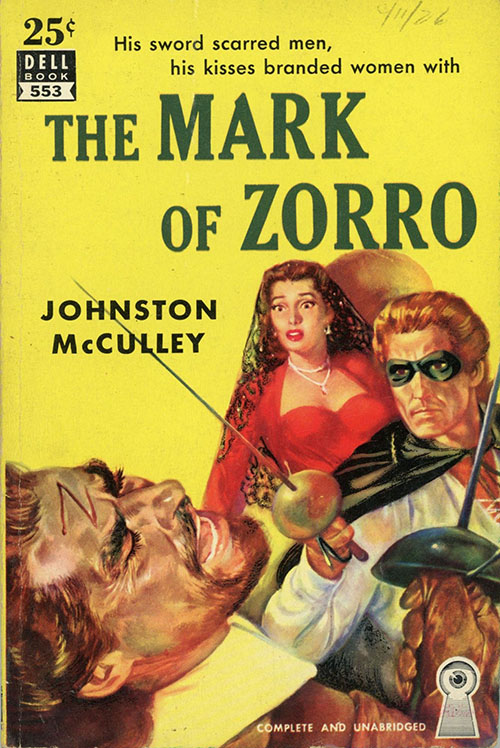
As for Heller not tripping a reader’s trigger where Quarry or Nolan or the Antiques mysteries do, I only hope it’s not the history aspect that puts such readers off. I admit that Heller was a way for me to combine my love of historical fiction with that of hardboiled mystery fiction. Do most of my readers even know who Samuel Shellabarger was? That his novels Captain from Castille and Prince of Foxes were my favorites at the same time I was inhaling Hammett, Chandler and Cain? Or that my favorite novels as an adolescent were The Three Musketeers and The Mark of Zorro? Or that Mickey Spillane’s faves were The Count of Monte Cristo and Prisoner of Zenda? (Shellabarger, by the way, was originally a mystery writer, under several pen names.)
But to readers who duck Heller because of the historical aspect, know this: the first intension is to write a classic private eye novel in the Hammett/Chandler/Spillane (Father, Son and Holy Ghost) vein. That is the goal and I think I’ve achieved it.

Interestingly, when I moved Heller to Hard Case Crime, editor/publisher Charles Ardai was pleased that The Big Bundle was based on a less-remembered crime than other books in the Heller series. He felt the HCC audience might be put off by the historical aspect.

What prompted this rambling missive to you, Dear Readers, is a particularly nice e-mail I received, and which I will share with you now, from Andrew Lewis – a fellow Iowan!

I hope this letter finds you well. I have been a fan of detective fiction since picking up The Hound of The Baskervilles at an elementary school book fare. Over time I’ve delved into Hammett and Chandler and even some of the better Batman comic books from the late 70s, but nothing has ever punched me in the face like the Mike Hammer novels.

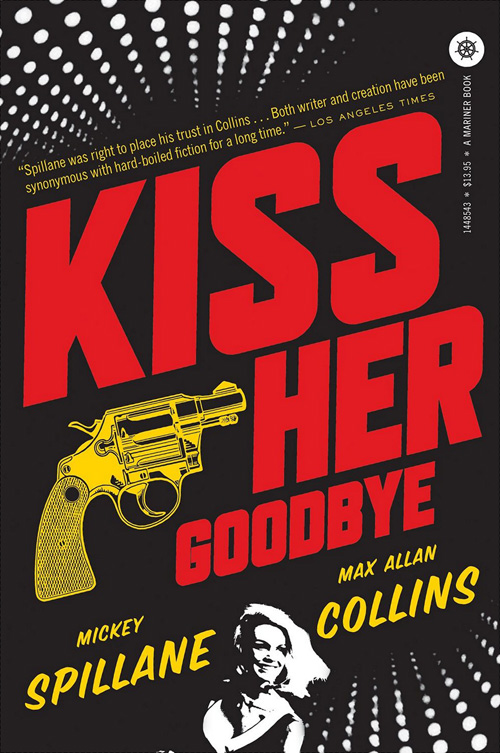
What Mickey Spillane does with storytelling is, in my mind, what Lou Reed did with song lyrics, say very profound things using the most simple language you can. I’m five chapters in to Kiss Her Goodbye which is, thus far, the 3rd Hammer novel I’ve read which you’ve completed. It’s hard to tell where Mickey stops and Max starts. It’s got some Black AlIey elements the same way Lady Go Die had some Twisted Thing elements, ideas set aside, forgotten, and reused. I’m all in.
I am confused about the timeline. Hammer indicates in the novel that he made it halfway through 12th grade before lying about his age to enlist in WWII. That would make him maybe 72 in 1996 when Black Alley is set. I understand that King of The Weeds is a sequel to that novel. Is there a set chronology or is it a suspension of disbelief where Hammer is always just as old as he needs to be for the story being told? My mind needs order, “foolish consistency” and all that.

I’ve recently picked up The Wrong Quarry and will be reading it after Kiss Her Goodbye. It’s my first journey into Quarry’s world, is it a good place to start? Thanks for taking the time to read this overly long note and for continuing the Spillane legacy.
Warmest regards,
Andrew Lewis
Council Bluffs, Ia

Here is the reply I sent to Andrew:

Thanks for your great e-mail.

With your permission I’d like to use it in this week’s Update/blog of mine, because you raise interesting questions that would be well answered in public.

Briefly, though, Mickey was very loose about continuity. Not as loose as, say, Rex Stout, who kept Archie Goodwin and Nero Wolfe frozen at the age at which we met them (their ages, not ours!). I have attempted to put together a continuity that doesn’t contradict Mickey, but that can only go so far. Do keep in mind Black Alley (my least favorite of Mickey’s Hammer novels) is his final Hammer novel, and King of the Weeds was a direct sequel he began as was Kiss Her Goodbye — he set aside King of the Weeds, intended to be the final Hammer, to write a 9/11 novel, The Goliath Bone. I finished both King and Bone and kept them in relative continuity not only with Black Alley but with the entire series. King of the Weeds, by the way, is in part meant to answers questions and fix inconsistencies in Black Alley. I liked to think (and this is outrageous I know) that I “fixed” Black Alley — that reading Alley and King back to back is an improved experience…the “part two” that Mickey began writing.

I always tried to set each story that I completed in time — specifically, when Mickey started (and set aside) those unfinished novels. I try to think about where Mickey was in his life, and get into his head space at that point. This means Lady Go Die is like an early Hammer, and King and Bone like later Hammers in tone and technique. Kiss Me Darling is another one that has that early feel. Kiss Her Goodbye is more mid-stream Mickey — he designed it to be Hammer’s return to the book market after a long quiet spell…but during that quiet spell, he kept starting (and stopping) various Hammer manuscripts.

I would recommend you read my biography of Mickey, co-written by James Traylor — Spillane — King Of Pulp Fiction. I include as part of a back-of-the-book bonus content a lengthy article about how I came to write the books and how I approached each of them.

Thanks again, Andrew! Let me add to that one thing: I am very fond of Black Alley (and not just because it’s dedicated to me). I grew to respect it more working with it in depth writing its sequel from Mick’s existing chapters. My disappointment with the book was the way he softened a banger ending that he shared with me in conversation, which I wound up using in slightly different form in another Hammer.

M.A.C.
Cutout Emerges and True Noir Begins

Tuesday, April 16th, 2024
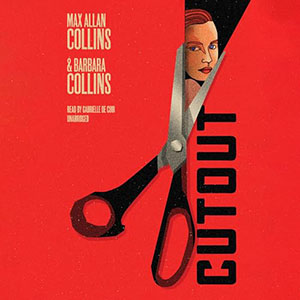
Cutout Audiobook Cover
Paperback:
E-Book:
Digital Audiobook:
Audio MP3 CD:

Today is publication date for Cutout, the new novella written by Barb and me. You should be able to order the print version from Amazon now (it includes some wonderful illustrations and should be a very nice physical book). Also available are the Kindle version and an audio version from Skyboat, who have done such a terrific job with the Quarry novels, the first two of three Fancy Anders titles, and more. The reader is Gabrielle de Cuir, who always does an excellent job. Barb and I have not heard it yet but are anxious to. Nor have we seen the print version and are anxious to.

I’ll interrupt myself to share with you this nice write-up from “Bits and Pieces” at Jerry’s House of Everything blog:

Max Allan Collins and Barbara Collins (or maybe Barbara Collins and Max Allan Collins), Cutout. Crime novella. “A young woman from the Midwest, recipient of an unexpected college scholarship, is recruited into a lucrative courier job that shuttles her from Manhattan to Washington, D.C. There’s a slight drawback: the previous two ‘cutouts’ died by violence.” Preordered; publication date is tomorrow 5/16. Also, Max Allan Collins Collection Volume 5: Twist in the Tale. E-Book compilation five books by Max Allan Collins and Barbara Collins: two novels (Reincarnal and Bombshell) and three short story collections (Murder — His and Hers, Suspense — His and Hers, and Too Many Tomcats and Other Feline Tales of Suspense). A superb bargain.

Thanks, Jerry!

The idea for Cutout was Barb’s and her draft was so good, working with it was a genuine pleasure. I think it represents our best work together, and really reflects her remarkable abilities as a storyteller and just flat-out good writer.

Neo-Text, who brought out the Fancy Anders novellas, is the publisher. They are in finally stages of prepping the third Fancy Anders, which will again have Fay Dalton illos. It’s my hope that the three Fancy Anders novellas (which interconnect) will be gathered into one novel with the Dalton art done full-color justice. And if the first two audios of Fancy Anders read by Gabrielle de Cuir (with music and sound effects) are any indication, Cutout should be very well-served on audio.

On a somewhat similar vein, the Kickstarter for the Nathan Heller fully-immersive audio dramas is about to go live. I have described this as a podcast series but that doesn’t do it justice. You’ll soon be able to get a sample of director Robert Meyer Burnett’s impressive handiwork with the proof-of-concept “pilot” I wrote, based on the opening of Stolen Away. Nate Heller is portrayed on that pilot by Todd Stashwick of Star Trek: Picard fame. That Todd is a Chicagoan and a former Second City cast member resonates extremely well with me.

We are beginning with the first Nathan Heller novel, True Detective, and I have delivered the first of ten scripts, which I am pleased to say got a rave review from director Burnett. I will admit it felt odd returning to a novel I wrote in 1981-1982 for 1983 publication, the book that I consider in many ways the real beginning of my career (meaning no offense to Nolan, Mallory or Dick Tracy). Since I am planning what will likely be the final Heller novel, The One-Way Ride, to be published by Hard Case Crime, the audio series seems somehow right to also be circling back to Nate Heller’s first recorded case, “The Assassination of Mayor Cermak.”

There’s an official Nate Heller/True Noir YouTube Channel with a pic of Rob Burnett, Todd Stashwick and the rest of the cast at the proof-of-concept pilot session.

* * *

Speaking of True Noir, Nate Heller and Rob Burnett, here’s a podcast interview with Rob that gets into True Noir and Heller, on John Suentes’ excellent Word Balloons.

The great Putnum Museum in Davenport, Iowa, is showing Road to Perdition on Sunday, May 19, at
2:30 p.m. in their Giant Screen Theater. I will be handling a Q and A session afterward. Details are right here.

Finally, the best ten performances on film of Tom Hanks are discussed here. Guess what #3 is?

M.A.C.

One-Stop Book Tour at Centuries & Sleuths – Plus Heller’s 40th

Tuesday, November 14th, 2023

Despite some further health-related adventures (more about that below), Barb and I are embarking on our final book tour – which is one stop at our favorite Chicago-area bookstore, Centuries and Sleuths, in Forest Park, Illinois.

The appearance is next Sunday, November 19, 2023, from 2 PM to 4 PM. It’s the only scheduled signing to support our new novels Too Many Bullets and Antiques Foe.

More info here.

Again, I am hoping you will (if you haven’t already) review Too Many Bullets, the new Nate Heller novel, at Amazon and/or Goodreads, Barnes & Noble, etc. We had something of a disaster (reported here in recent weeks) that led to all of the trades (Publisher’s Weekly, Kirkus, Library Journal, Booklist) failing to review the book. This costs us bookstore sales and library sales and could be the death knell for Nate Heller.

Hard Case Crime is doing its best to get the word out, tying the hardcover Too Many Bullets to the soon-to-be-published trade paperback of The Big Bundle. They have done a great job on a press release that I will share with you here.

* * *
BEST-SELLING TRUE-CRIME DETECTIVE NATHAN HELLER CELEBRATES 40 YEARS
GRAND MASTER MAX ALLAN COLLINS’ SIGNATURE PRIVATE EYE RETURNS IN TWO NEW BOOKS:
THE BIG BUNDLE and TOO MANY BULLETS

Best-selling and award-winning novelist Max Allan Collins, author of Road to Perdition (which inspired the Oscar-winning movie starring Tom Hanks, Paul Newman, Jude Law and Daniel Craig), is celebrating the 40th anniversary of his groundbreaking, million-copy-selling historical detective series about private eye Nathan Heller with the release of two new books: THE BIG BUNDLE (coming in paperback on December 12) and TOO MANY BULLETS (new in hardcover, available in stores now).

The Nathan Heller novels have sold more than 1 million copies since debuting 40 years ago with True Detective in 1983, and the series has won the Shamus Award twice, as well as the Private Eye Writers of America’s “Hammer” Award for lifetime contribution to the genre. In 2017, Collins was named a Grand Master by the Mystery Writers of America, the organization’s highest honor, one he shares with John Le Carre, Alfred Hitchcock, and Agatha Christie.

Each of the Heller novels investigates a headline-making true crime, with all the authenticity and detail of a definitive non-fiction account – but seen through the eyes of fictional private eye Nathan Heller. In THE BIG BUNDLE, Heller is brought in to help solve the notorious Greenlease kidnapping, involving the highest ransom ever paid in U.S. history. In TOO MANY BULLETS, Heller seeks the truth behind the assassination of presidential candidate Robert F. Kennedy.

Featuring appearances by real-world figures ranging from Kennedy and the reclusive Howard Hughes to sports celebrities and filmmakers of the 1960s, these novels immerse the reader in the last century with a powerful sense that you are there, witnessing the events that seized the world’s attention.

“The Heller novels tell the story of the 20th century through the eyes of a cynical, tough-minded detective who takes you on a tour of America’s darker side,” said Hard Case Crime editor Charles Ardai. “The series is a tremendous accomplishment, and we are thrilled to publish these new cases to celebrate its 40th anniversary.”

Both books’ covers feature new painted art by celebrated artist Paul Mann, whose work was recently seen on Quentin Tarantino’s Once Upon a Time in Hollywood.

About Max Allan Collins
Celebrating his 50th year as a mystery novelist, Max Allan Collins has reached the pinnacle of his field, receiving the highest lifetime-achievement honors from both the Mystery Writers of America and the Private Eye Writers of America. His books have been New York Times and USA Today bestsellers and adapted both to television (a Cinemax series based on his Quarry novels) and feature films (including the Academy Award-winning movie based on Collins’ graphic novel Road to Perdition). Collins is also a star in the field of comic books, having penned the adventures of Batman and Dick Tracy and created the longest-running private eye comic in history (Ms. Tree), and he was hand-picked by his friend and fellow MWA Grand Master Mickey Spillane to continue the legendary Mike Hammer novels after Spillane’s death. A native of Iowa (and a graduate of the prestigious Iowa Writers’ Workshop), Collins is also a screenwriter, a film director, and for more than five decades a professional touring rock-and-roll musician.

About Hard Case Crime
Called “the best new American publisher to appear in the last decade” by Neal Pollack in The Stranger, Hard Case Crime has been nominated for and/or won numerous honors since its inception including the Edgar, the Shamus, the Anthony, the Barry, the Ellery Queen, and the Spinetingler Award. The series’ books have been adapted for television and film, with a series based on Max Allan Collins’ Quarry novels airing on Cinemax and Haven, based on Stephen King’s novel The Colorado Kid, running for six seasons on SyFy. Hard Case Crime titles also include Stephen King’s #1 New York Times bestsellers Joyland and Later; James M. Cain’s lost final novel, The Cocktail Waitress; lost early novels by Michael Crichton (writing under the name “John Lange”) and Gore Vidal (writing as “Cameron Kay”); Are Snakes Necessary? by filmmaker Brian de Palma and former New York Times editor Susan Lehman; and Brainquake, the final work of writer/filmmaker Samuel Fuller. Hard Case Crime is published through a collaboration between Winterfall LLC and Titan Publishing Group. www.hardcasecrime.com

About Titan Publishing Group
Titan Publishing Group is an independently owned publishing company, established in 1981, comprising three divisions: Titan Books, Titan Magazines/Comics and Titan Merchandise. Titan Books is an established publisher of exceptional genre fiction in the Science Fiction, Fantasy, Horror and Mystery fields. Recent authors of Titan Books include Kareem Abdul Jabbar, V.E. Schwab, Mickey Spillane, Max Allan Collins, Alice Blanchard, Tim Lebbon, Sarah Pinborough, Andrew Cartmel, Chris Ould and many more. Titan Books also has an extensive line of media- and pop culture-related non-fiction, graphic novels, and art and music books. The company is based at offices in London, but operates worldwide, with sales and distribution in the U.S. and Canada being handled by Random House. www.titanbooks.com

THE BIG BUNDLE | Max Allan Collins | December 12, 2023 | Trade Paperback | 304 pp
ISBN: 978-1-78909-948-5; e-ISBN 978-1-78909-853-2
US $15.95; CAN $19.99; UK £8.99

TOO MANY BULLETS | Max Allan Collins | October 10, 2023 | Hardcover | 304 pp
ISBN: 978-1-78909-946-1; e-ISBN 978-1-78909-947-8
US $22.99; CAN $29.99; UK £16.99

* * *

For all the attention I’ve paid to Mickey Spillane’s anniversaries, I neglected to notice that Nate Heller’s 40th anniversary is…right now! True Detective was published in 1983, after all. I owe thanks to J. Kingston Pierce of the outstanding blog The Rap Sheet who pointed out Heller’s birthday to his clueless creator.

In fairness, I have been busy. In addition to directing my first indie movie since 2006 – the forthcoming Blue Christmas, currently being edited by Chad Bishop and me – I somehow managed to get myself back into a-fib despite having an ablation procedure. The doctor in charge of that got me back almost immediately in for a cardioversion (that’s when they jump-start you like an old Buick) and I am currently taking it easy, post-procedure, to be ready for next week’s Sunday signing in Forest Park.

This is liable to be our final signing in the Chicago area, so we hope readers/fans in that part of the world will come around to see us.

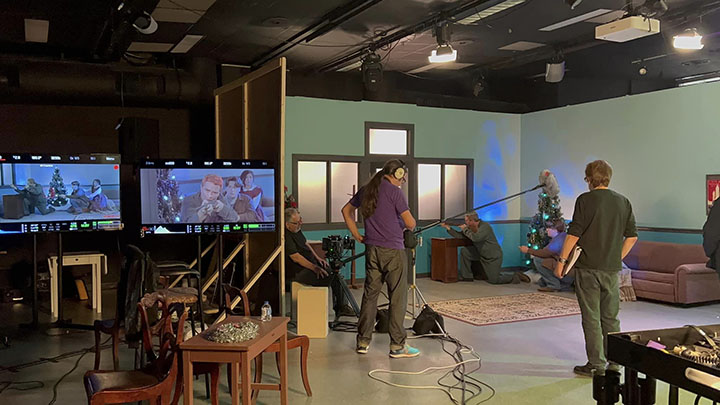
Here is a nifty pic from the set of Blue Christmas that has both me and my son Nate in it (he’s the one working the boom pole).

Blue Christmas behind the scenes
* * *

The great private eye site Thrilling Detective singles out Stolen Away as one of the Big Reads in the field.

Here’s a terrific Too Many Bullets review from Craig Zablo.

If you scroll down, you’ll see Ms. Tree get some love at the 13th Dimension site.

Also, Kino Lorber has a DVD and Blu-ray sale on noir titles that features the Assante I, the Jury and My Gun Is Quick for chump change. Check it out!

And watch Robert Meyer Burnett’s various YouTube shows for info about the Nate Heller dramatic podcasts that you can help get produced.

M.A.C.

Blue Christmas Is a Wrap!

Tuesday, October 31st, 2023

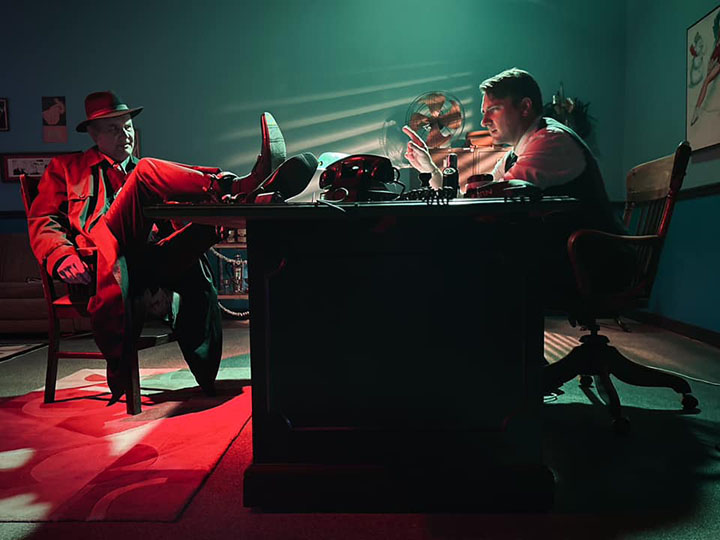
Jake Marley (Chris Causey) and Richard Stone (Rob Merritt) in the private eye’s office.

We completed production on Blue Christmas last evening, and will be picking up various things and stuff at Muscatine Community College (our gracious host) this afternoon. Before I discuss the shoot, let me provide some background, requesting patience from those of you who have heard this story before (perhaps more than once).

The day before Thanksgiving 1992, I was notified by mail in a letter from a particularly odious editor at Tribune Media Services that my services as writer of the Dick Tracy strip were no longer required. I had done the writing of the strip, taking over for creator Chester Gould, since late 1977 – a fifteen-year run plus a few months.

Actually, they had already picked up my contract by not notifying me into I was three months into the new contract period, which was an automatic pick-up. But when I called the gracious Robert Reed, the recently retired head of the TMS, he talked me out of suing the Trib. He had hired me, and he deplored the decision of the editor (who had not hired me), but reminded me how many lawyers the Trib had, and how costly it would be for me to fight a battle even in the right. Then he said something I will always appreciate him for.

“You don’t need to worry about your next job,” he said. “You’re Max Allan Collins.”

I had needed reminding on that point. My friend and future DC Comics editor, Mike Gold, had already told me, “You really should have moved on after ten years. It stopped serving your career at that point.”

Nonetheless, it was a blow. And the same day, my agent informed me that – just a few weeks after winning the Best Novel Shamus award for Stolen Away – my Nate Heller contract had been dropped by Bantam Books, who had screwed up the series by publishing the hardcover and trade edition simultaneously, and making my hardcover sales on that title look like shit in the computers.

So I had lost everything, career-wise – both Tracy and Heller. I scrambled and did a few short stories for my pals Ed Gorman and Marty Greenberg, God bless their memories, but mostly I was at a loss. Untethered. And as close to a writing block as I had ever got. Thanks to Ed and Marty I kept going. But other than those assignments (writing for their theme anthologies), I had hit the wall.

Then on Christmas Eve 1992, after the festivities were over (my family has always celebrated Christmas Eve, rather than Christmas Day), I had an idea and began to write. A Christmas Carol was one of my favorite stories, the Alistair Sim film of it in particular, and my favorite single detective novel was The Maltese Falcon. I had the stray thought that the two stories might be effectively combined, and began to type. I have no idea how long I worked – most of the night, as it was a single session – but the result was a fifty-page novella, “A Wreath for Marley.”

I am not by inclination a short story writer, but as soon as I’d finished it, I knew “Marley” was special. Maybe not to anybody else, but to me. And over the years it’s been in several anthologies and ultimately the lead story in a holiday-themed collection of my shorter stories, Blue Christmas (available from Wolfpack in the collection’s most current incarnation).

The writing of “Marley” ended my creative logjam. Soon I had sold Carnal Hours, one of the best Heller novels, to Dutton in a multiple-book contract; and – on the fly, at WonderCon – sold the idea of Road to Perdition to a DC editor who wondered if I might be interested in writing a noir graphic novel. Mike Gold and Robert Reed had been right – losing Dick Tracy was like Dean Martin breaking up with Jerry Lewis – teaming with Jerry was the best thing that ever happened to Dino (Martin said) and the next best thing had been breaking up with Jerry.

Another result of losing the Tracy strip was finally pursuing my interest in filmmaking. In 1994 I wrote The Expert in Hollywood for director William Lustig, and wrote and directed Mommy here in Iowa. The latter feature – in which Patty McCormack portrayed a grown-up variation on her famous evil kid role in The Bad Seed – became a video store hit and sold to Lifetime as a movie of the week. Its success led to my scripting a feature film version of “A Wreath for Marley,” which I called Blue Christmas. We were in pre-production of that project when the success of Mommy made it necessary to follow up with a sequel, Mommy’s Day, causing us to temporarily shelve Blue Christmas. The thought was to do it next.

That did not happen. While Mommy’s Day was also a video store hit, we did not get a cable TV sale, and then my producer – only my best friend from high school days and the best man at Barb and my wedding – stole our money. I was never able to mount a full-throated production again. Our budgets of half a million and a quarter million for Mommy 1 and 2 respectively were never to be repeated.

I managed to stay active in indie filmmaking for another decade. I served three terms as president of the Iowa Motion Picture Association. I was able to get funded for two documentaries (Mike Hammer’s Mickey Spillane and Caveman: V.T. Hamlin and Alley Oop) and did three short films with my Mommy director of photography, Phil Dingeldein. Phil and I mounted Real Time: Siege at Lucas Street Market for around $10,000 (shooting mostly on security cameras) and had a similar budget (thanks to a Humanities Iowa grant) with Eliot Ness: An Untouchable Life. I wrote numerous screenplays and sold a few, including some that were never produced, with a short Quarry film, “A Matter of Principal” leading to the feature The Last Lullaby, which I co-wrote.

Then, of course, there was Road to Perdition with its big-name cast and Academy Award nominations and so on, which led to Phil and me trying to get the sequel, Road to Purgatory, off the ground. Much time was spent on that and we came heart-breakingly close several times. While various screenwriting projects continued (and still do), gradually I came to accept that my film directing days were over.

I did not consider this a tragedy as my fiction writing was trucking along. A Quarry TV series was produced by HBO for their Cinemax network and I was able to do a couple of scripts for it (one for the never-produced second season). Filmmaking was a part of my credentials and that was nice but nothing I was actively pursuing any longer.

Then last year I co-produced the “Mike Hammer” Golden Age Radio-style play, Encore for Murder, originally an audio full-cast production with Stacy Keach. I had done the play twice before (in Owensboro, Kentucky, and Clearwater, Florida) with Gary Sandy as Hammer. Gary and I were friends going back to his co-starring role in Mommy’s Day. This latest Encore production was a fundraiser for the local art center/museum, and Gary generously donated his time.

The play came together so well that literally a few days before its single performance, I called Phil Dingeldein and asked, “Do you want to make a movie this weekend?”

As some of you already know, Phil came down and he and Chad Bishop (who was the on-stage foley guy in the play) pooled their resources to shoot two dress rehearsals and our one performance. Then Chad and I spent a month or so editing the footage into a movie of sorts – or maybe it’s a television program, hard to say exactly what animal it is.

At any rate, the result, like the performance itself, was surprisingly good. Phil and I were already mounting an expanded version of the Spillane documentary as a 75th anniversary (of Mike Hammer) release for VCI. We showed Encore for Murder to Bob Blair, the president of VCI, pitching it as a Blu-ray bonus feature for the expanded documentary. Bob not only snatched it right up for that purpose, he planned a release on DVD of Encore itself. Both will be out well before year’s end.

So my filmmaking juices were flowing again. I proposed to Chad Bishop that we mount a follow-up Golden Age radio-style production of Blue Christmas. This morphed into a stage play that I planned to shoot much as we had Encore, only with more elaborate pre-production.

Finally I decided just to shoot it as a movie.

The script needed to be reworked from one that had half a dozen locations to one location in which all the the Scrooge-like visions take place in the private eye hero’s office – a single realistic set that would serve surrealistic purposes.

Phil came on board, taking a week’s vacation to shoot it (with his sometime accomplice, the talented and skilled Liz Toal), meaning we had to mount the principal photography in a single week. I approached Muscatine Community College about using their black box theater as, essentially, a film sound stage for the week-long shoot, and they got on board.

We had been led to believe we had a good shot at a Greenlight Iowa grant for $50,000, which would have been tight but sufficient. We mounted an Indie Go Go campaign to raise supplemental funding and reached our $7000 goal. But the grant did not come to us – although frankly we were never contacted about that after jumping through many an official hoop (never even informed we weren’t getting it, which stalled us while we waited for news that never arrived).

So finally we built upon the Indie Go Go money, took our own payment completely out of the budget (Chad, Phil and me), and got one $5000 investor and a few more donations, coming up with a princely $14,000 to produce the equivalent of a $300,000 to $500,000 indie. This was a big part of planning to do the film in (choke) six days.

For a long time, Gary Sandy was going to play Marley, but other commitments and a reluctance to work during the actor’s strike (although our micro-budgeted production was not a target of the strike) caused Gary to drop out a few weeks before shooting began. That left us with a cast consisting of talent from the Quad Cities, Cedar Rapids and Muscatine, with almost everyone from Encore for Murder back again.

So how did the shoot go?

The professionalism of Phil and Liz was a breathtaking thing to watch. Chad Bishop wore more hats than Barthlomew Cubbins – lighting, audio, producer, actor. I had caught Covid about a month out and got cleared to work weeks before the production would begin; so I was tired and exhausted going in…but that didn’t stop me. I would say I got my stride back by the second or at the latest third day.


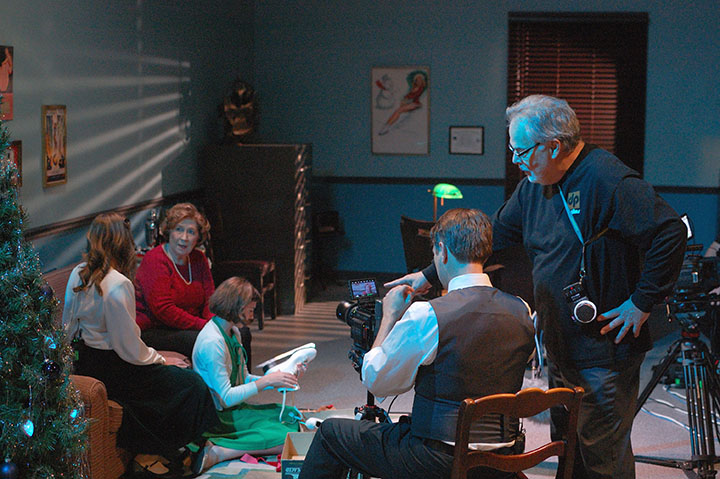
Barb and Max on set at Blue Christmas.

Our set was a thing of beauty thanks to Bill Turner, a veteran of local theater; and Bill took on a role in the production as well, doing a fine job. Our lead was the remarkable Rob Merritt from Cedar Rapids, who has many movie roles under his belt and held up under the burden of being in virtually every scene. Among his co-stars was national celebrity Alisabeth Von Presley, who looks like something out of a Russ Meyer dream and performed like a dream, period. The entire cast did stellar work, including Encore veterans Chris Causey, Rene Mauck, Cassidy Probasco, Brian Linderman, Keith Porter, Judy Wilson, and Evan Maynard. Tommy Ratkiewicz-Stierwalt, Chase Bishop, Kim Furness, Dave Juehring, Tracy Pelzer-Timm and Scot Gehre, among others, were also in a very talented cast of twenty-four. Corey Ruby did the special effects, and my old Seduction of the Innocent pal Chris Christensen has signed on to do the score.


Director of Photography Phil Dingeldein gets a role…

…and lead actor Rob Merritt films a scene.

We worked long days – seven a.m. till at least seven p.m. On all but one day, I went home on the lunch hour and took a nap. The production was both brutal and rewarding, and it’s doubtful I’ll ever be foolish enough to put myself through something like this again…although I’m glad to have done this one last time.


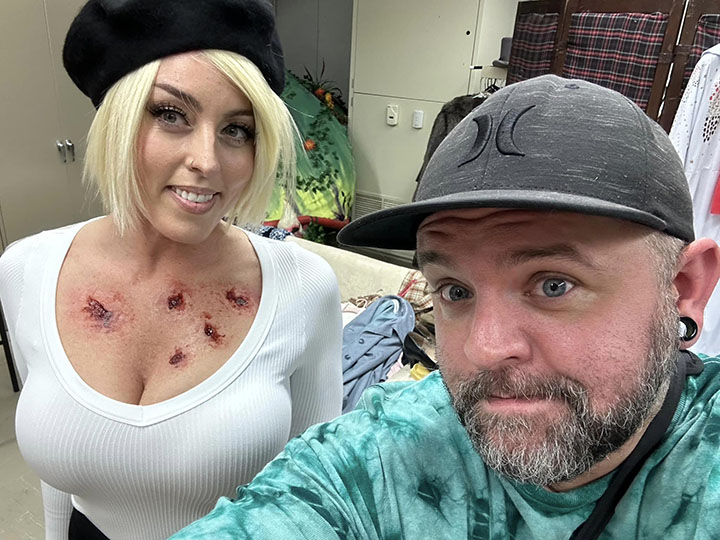
Special effects man Corey Ruby takes pride in applying bullet holes to lovely Alisabeth Von Presley.

Barb had sworn not to be part of this crazy effort, but she was right there with me on the first day and thereafter. She ran craft services and did so very much more. Nathan Collins and Matt Clemens were there every day running security (MCC was in session). Nate did everything from man a boom pole to shoot footage on a high-end camera.

Of course, we’re not finished. Chad and I (and Chad’s cohort Jeremy Ferguson) will be shooting Second Unit material, chiefly establishing shots (once the snow starts to fall here). And right away we will begin editing, a process I enjoy a great deal.

I will report here as we move forward, but I can say that at long last, the promise of Blue Christmas is being fulfilled. If we’re not the best goddamn fourteen-thousand dollar movie ever made, I defy you to show me one that is.

* * *

Despite some stellar reviews on Amazon, Too Many Bullets remains mostly ignored by critics elsewhere. As I mentioned previously, none of the trades – Publisher’s Weekly, Kirkus, Library Journal or Booklist – had reviewed it.

I am going to get the book into some reviewers’ hands, but in the meantime, if you’ve read and enjoyed the novel, please review it at Amazon, Barnes and Noble, Goodreads and elsewhere, and if you have your own blog, talk it up there.

There have been a few notices, like this one.

And this.

M.A.C.