Posts Tagged ‘Giveaways’

New Mike Hammer Book Giveaway & Encore For Murder

Tuesday, September 20th, 2022
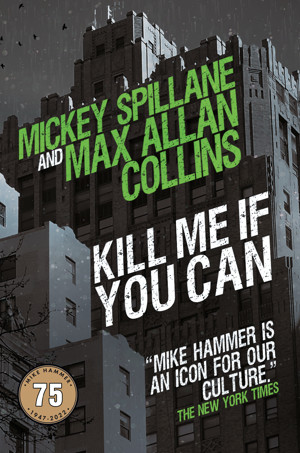
Kill Me If You Can cover
Hardcover: Target Purchase Link
E-Book: Google Play Kobo
Digital Audiobook: Google Play Audiobook Store
Audiobook MP3 CD:
Audiobook CD:

As our celebration of 75 years of Mike Hammer rolls on, the new Hammer novel, Kill Me If You Can, is about to be published by Titan today (September 20).

We have ten copies of the book for the first ten who write me in exchange for a review on Amazon and/or Barnes & Noble and other review-friendly sites. Kill Me If You Can comes chronologically after Velda’s disappearance and charts (among much else) Hammer’s descent into depression and the bottle…and yet it’s a rousing good time! I promise. As a bonus I have included five short stories (two of them Hammer tales, significant additions to the canon) taking place in the “Hammer-verse.”

[All copies have been claimed. Thank you for your support! –Nate]

* * *

I’m involved in many things to celebrate this 75th anniversary of the publication of the novel I, the Jury (1947), including this December the ClassicFlix release of the film I, the Jury (1953), with a 4K Disc as well as a regular and a 3-D Blu-ray. I’ve done a commentary for the film and also included a remaster of the Brian Keith/Blake Edwards 1954 Mike Hammer pilot film (with an on-camera wraparound). Wolfpack has already published The Menace by Mickey and me (a novelization of an unproduced horror screenplay), a collection of his three Young Adult adventure novels, including the previously unpublished title yarn, The Shrinking Island; and a terrific anthology of novelettes and short stories, Stand Up and Die!, which includes a Spillane/Collins “Hammer” story.

Still to come are an expanded, updated version of my 1999 documentary, Mike Hammer’s Mickey Spillane and the definitive biography, Spillane – King of Pulp Fiction by Jim Traylor and me coming out from Mysterious Press in January 2023.

The most quirky and (for me at least) particularly fun iteration of the Hammer celebration has been the local (Muscatine, Iowa) presentation of my Hammer play (from a one-page Spillane synopsis), Encore for Murder. We presented the one-time only performance on Saturday, September 17.

A generous array of photos accompany this update, and I will share some thoughts and memories about it. However, first I’ll mention that we recorded the production and will, at the least, be excerpting scenes (and a few cast interviews) from it in the expanded Spillane documentary.
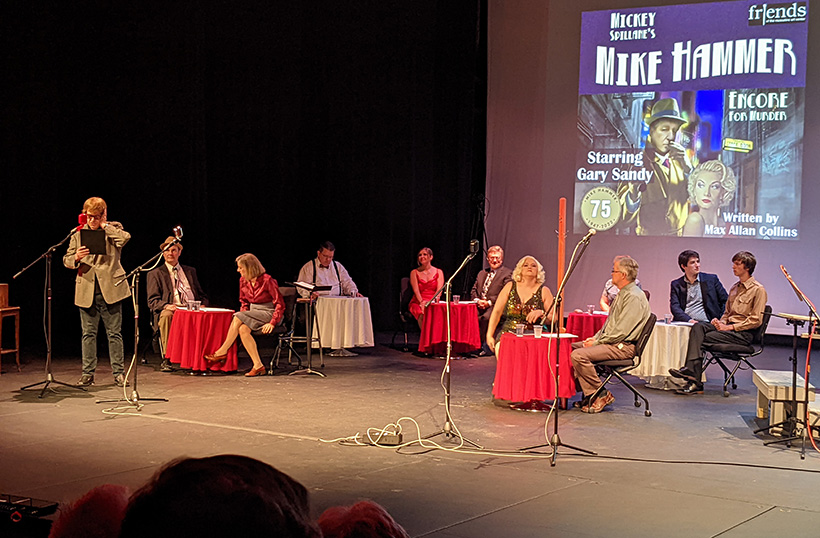
Noted radio announcer Max Allan Collins introduces the play.

It began with a phone call from local theater maven Karen Cooney, who wanted to mount a play in the style of an old radio show as a fund-raiser for the local Art Center. She thought doing a Dick Tracy radio show would be fun and I, of course, was the logical person to provide the script and participate generally. I turned her down flat, saying I had no interest in promoting Dick Tracy, a property I was fired off of in 1993.

A few days later I called Karen back and said, “However – I have an existing Mike Hammer script in the radio style that you could use.” I explained that this was the 75th anniversary of Mike Hammer’s debut and I was looking for ways to promote that – particularly fun ways.

I told her that Gary Sandy of WKRP in Cincinnati fame had played Hammer in this play, Encore for Murder, at a mystery festival in Owensboro, Kentucky, in 2012, and again in 2018 at the prestigious Ruth Ekherd Hall in Clearwater, Florida. Gary’s involvement, and mine, grew out of his co-starring with Patty McCormack in my indie feature, Mommy’s Day.

Encore for Murder was originally recorded in 2011 for Blackstone Audio (in a longer version) by the great Stacy Keach and a full cast including Mike Cornelison and Tim Kazurinsky.
Rene Mauck as Velda with Gary Sandy as Mike.

Initially for this local presentation, I was going to read Hammer, and the production would be much like the Owensboro one, which was strictly actors at microphones with a sound-effects table in the orchestra pit. Karen wondered if Gary Sandy might consider coming to Muscatine to appear in our production. Somewhat reluctantly, not wanting to put a friend on the spot, I agreed to ask Gary and find out what it might cost to bring him in, because that would be a fund-raising effort unto itself.

I thought getting Gary to do this was a very long shot, but he not only immediately said yes, he refused any compensation (beyond expenses and lodging, which I insisted upon). This began to get me thinking about the more hybrid presentation we’d done in Clearwater, with costumes and more stage action, as well as a giant screen with scene-setting slides and musical cues, and a foley table right on stage to invoke the feel for a studio audience in the days of Golden Age radio.

Still, with a local amateur cast, I didn’t want to get carried away.

My role was co-director, basically letting co-director Cooney cast it (she knew local dramatic talent and I didn’t) and get the play on its feet. When Gary arrived, I would step in and fine-tune. When I went to the first table read of the script, I was pleasantly surprised by the level of the cast.

I went home and said to Barb, who was keeping her distance from this project, “Am I crazy, or could this cast actually be pretty good?” Her answers were “Yes…and maybe.” I begged her to go the second table read and give me her opinion. I read Hammer myself. Afterward, Barb said, “Yes, they’re good.”

From then on I went to all the rehearsals and read the Hammer role, to give the cast a sense of pace and tone. Karen wanted a table read with Gary on the phone, a conference call. Again, somewhat reluctantly as I hated to impose on him, I asked….and Gary wound up doing two table reads.

Gary Sandy does not do anything half-way.

We rehearsed initially in a small black-box theater at Muscatine Community College (where Barb and I had gone in 1966 – 1968, and I taught from 1972 – 1977). We were not able to get into the rather impressive Muscatine High School auditorium until the Tuesday before the Saturday show. Five days to mount and perform it.

Oh…kay….

Gary was coming in Wednesday, traveling during that day, and might stop by and say hi to the cast (all our rehearsals began at 6 p.m. as the school was using the theater till then – we would have to strike the set every time). We’d only have him Thursday and Friday before the Saturday performance. Making this truly problematic was our foley artist, Chad Bishop – studio manager of Muscatine Access Channel Nine – would be controlling the live action sound effects and the prerecorded ones too, as well as the audio mix and musical cues…all from on stage!

(I provided the Stan Purdy music from Mickey’s 1954 Mickey Spillane’s Mike Hammer Story LP, and from Chris Christensen’s score for the 1999 documentary.)

The pre-recorded sound-effect cues included things like tire squeals, crashing glass through a skylight, and a plethora of gun shots. Gary would have to conform to these prerecorded cues or unintentional hilarity would ensue.
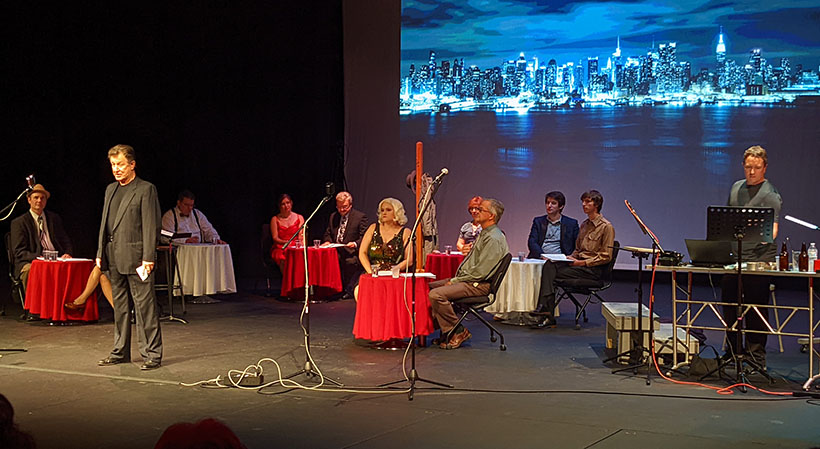
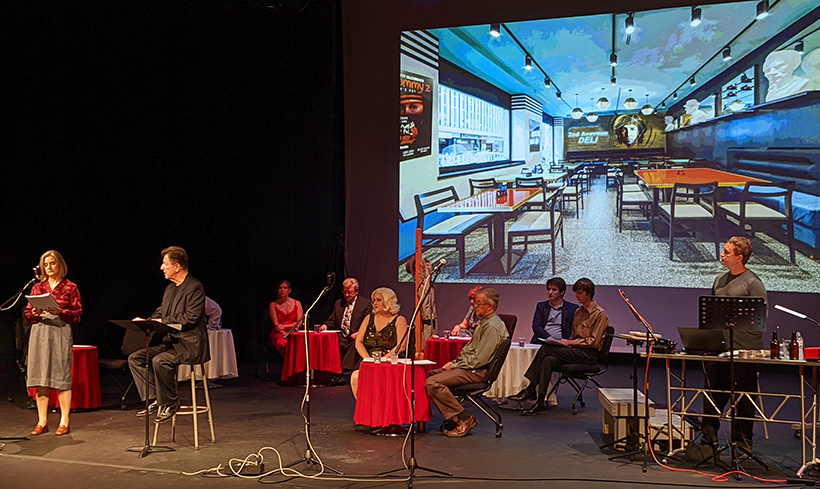
Gary Sandy as Mike Hammer. Foley artist Chad Bishop at right, the full cast on stage throughout.

So I got very involved in the directing that first Tuesday night in the real theater space. I was on stage talking to Chad about his foley work and the difficulties they created, when I turned and found myself nose to nose with a grinning Gary Sandy.

After a six-hour drive, the unannounced Gary stepped right in and we ran the full first act, sound effects and music cues and all. The next night we ran the second act the same way. Much of this had to do with Gary coordinating with Chad. But it was thrilling, really was, to see this already very good cast get pulled up at least a notch by Gary’s performance level. I was already impressed by the way every single cast member took direction – because my experience is in features, I work on tweaks not broad strokes, and you might think local talent would have difficulty with nuance. In this case, at least, you’d be wrong.

Gary was not happy with the fedoras we had for him, and neither was I. I decided to try something very special. I have one of Mickey’s Miller Lite-era porkpie Stetsons that his wife Jane gave me – in a hat box with Mickey’s own writing on it. Gary’s mouth dropped open when I presented it to him in his dressing room and said, “If this fits, it’s yours…until after the performance.” Each time he wore it at rehearsal, he returned it to me in the hat box and I brought it again the next day. He only wears it at the open and close of the show…but for the play’s final lines, when he steps out very close to the audience, he looked amazingly like Mickey.
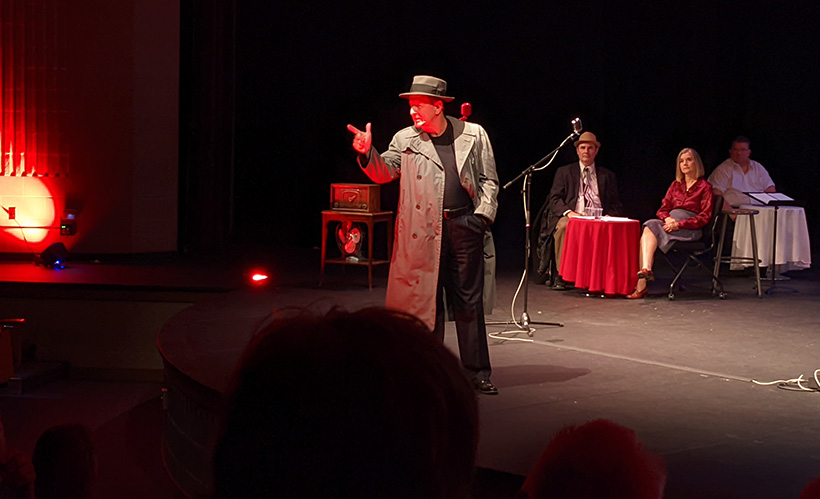
Mike Hammer (Gary Sandy) about to make his exit.

We had two dress rehearsals – Friday night and Saturday afternoon, with only a couple of hours between dress and the Saturday night performance. These were intense and I was tweaking the cast performances and my script throughout it all – some changes were made after the final dress rehearsal!

That dress rehearsal had gone well but not flawlessly, and I left wondering whether this was going to be a bullet train or just a train wreck. I was also concerned because we were up against a televised University of Iowa football game. I knew, from playing band jobs on such nights, audience size would be negatively impacted.

But the turnout was very good – three-hundred souls when we’d been under two hundred on advance sales. The silver lining was a V.I.P. After Party, meet-and-greet/Q and A at the great Merrill Hotel, which had sold out at fifty bucks a pop.

My longtime film/video collaborator Phil Dingeldein joined with Chad and his assistant Jeremy Ferguson in positioning stationary cameras around unobtrusively. Phil shot the dress rehearsals (often roving) and the live performance. He had not been to any of the other rehearsals and he, like Barb, was surprised by the cast and the level of this local production, done under tight, unforgiving circumstances, not to mention a nonexistent budget.

The audience loved it, laughing in the right places, drawing in breath at the tough action – our record was a standing ovation, or I should say Gary and the cast (including hilarious on-stage foley artist Chad Bishop) received a standing ovation.

Where do we go from here? I know we obtained footage that will give us some interesting new moments for the expanded documentary. Having Gary and his Velda (Rene Mauck) and Pat Chambers (Chris Causey) talking about playing these iconic roles alone is a big plus.

Phil, Chad and I will edit the performance together and then there will be hard thinking to do. On the positive side, we have a lot of footage, or “coverage” as we say in the feature film game. I would love to share Gary’s charismatic performance as Hammer, as to date he’s the only actor to perform as the character in a stage play; his take in Encore is amusing without being campy, able to spoof one moment and slide into genuine tough-guy menace the next. One thing I’m considering, if Gary gives his blessing, is including it as a bonus feature on the Blu-ray of the expanded Spillane documentary.

Obviously we have to see how well it comes together as a video presentation (it’s high-def and I already know Phil shot it well). Perhaps if people understand the context, and the small miracle of this local production (Muscatine is a town of 24,000 after all), they will find the experience entertaining and even worthwhile…particularly with a pro like Gary Sandy at its center.
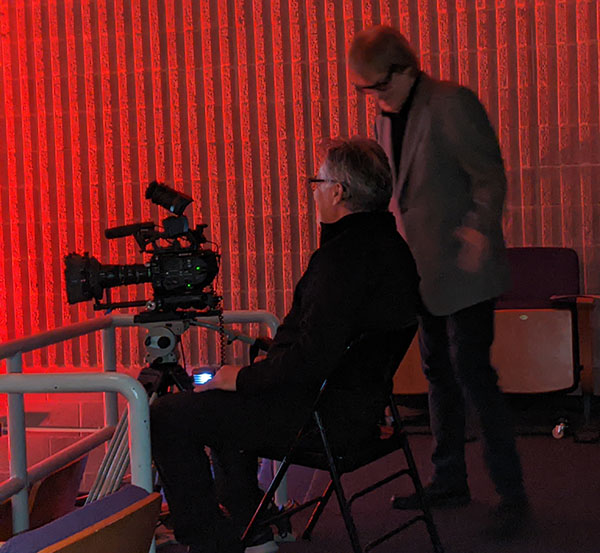
Phil Dingeledin on the camera at ENCORE FOR MURDER, with Max looking on.

But can we, as filmmakers, capture the excitement and enjoyment of those in the theater that night?

Stay, as they say, tuned.

M.A.C.
* * *
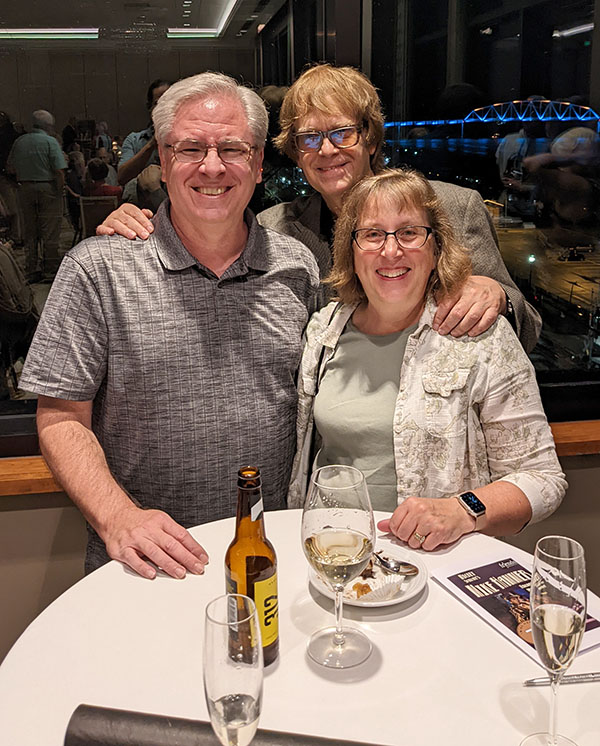
Fans who made the trip to Muscatine for ENCORE FOR MURDER: Mike and Jackie White.
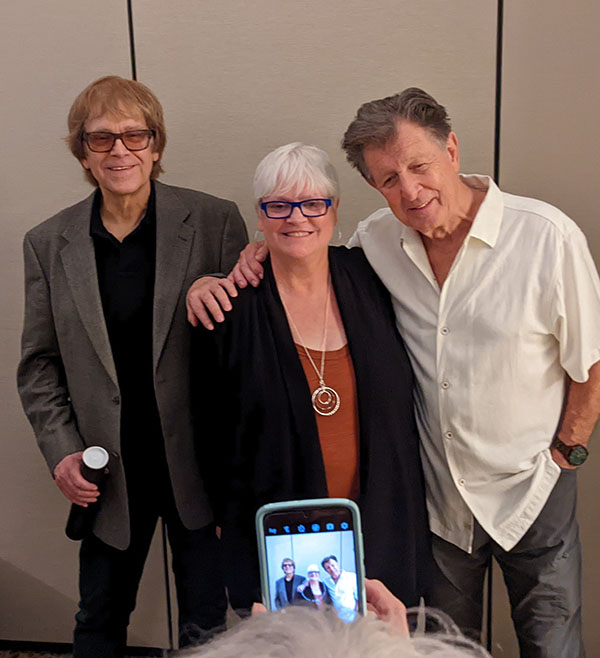
Max, co-director Karen Cooney, and Gary Sandy at the V.I.P. after party.
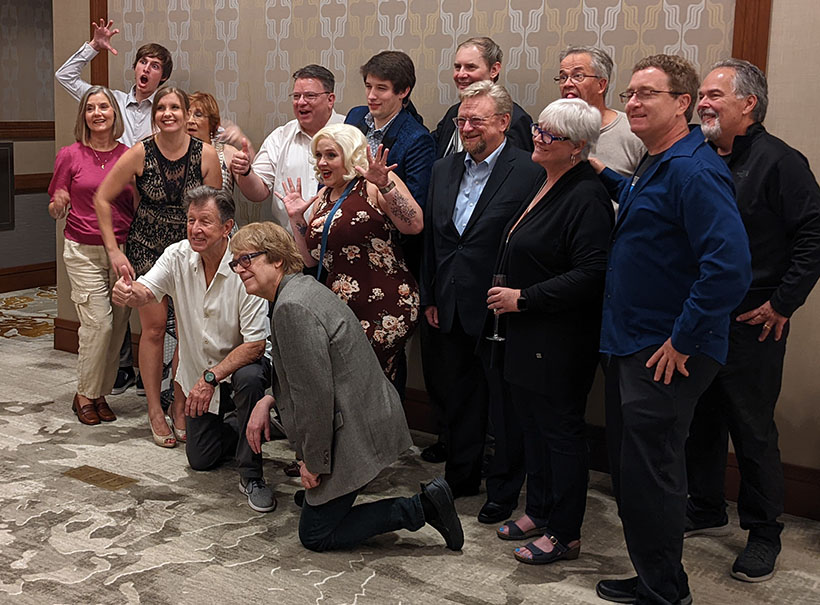
The cast of ENCORE FOR MURDER hams it up at the after party.
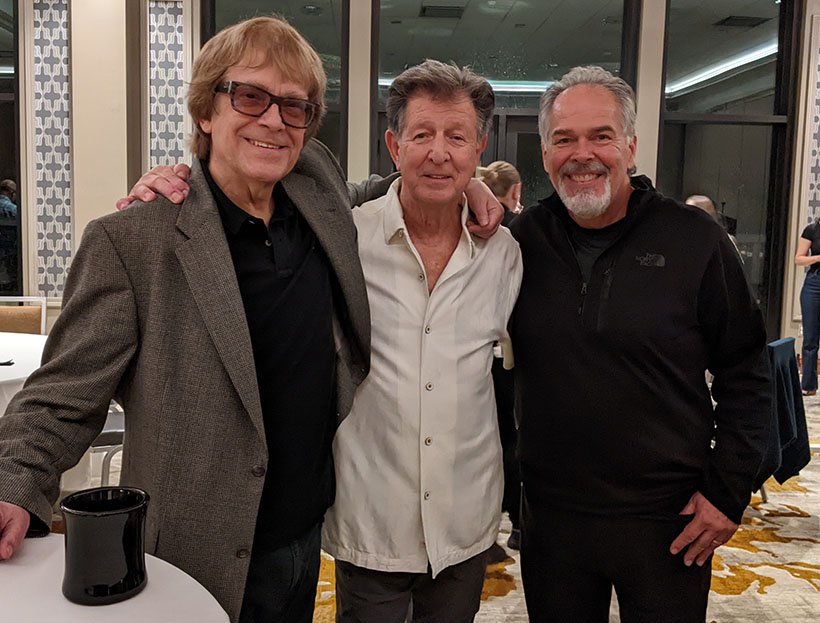
Max, Gary and filmmaker Phil Dingeldein at the after party.
Menace & Shrinking Island Giveaway…And Robert Morse

Tuesday, April 26th, 2022

The publication date of The Menace by Mickey Spillane and myself (from Wolfpack’s Rough Edges Press) is August 27 (Wednesday of this week, as I write). To jump-start some reviews of this and of The Shrinking Island (the collection of Mickey three YA adventure novels), I am announcing right now a book giveaway. Winners agree to write an Amazon review; other reviews are also encouraged.

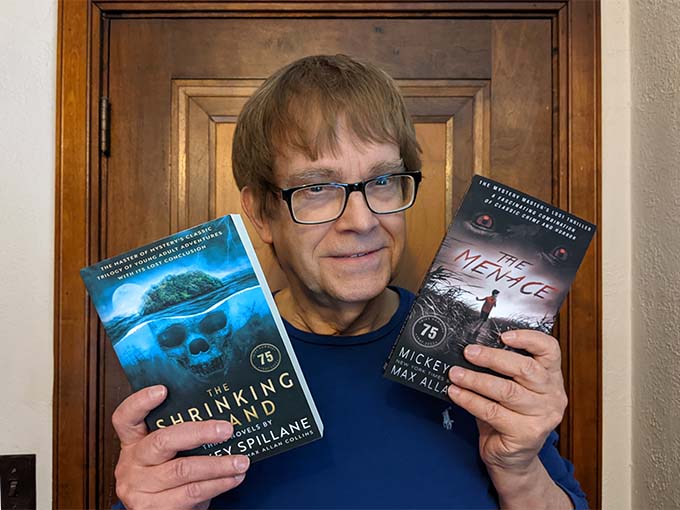
M.A.C. holding copies of The Menace and The Shrinking Island

I have five copies of The Menace and five copies of The Shrinking Island for the first ten who request a book by writing me at macphilms@hotmail.com. Tell me which book you prefer, but if your choice is gone, the other will be sent. You must include your snail mail address, even if you’re entered before. These will go fast.

As usual, USA only.

The Menace is a special book. It is unusual in several respects. The Mike Hammer novels under the Spillane/Collins byline reflect me finishing books of Mickey’s in progress or put aside at the time of his death in 2006, or novels developed from synopses he left behind. I’ve also done from partial Spillane manuscripts two non-Hammer novels – The Consummata (with Morgan the Raider from The Delta Factor) and a standalone (Dead Street), with a very Hammer-like protagonist.

The Menace was developed from an unproduced screenplay in the Spillane files. It was apparently written shortly before or around the time he and I became friends in 1981, and he spoke to me of it frequently. He seemed to have an independent production in mind; he was friendly with South Carolina indie producer, Earl Owensby, who had his own studio, and the two had explored doing projects together. Nothing came of it, but The Menace indicates something might have.

But the screenplay was short – around 40 pages – and seems either to be a condensed version designed to attract investors or a version that could have been a pilot for a one-hour anthology series, probably with Mickey hosting. (In the forthcoming Mysterious Press biography by Jim Traylor and me, Spillane: King of Pulp Fiction, we explore Mickey’s efforts to put a mystery/crime anthology on the air with himself as the on-camera Rod Serling or Alfred Hitchcock).

What is particularly interesting about The Menace is the genre – while one foot is in a crime/mystery story, the other is in horror. Elements of horror were a part of Spillane’s novels from the beginning – he brought the horrors of graphic violence to his post-war crime fiction – the endings of Kiss Me, Deadly and My Gun Is Quick come to mind – and flirted with horror themes in The Twisted Thing and his last Hammer-in-progress, The Goliath Bone.

But The Menace is specifically Mickey reacting to the success of Stephen King. I go into this in my intro to The Menace, and will only say here that it was a Spillane reaction to King’s enormous success as a writer who became a media star and who carved out his own new niche in popular fiction. It’s fair to say that King has been imitated in much the same way Mickey was in his heyday.

Spillane did not, however, like the supernatural aspect of King and that other huge success, The Exorcist (book and film). As a Jehovah’s Witness, he took demons and the devil very seriously and did not consider them appropriate subject matter for fiction. He didn’t cry out for censorship, and in fact called King “a great writer”; but that type of horror was not for him.

The novel I’ve fashioned from his compact screenplay is unusual in its crime/mystery aspect having no Mike Hammer substitute at its center, though a tough small-town police chief is one of the two protagonists. The story is about a family where the husband (a self-made-man doctor) and wife (an artist from a wealthy family) have been driven apart by their disagreement over how to raise their ten-year-old “special needs” son. During much of the action, the estranged couple and their boy are in a big old spooky house, the grounds behind walls, which becomes the setting for a siege of sorts involving an Aztec mummy who may or may not still be breathing and a creature who may or may not be human. And at its heart is the story of a family coming back together in adversity.

Not typical Spillane elements, but typically compelling Spillane storytelling. Like the adventure stories he wrote in his last decade – The Shrinking Island, Something’s Down There and The Last Stand – The Menace indicates an author trying to break away from Mike Hammer and flex other storytelling muscles.

I am very proud of the book and think it shows a whole other side to Mickey Spillane. It’s a relatively short novel – 40,000-words – but we have included as a bonus the original, previously unpublished version of the short story “The Duke Alexander” and a rare non-fiction crime story by Mickey, “The Too-Careful Killer,” unseen since 1952.

* * *

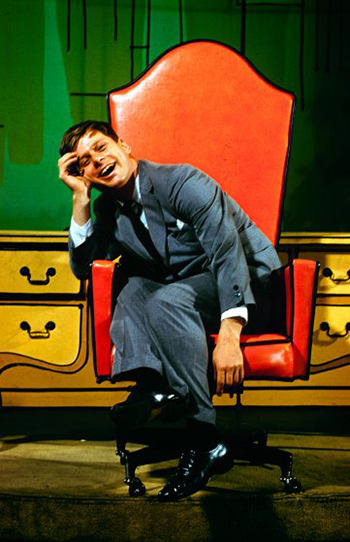
Yet another of my heroes has left the planet. As if losing Norm Macdonald and Gilbert Gottfried weren’t enough, a selfish God has taken Robert Morse away. Granted, Bobby Morse had a 90 year-run, and I admit when Barb and I screened How to Succeed in Business Without Really Trying in his honor over the weekend, we could not mourn. We could only get caught up again in the joy of experiencing the magical, shamelessly mugging musical comedy performance that is Robert Morse playing J. Pierpont Finch.

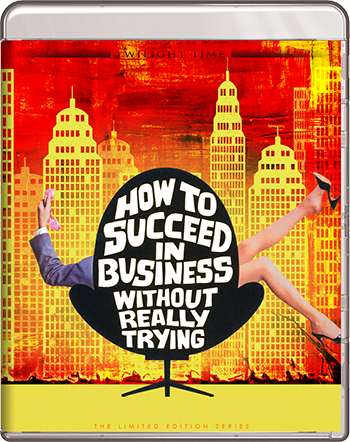
I started thinking about what I was going to say about How to Succeed and Morse, but thought I should check on what I’d said on the subject in this space before. And I discovered that in a post in 2017, I had already said the things that my mind was putting together for me to share now. So I’m going to do something I don’t believe I ever have here – I am going to rerun my response to seeing the Twilight Time Blu-ray edition of How to Success in Business Without Really Trying.

* * *
As you may have gathered, if you’ve stopped by here at all frequently, I am a collector of movies on Blu-ray and DVD. Many of my favorite films have made it onto Blu-ray, like Kiss Me Deadly and Gun Crazy (though I had to get that from Germany). And a fairly short list of my favorites remain on DVD only, like the Chinatown sequel, The Two Jakes, and the great film version of the Broadway musical, Li’l Abner.

One of my favorites, poorly represented with a terrible transfer on DVD, has finally made it to Blu-ray, in a limited edition of 3000, from Twilight Time, the boutique label that has brought us any number of terrific films, from The Big Heat to the Hammer Hound of the Baskervilles, from a Sinatra Tony Rome double feature to Pretty Poison.

But this time – and my birthday month yet – they have given me (and Barb and for that matter son Nate, who also loves it) a film I could watch once a week – How to Succeed in Business Without Really Trying.

There are those who can find reasons not to like this movie, just as there are people who can find a reason not to like ice cream. They are to be pitied. How to Succeed features a brilliant, witty, acid but not hateful score by the brilliant Frank Loesser. A Pulitzer Prize-winning musical (yes, Pulizter Prize-winning musical) in 1961, the Broadway version skewered the shallowness of big business in an up-to-the-moment manner. Unfortunately, the timing of the film’s release – 1967 – made How to Succeed’s cutting-edge satire seem dated, a lot having happened since ‘61.

Fortunately, time has been kind to this early ‘60s musical, with its bright Batman TV colors and cartoon images come to life (cartoonist Virgil Partch – VIP – was a consultant) and Bob Fosse choreography that is as witty and biting as the original play itself. (Fosse is not the actual choreographer of the film, but he’s credited as the source.)

A number of players from the Broadway show are retained, including Michelle Lee (who was the second Rosemary Pilkington in the original cast), the very funny Rudy Vallee, Ruth Kobart, and Sammy Smith, with Charles Nelson Reilly’s Bud Frump M.I.A., though decently replaced by Anthony Teague. Maureen Arthur – a live-action Little Annie Fannie – was in the national company of the musical and joined the Broadway run later.

I saw the national company in Chicago when I was in high school and fell in love with the musical then. The cast included Dick Kallman as Finch (later star of Hank on TV), who was excellent, with the second Great Gildersleeve, Willard Watterman, in the Rudy Vallee role. And of course the eye-popping Maureen Arthur was Hedy LaRue (“O.K. Charlie!”).

Two things make this film one of the best transitions of a Broadway hit to the big screen. First, director/writer David Swift – with credits like Pollyanna and Under the Yum Yum Tree enough to make one doubtful – had the surprising sense to film faithfully a show that had won seven Tony Awards, the New York Drama Critics Circle award, and the 1962 Pulitzer Prize for Drama.

The other thing is Robert Morse.

His J. Pierrepont Finch is my favorite performance in any musical film. He shamelessly recreates the Broadway role with only the slightest concession to movie technique. He understands, as does the rest of the cast (though not on this level), that he’s appearing in a cartoon. His character, who climbs from window washer to the chairman of the board in a few days, following a self-help book that provides the film’s narration – should be unsympathetic. He’s manipulative and dissembling and is never seen really working (not really trying, remember?); but the boyishness of Morse himself smooths the edge off.

Morse brings a remarkable energy to his songs and his loose-limbed dancing brings James Cagney to mind. In the ensemble, “Brotherhood of Man,” in the midst of a sea of Bob Fosse choreography, brilliant scene-stealer Morse knows just how to draw the viewer’s eye, chiefly by lagging like a jazz player behind the melody just enough to seem improvisional among all the precise dancers. He alone seems spontaneous.

Does he mug? Almost constantly. His performance is basically Jerry Lewis Goes to Graduate School. Somehow, playing a ladder-climbing nogoodnik, he seems joyful – the perfect conveyer of Loesser’s lyrics, with their hidden dark side.

Famously, the big hit love song from How to Succeed is sung by Morse’s Finch…to himself in a mirror. Few scores rival this one, though like Sondheim, Loesser writes to the story. The songs that were left out (“Paris Original,” “Happy to Keep His Dinner Warm”) are the weakest in the show. The only loss, besides Charles Nelson Reilly, is the great “Coffee Break,” which was filmed but cut for time. Too bad it doesn’t seem to have survived to be a special feature.

Morse and Reilly, by the way, were so successful on Broadway that they made an album together, “A Jolly Theatrical Season,” in 1963.

If the name Robert Morse seems vaguely familiar to smart younger people, he played Bertram Cooper on Mad Men, a role he was cast in, in tribute to his star turn in How to Succeed. Toward the end of Mad Men’s run, Morse was given a lovely song-and-dance farewell.

Morse’s career on Broadway was a stellar one, particularly his roles in Sugar and his one-man play, Tru, in which he played Truman Capote, winning his second Tony. But his film legacy is, largely, How to Succeed. No other film caught his magic, and a few really did him no favors – Honeymoon Hotel; Quick, Before It Melts – though The Loved One and Guide for the Married Man are worthy credits. I used to feel sad that this great talent had only one film to do him justice.

But with How to Succeed finally on Blu-ray, and with Mad Men as a wonderful, Emmy-nominated coda, I can only smile.

Nice modern-day (separate) interviews with Morse and Michelle Lee are special features. No “Coffee Break,” alas.

Buy it here.

* * *

UPDATE: The Twilight Time Blu-ray is still available but is pricey from some sources, although Screen Archives still has it at $20.

Let me add a few thoughts. Morse, who I describe above as “Jerry Lewis Goes to Graduate School,” shared with Lewis an inability to move from boyishness into anything else. It took the heavy make-up of his Truman Capone one-man show to briefly change that – he won a second Tony for it, after all – but he remained a boyish persona.

His rise to success (and Succeed) came from a string of stand-out youthful Broadway roles that culminated in J. Pierpont Finch being designed as a star vehicle for him. Two Broadway revivals have not shown their popular stars able to make their performances anything but reminders of how good Morse was.

He worked. He had a career. For a while he remained hot on Broadway, with Sugar (the musical version of Some Like It Hot) in 1972 a particular highlight. But mostly it was episodic TV and TV movies (he played Grandpa Munster in one), Pringle commercials and lots of cartoon voiceovers (Teen Titans, toward the end) – not what his dazzling How to performance promised.

That he had Mad Men as a last act is wonderful. But he deserved more. And we deserved more Morse.

* * *

Richard Piers Rayner’s phenomenal work on Road to Perdition gets some nice notice here in a piece on movies that recreated panels from the comic books they were based on.

M.A.C.

Nate Heller, Chuck Berry, and Five Free Books!

Tuesday, March 8th, 2022
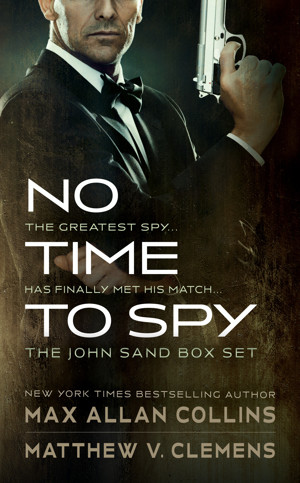
No Time to Spy Cover
E-Book: Amazon
Paperback: Amazon

Finally, our book giveaway of No Time to Spy, the massive collection of the John Sand trilogy, has arrived. We have only five (5) copies to give away. As usual, you agree to write an Amazon review (and/or at any other review site, like Barnes & Noble, Good Reads, your own blog, etc.). [All copies have been claimed. Thank you for your support! — Nate]

We really need the reviews, as No Time to Spy has stalled out at a meager 18 ratings. By way of contrast, the new Quarry’s Blood already has 34 (and thank you for that!). Now, I understand John Sand and Quarry are two different animals, but the individual titles in the Sand series have fared very well (229 ratings for Come Spy with Me for an average of four stars).

If you have read the trilogy as it came out, novel by novel, and liked what you read, please consider reviewing the collection at Amazon to help build up interest. Right now it’s looking like the fourth Sand, resolving a hell of a cliffhanger (if Matt Clemens and I may be so bold to suggest), will never be written.

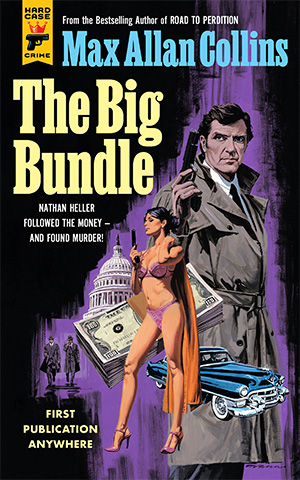
On this subject – and I think I’ve made this clear before – I am well aware that not everything I write appeals to the same group of readers. Right now I’m working on The Big Bundle, the new Nate Heller novel (about 2/3’s in), and am cognizant of the fact that what some readers relate to in my work is my first-person voice. That’s not just one voice, of course – Mike Hammer and Quarry and Heller are not the same voice, but they are variations on my voice and reflect whatever facility I may have in first person. Some readers may not relate as well to a third-person voice, as used in John Sand, Nolan, the Perdition prose novels and more.

And some people who like, say, Quarry like to lambast me when I write anything else. But I need to stay fresh and nimble and that requires writing different things, although mostly I work in suspense/mystery. But I get it. I have writers whose work I like who occasionally throw me a curve I can’t catch. One of my favorite writers is Mark Harris – his baseball trilogy (The Southpaw is the first, Bang the Drum Slowly is the most famous) is to me a marvel of first-person storytelling.

Harris, who I met and then corresponded with, saw himself as a literary writer and throughout his career he tried all kinds of things. Usually I at least like what he did, at times I loved what he did, but on a few occasions I didn’t connect with him at all. When someone dislikes my work in general, I like to say the reader and I are not a good fit. When someone who likes some of what I do complains about a work that doesn’t work for him or her, I chalk it up similarly – that reader isn’t a good fit with that particular work.

A good example is the Antiques series that Barb and I write together. These are cozy mysteries, albeit somewhat of a subversive take on that sub-genre, told in the first person by two narrators. The novels combine what we think are good solid mysteries with a lot of fairly off-the-wall humor. A surprising number (surprising to me) of readers of noir-ish things of mine like Quarry, Heller and Hammer also like these books. But I completely understand the readers who, despite generally being fans of mine, don’t cotton to Brandy and Vivian Borne.

Writing this new Heller raises a number of issues in my aging mind. I understand that some fans of my Quarry and Nolan and Hammer novels don’t respond to Heller, despite my own feeling that the Heller saga is my signature work. While the Heller books have the violence and sex for which I am known and loved, they also are long books…this one will be 80,000 words and I believe Stolen Away was 125,000 words…and they are more detailed and explore the historical crimes they’re dealing with in depth. The violence and sex stuff is there, but not every other chapter.

The Big Bundle cover

Another factor I’m facing is the degree of difficulty. Even now I can write a Quarry novel in a month. The real-life case I’m dealing with in The Big Bundle is not as complicated (or frankly as famous) as, say, the assassination of Huey Long (Blood and Thunder) or the disappearance of Amelia Earhart (Flying Blind). But at this age I have to review the research extensively before working on a chapter covered by that material; this includes new research, beyond the several months of reading that preceded the writing, stuff I’m picking up on the fly.

I also find I am re-plotting several times as I go along. That happens with any novel, because I don’t let my synopsis dictate things – if characters want to do something different, I let them. If something occurs to me as an interesting turn to take, I take it.

That’s all well and good, but in a Heller novel I am dealing with history. The first book, True Detective, in the very title established the rules: these would be true stories. I allow myself some liberties – time compression and occasional composite characters are typical elements in a Heller. But mostly it’s just the facts, ma’am, presented in the context of a private eye novel and striving to come up with the truth…most happily (as has been often the case) with a new solution to a controversial real mystery.

What I am up against now is that pesky degree of difficulty. I think I’m writing as well as ever (possibly self-delusion, but it keeps me going). With Heller, however, the amount of time for me to feel I get it right is at odds with the speed at which I was long able to work. I understand that’s a function of old age; but knowing that doesn’t make it any easier. Just annoying. Frustrating.

I have committed to one more Heller after this one – the two books will complete the cycle of Heller novels involving JFK and RFK. Bobby Kennedy isn’t in The Big Bundle much, but he’s a vital element; next time he will be the focus.

I have been expecting to spend my remaining writing years with a focus on Heller. I am nearing the end of the Hammer manuscripts, and I’ve written and published endings to Nolan and Quarry (two each!). But I question whether I am up to the Heller degree of difficulty in relation to how much time it takes to arrive at what satisfies me.

On top of this are newer projects – like Fancy Anders and John Sand – that interest me. I am extremely proud of The Many Lives of Jimmy Leighton; it’s one of my best books (thank you Dave Thomas!). Barb and I are developing a standalone thriller, and I’m doing three novellas for Neo-Text on unlikely American heroes. There a few more Spillane/Hammer books left to write.

But Heller is what I’m proudest of. Probably the deciding factor will be if I can’t hit the mark, can’t write about him in a way that pleases me.

One interesting thing about Heller is how writing the books can lead me into rewarding areas that I didn’t anticipate. In Big Bundle, I decided to do a scene in St. Louis at a club where Chuck Berry was playing. Berry isn’t being used as a famous historical character in the novel – it’s just me looking for a fun setting for a scene.

That’s always a problem in private eye novels. The form is basically a series of interviews with witnesses and suspects – look at The Maltese Falcon. So I try in Heller (well, in all novels that touch on the PI form) to use interesting locations. With an historical saga like Heller’s, it’s an opportunity to suggest the times and put the place in context – using famous defunct restaurants, for instance.

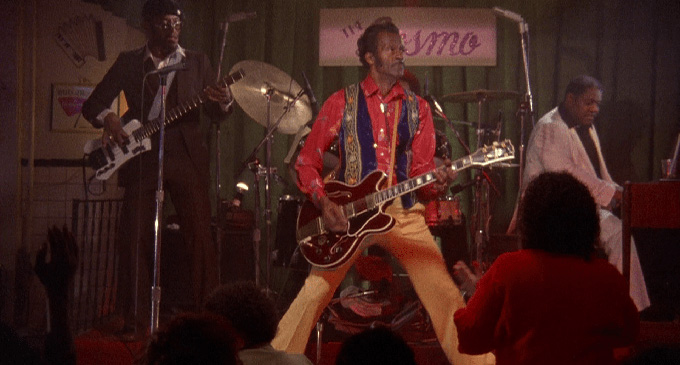
Chuck Berry at the Cosmo

I read about the Cosmopolitan Club, where Berry basically put rock ‘n’ roll on stage for the first time, and found that the documentary Hail! Hail! Rock ‘n’ Roll (1987) had refurbished the defunct East St. Louis club for a mini-concert celebrating (and sort of recreating) Berry’s tenure there. I got caught up in the documentary and it got me interested in Berry and his music, which I had frankly (stupidly) taken for granted. On reflection, I was reminded that everything from the Beach Boys to the Beatles came from him, and recalled how many, many songs of his my various bands had played.

So I sent for another documentary (Chuck Berry, 2018), and several books, and three CD’s. That’s a bonus that comes out of the Heller research – I stumble onto things that are only tangential to the book at hand but that roar into the centerstage of my personal interests.

If you’ve never seen Hail! Hail! Rock ‘n’ Roll, by the way, you haven’t lived till you watch Chuck Berry schooling Keith Richards on how to play rock ‘n’ guitar. One particular sequence is singled out as demonstrating how difficult Chuck could be; but for those of us who’ve played in bands, we know: Chuck was right.

One bittersweet aspect was my realization that I had blown a great opportunity. My son Nate lived in St. Louis for better than half a decade, and during that time Barb and I visited him (and later, Nate and his wife Abby, and later than that, grandson Sam too) often. Meanwhile, hometown boy Chuck Berry was playing once a month at Blueberry Hill, a fantastic club in the Delmar loop. And I – we – didn’t bother to see him.

As Fats Domino would say, “Ain’t that a shame.”

* * *

This Paperback Warrior review of Quarry’s Blood appeared on my birthday, March 3, and I couldn’t ask for a better present.

The New York Times recommended ten books last week, and Quarry’s Blood was one of them.

Finally, Daedalus Books has the hardcover of Eliot Ness and the Mad Butcher for $6.95.

M.A.C.

Not Another Book Giveaway! Also, Entertain or Impress?

Tuesday, February 1st, 2022
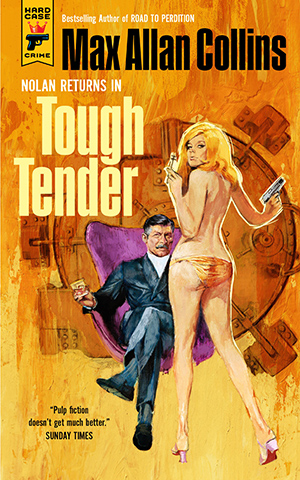
Tough Tender Cover
Paperback: Indiebound Purchase Link Bookshop Purchase Link Amazon Purchase Link Books-A-Million Purchase Link Barnes & Noble Purchase Link Target Purchase Link
E-Book: Amazon Kindle Purchase Link Google Play Books Purchase Link Nook Purchase Link Books-A-Million eBook Purchase Link Kobo Purchase Link Apple Books Purchase Link

Yes, just one week later and it’s another book giveaway.

Hard Case Crime continues its wonderful (to me, anyway) series of Nolan reprints, with two novels to a volume and terrific, movie poster-ish Mark Eastbrook covers. Tough Tender, including both Hard Cash and Scratch Fever, will be published March 22. I have ten advance copies for readers willing to do a review at Amazon (and/or other Barnes & Noble and other review sites). This is USA only and (IMPORTANT) you must include your snail-mail address, even if you’re entered and won before. [All copies have been claimed. Thank you for your support!]

These novels were the last in the original Nolan cycle – all of them (save Scratch Fever) were written for Curtis Books in the early seventies, and later minorly revised when Pinnacle Books picked the series up. Only Bait Money and Blood Money (the first two) saw publication from Curtis Books in 1973. Scratch Fever was written expressly for Pinnacle, and would be the last Nolan until Spree in the eighties. Spree, designed to be the last in the series, has been followed by a “coda” novel, Skim Deep, out last year.

I continue to emphasize the importance of reviews at Amazon in particular. Some of these books – the Hard Case Crime titles and Titan titles – you can find in your favorite brick-and-mortar bookstore. But the likes of The Many Lives of Jimmy Leighton (by Dave Thomas and me, and a book I really love), Fancy Anders Goes to War (I love you, too, Fancy!) and No Time to Spy (the new John Sand omnibus by Matt Clemens and me) can only be ordered online – Amazon probably your best bet.

* * *

As I mentioned in recent posts, I’ve decided to slow down my rate of production. In 2021 I amped things up, and you’ll be seeing the results in the coming months, in part due to this year’s 75th anniversary of the debut of Mike Hammer in I, the Jury. I am hopeful that Spillane – King of Pulp Fiction (the biography by Jim Traylor and me) – will get some special notice. An Edgar nomination is the dream, but Mickey Spillane on Screen by Jim and me, which I remain very proud of, was roundly ignored. Skim Deep got great reviews and was mentioned on not a single “Best of 2021 Mysteries” lists.

I talked a bit last time about books like mine that aim to entertain rather than impress. It’s the books that try to impress (and are often no fun at all) that get the acclaim. Frustrating as that can be, I don’t envy my peers who get the accolades. For one thing, I’ve had my share of honors over the years – maybe more than my share. For another, to be jealous of another writer you have to be willing to trade your book for one of theirs. I might like Angel in Black to have the sales and reputation of The Black Dahlia, but I wouldn’t swap it for a box of Edgars and a boxcar of money.

If writing isn’t about the writer, it isn’t about anything at all.

I mention The Black Dahlia only because a genuine frustration I feel comes from the countless times some well-meaning reader says to me, “You are one of two favorite writers. The other is James Ellroy.”

I usually don’t comment on other writers, and I won’t here, except to say Ellroy is the rare fellow writer I have at times admitted not caring for (his work – personally, our encounters have always been friendly). It just makes a writer’s brain hurt and maybe explode when fans say their other favorite writer is somebody whose work that writer deplores.

But it makes sense that somebody who likes Ellroy’s fiction might like both his and mine. We work the same side of the 20th Century true-crime street, which is enough to attract the same readers. Sex and violence and traditional hard-boiled themes occur in both of us. What somebody like me has to wrap his head around is this: a reader may have the capacity to like two very different approaches to the same subject matter. In fact, a reader should have the capacity to do that.

Writers, however, often have tunnel vision in this area. For me writing is a trial-and-error process. I don’t mean the plotting or the story selection or any of that. I refer to the actual word-for-word hammering it out, the way sentences are assembled, the way paragraphs get put together. On another level, thematic concerns come into play, albeit often subconsciously – world view.

What I am trying to do, in a perhaps stumbling way, is what I’ve been doing all along: attempting to perfect my approach to storytelling. This is one reason why I don’t read much fiction anymore, especially mystery/crime. I’m no longer interested in being influenced. On some perhaps naive level, I am trying to come up with The Way to Write Crime Fiction.

I should be glad that Ellroy’s approach differs so drastically from mine. I should understand that the reader is somebody who goes along Restaurant Row and sometimes eats Chinese and sometimes Italian, and loves both. Nothing wrong with that.

With Ellroy, I have encountered too many smart people who like his work to dismiss their opinions. I have come to accept that I have had a strong element of envy in my reaction to him, because he is more successful in terms of readership, acclaim, earning power, etc. But where he isn’t more successful (and is in no way trying to be) is as the author of Max Allan Collins novels.

Shakespeare said the play is the thing. From this we extrapolate that the novel is the thing – the fiction (short stories and movie scripts, too) a writer creates is the thing. I congratulate any writer who can manage to make a living doing this throughout a lifetime – even me.

Even James Ellroy.

Smart people’s tastes vary. Here is the sentence many consider to be the best first sentence in private eye fiction; it’s by James Crumley in The Last Good Kiss:

When I finally caught up with Abraham Trahearne, he was drinking beer with an alcoholic bulldog named Fireball Roberts in a ramshackle joint just outside Sonoma, California, drinking the heart right out of a fine spring afternoon.

You may like it very much, and you won’t be the only intelligent human who shares that opinion. I think it’s a lousy first sentence, overloaded and too cute and trying way too hard. Really, just horrible.

We’re both right.

* * *

Speaking of right, here’s a lovely review of The Many Lives of Jimmy Leighton from Ron Fortier.

Road to Perdition, the graphic novel, has made a list of the best 110 “thriller books.”

The film is highly regarded here.

And here.

M.A.C.