Posts Tagged ‘Death by Fruitcake Movie’

Comeback for Physical Media?

Tuesday, May 12th, 2026

I am writing this on Mother’s Day and want to give you a belated chance to celebrate (since this appears on the Tuesday after).

In keeping with that holiday, You can watch my movies Mommy and Mommy 2: Mommy’s Day on Prime (and elsewhere) right here:

Mommy

Mommy 2: Mommy’s Day

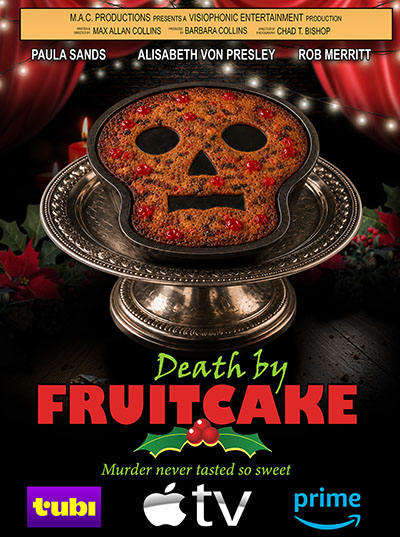
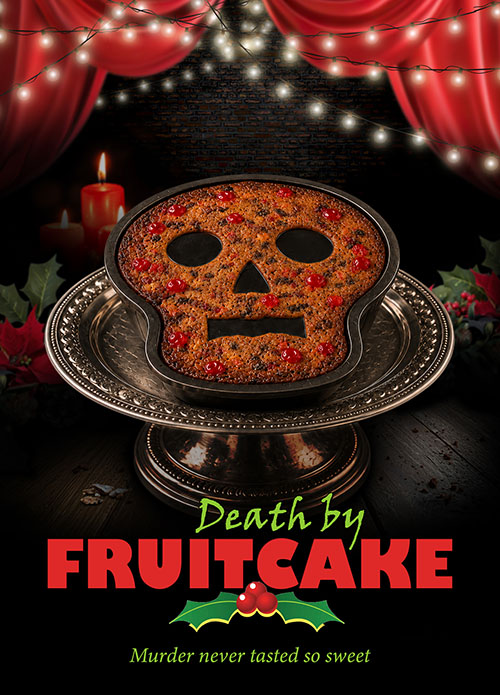
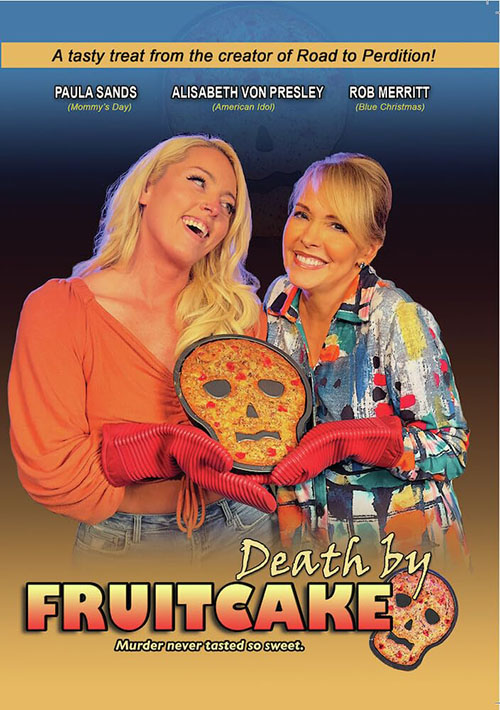
And you can visit mother-and-daughter sleuths, Vivian and Brandy Borne (from the Barbara Allan Antiques mystery novels by Barb and me) in our little movie Death By Fruitcake right here:

Death by Fruitcake

If you prefer to visit Mommy on physical media, try here (best price).

And Death by Fruitcake on DVD (no Blu-ray) is here – your support is MUCH appreciated!

* * *

Ted Turner died last week.

He created cable as we came to know it, and he created CNN and the 24-hour news cycle, and actually a lot more. I celebrate his dedication (through TCM) to making classic (and not so classic) films from the dawn of sound up.

He did not create streaming. I’m not sure anybody should have, at least not in the expensive, dishonest, frequently stupid way it has evolved. I don’t have to explain “expensive” – it’s the reason why following worthwhile shows on various streaming “services” is prohibitive for anyone but the wealthy.

I should explain “dishonest,” though – it’s the way we were sold a bill of goods that “everything” would be available to us at a click and we would no longer need physical media, like DVDs, Blu-rays and 4K discs. This has proven not only to be false but what is available (even after we’ve paid the monthly service charge) often includes a fee with no physical media attached. You can “buy” a movie this way, and “own” it, only to have it stripped away sooner or later without notice.

And I will explain “stupid” by way of the reality that streaming services are funding series and movies often well below the former standard of cable and even network TV. The drawback of network TV was always the limited channels; but the plus has been occasional shows of quality like classic Star Trek, Twilight Zone, Perry Mason and Seinfeld – which generated what used to be called “water cooler” talk.

Yes there are first-rate streaming series – as indicated, enough of them to make prohibitive signing onto a streaming service for its one or two good seriess. But quality shows happen only because talented people, not in need of guidance from a corporate daddy or mommy, can create a Sopranos or Breaking Bad or Curb Your Enthusiasm.

Give streaming accidental credit for that much.

And I say “accidental” because the streaming services show no signs of telling good from bad, mediocre from excellent. A series like Apple’s Palm Royale with the great Kristin Wiig and Carole Burnett can begin well and sputter into unexpected embarrassment. That same service’s Hijack can have an excellent first season and a become a travesty of itself in the second. And if you can’t give Idris Elba something worthwhile to wrap his acting chops around, give up.

The missus and I often sit down of an evening to peruse the streaming possibilities from Netflix to HBOMax, from Apple to Peacock, and we’ve been to Hulu, Disney and Paramount Plus (among others) on our travels and through the associated travails. And what we end up doing, three out of four times at least, is turning to my substantial collection of physical media – where we know something will be worth re-watching, with the unwatched tempting enough for me to have laid money down for its individual promise.

I am part of Robert Meyer Burnett and Dieter Bastien’s Let’s Get Physical Media show which is on most Sunday afternoons (1 p.m. Central). There I discuss noir and noir adjacent releases, and Rob and Dieter focus mostly on science fiction, fantasy, horror and fun schlock (Dieter proudly self-describes as the Trash Panda). I’ll include a window on a recent episode – I show up an hour or so in for an hour so appearance, recommending Blu-ray and 4K releases. Occasionally DVDs, too.

The decline of physical media for movies and TV has created a collector class for whom the Let’s Get Physical Media show is designed. These are collectors after boxed sets of single and multiple releases, fancy editions with slip covers and tons of bonus featrues and assorted bells and whistles including books – and it’s not unusual for one of these limited releases to cost fifty bucks or more.

But on every episode it’s noted that, of new discs, DVD sales still rule, with Blu-ray lagging behind and the superior format, 4K, a virtual afterthought. And yet in recent months physical media is making a vinyl-like comeback. Best Buy and Barnes & Noble are still strong in sales of all three forms (most other brick-and-mortar stores dropped out of physical media sales of video a couple of years ago).

What’s interesting about the comeback of physical media is that it’s driven by two groups: those special edition collectors I mentioned; but also Gen Z buyers – a younger generation that has rejected the streaming era and is turning to…DVD.

It’s a good trend – young people building libraries reflecting their personal tastes. One aspect of the trend has these Z’ers – with less disposable income than some previous gens of kids – going to Goodwill and other second-hand stores and buying DVDs for a few bucks (or even one buck). These buyers are less concerned having the high def aspect (if at all), possibly because they are used to the small screens on their phones, and video that’s just okay is okay by them.

I’m going to stop short of saying, “Physical media is back, baby!” But it’s definitely a shifting scene.

* * *

My buddy, editor/publisher Charles Ardai has an in-depth Crime Reads interview here about Hard Case Crime (and I rate a mention or two).

The movie version of Road to Perdition gets included in this list of great mob movies. (Exciting Perdition news forthcoming.)

M.A.C.

Sam Spade News & A Fruitcake Near-Rave

Tuesday, April 28th, 2026

I’m pleased to announce I’ve signed with Hard Case Crime to do two more Sam Spade novels.

Launching a new Spade series wasn’t my intention in writing Return of the Maltese Falcon. I merely wanted to be out there first with a sequel to the classic original, now that it was in the public domain, and was presumptuous enough to think I could get it right.

As I’ve mentioned here, when I finished writing the book, and was pleased with it, my wife Barb warned me to brace myself – she said, Not everyone would like me appointing myself to a task that some might think ought never have been attempted. My thinking was, Somebody’s going to do this, and it might as well be me.

And I was surprised and pleased that the reactions were overwhelmingly favorable, generating some of my best reviews ever. A few naysayers weighed in, though were very much in the minority. Don’t get me wrong: I didn’t feel vindicated, I felt relieved.

Only when I saw how well Return of the Maltese Falcon was doing did I begin thinking about writing more Sam Spade. Spade is a character about whom Hammett might well have written another dozen or two novels, like Gardner with Perry Mason, Christie with Hercule Poirot or Rex Stout with Nero Wolfe. And of course Hammett, before turning his back on mystery writing, had written three Spade short stories, plus there’d been the popular Spade radio show with Howard Duff.

But what came to my mind was offering my publisher a trilogy, the first of which would be the already existing Return. I found it interesting to suggest two more Spade novels, each separated by ten years or so – to see what Spade was up to in the war years and then the McCarthy-era ‘50s (which obviously have resonance with Hammett’s life).

I wrote a fairly lengthy proposal and Hard Case Crime’s Charles Ardai, with support from parent company Titan’s Nick and Vivian Landau and my editor Andrew Sumner, responded favorably. I am now about to begin work on Prey for the Maltese Falcon, set in 1939.

In some ways it’s more challenging than Return, which gave me the luxury of working within the parameters of the original novel – its characters, its locations, its themes. Now Spade is ten years older, and the case I’ve constructed takes him all sorts of places that the original novel and my sequel didn’t.

Wish me luck.

* * *

The UK’s Guardian has an excellent essay on the resurgence of interest in the private eye. It includes a nice reference to Return and me.

* * *

I was surprised and pleased to discover that the Overly Honest Reviews site has posted a terrific Death by Fruitcake review that I’ve been granted permission to share with you.

RAVING REVIEW: One of the best types of mysteries doesn’t pretend to be bigger than it is. DEATH BY FRUITCAKE leans into its small-town setting, its contained stage environment, and its personality-driven storytelling without trying to inflate the stakes beyond what the story can support. That restraint ends up being one of its biggest advantages. It knows the scale it’s operating within and, instead of stretching, digs inward into character, tone, and timing.

The setup is simple in the best way. A dress rehearsal collapses into chaos when a notoriously difficult actress drops dead mid-performance, and suddenly everyone in the room becomes a suspect. That kind of confined, single-location mystery has been done countless times, but what makes this one click is the attention it pays to the personalities circling the event. This isn’t about elaborate plotting or intricate twists stacked on top of each other. It’s about letting the audience sit in a room full of people who all have a reason to hate the victim and watching the tension build from there.

Paula Sands carries much of the story as Vivian, and what stands out isn’t just her presence but the way the performance embraces a slightly heightened delivery without tipping into parody. There’s a stiffness to her line reading at times, but instead of breaking the illusion, it almost feeds into the character. Vivian feels like someone who sees herself as more composed and authoritative than she actually is, and that disconnect becomes part of the charm. It’s not polished conventionally, but it fits the world the film builds.

Alisabeth Von Presley brings a different kind of portrayal as Brandy, and the contrast between the two performances becomes one of the film’s strengths. Where Vivian leans toward control and presentation, Brandy feels more fluid, more aware of the absurdity around her. The moments where she interacts directly with the camera could have come off as distracting. They’re used sparingly enough that they add personality instead of pulling you out of the story. It gives the film an edge, a reminder that it’s in on its own tone without constantly pointing it out.

The supporting cast fills out the ensemble, keeping the suspect pool engaging. No one is pushed into satire, but everyone is just exaggerated enough to feel distinct. That balance is important in a story like this. If the characters blend into one another, the mystery loses its shape. Here, each interaction carries just enough tension or humor to keep things moving, even when the narrative slows.

The investigation expands in a way that feels intentionally relaxed, but there are stretches where it could have used a sharper sense of escalation. Conversations feel a bit repetitive at times, suspicions shift without always adding new information, and the momentum dips as a result. It never stalls completely, but there’s a version of this that trims some of that repetition and lands with a bit more impact.

There’s a lightness to the humor that doesn’t undercut the mystery, and a sense of familiarity that works in its favor rather than against it. It feels like a story that understands its audience, especially those drawn to mysteries where the intrigue matters but the experience is just as much about spending time with the characters. The jokes land more often than not, and when they don’t, they still feel in line with the world the film has created.

The single-location setting becomes a strength rather than a constraint, forcing the film to rely on blocking, performance, and dialogue rather than on visuals. There’s a stage-like quality to everything, which makes sense given the setting, and instead of fighting that, the film leans into it.

What ultimately holds everything together is the film’s understanding of what kind of mystery it wants to be. It’s not chasing complexity for its own sake, and it’s not trying to reinvent the genre. Instead, it focuses on delivering a contained, character-driven story with enough intrigue to keep you guessing and enough personality to keep you invested.

There’s also an underlying appreciation for the setting itself. The small-town dynamics, the overlapping relationships, the way grudges and histories linger just beneath the surface, all of that feeds into the mystery without needing to be spelled out. It gives the film a sense of place that adds texture without complicating the narrative.

DEATH BY FRUITCAKE doesn’t aim for perfection. Its appeal comes from how comfortably it settles into its identity. The imperfections are part of the experience, but they don’t define it. What sticks is the chemistry between its leads, the playful tone, and the steady commitment to telling a story that fits its scale. It’s the kind of film that understands exactly what it’s offering, and more importantly, what it isn’t. And in a genre that often overreaches or overcomplicates itself, that clarity goes a long way.

Please visit https://linktr.ee/overlyhonestr for more reviews.

* * *

If you haven’t read Return of the Maltese Falcon yet, please do. And if you watch Death by Fruitcake on Prime or Roku or Apple TV, please leave a thumbs up if you’ve enjoyed it. And if you order the DVD from Amazon, a favorable review there would also be helpful.

Finally, just a reminder that True Noir: The Assassination of Anton Cermak is out as a 4-CD set now, and can be ordered here for only $23.37 (on sale from its usual $35.95) [Also in a single-disc MP3-CD for $19.47 or digital download for a mere $12.97! – Nate] It’s a full-cast star-studded nearly five-hour audio drama written by me from the first Nate Heller novel, True Detective, and directed by my pal Robert Meyer Burnett.

M.A.C.

True Noir on CD, Love for Fruitcake & A Falcon Nice Review

Tuesday, April 21st, 2026

This week marks the release of the Blackstone/Skyboat four CD-set of True Noir: The Assassination of Anton Cermak (a one-disc MP3-format edition is also available). I’ve talked here often about the amazingly stellar cast (headed up by Michael Rosenbaum) and the direction by my buddy Robert Meyer Burnett. Rob and I both think True Noir is among the best things either of us has done.

You can order it here: https://downpour.com/products/book-101t

[Or here on Amazon. –Nate]

Incidentally, this link accesses 81 titles of mine, in all formats, including Return of the Maltese Falcon.

I get a few inquiries about why True Detective has been adapted under the name True Noir. The obvious (and correct) answer is that HBO used the title on its acclaimed series of a while back. But I like getting the word “noir” in there (and it was my suggestion).

For those of you unfamiliar with this project, here’s what True Noir is: a full-cast, fully scored (by Alexander Bornstein), complete with meticulous sound effects, scripted-by-me adaptation of the first Nathan Heller novel, True Detective. That book won the 1984 Best Novel “Shamus” award from the Private Eye Writers of America, and led to a long-running series (that I may return to one of these days). It really is a movie for the ears, running four and a half hours and providing several evenings of entertainment, or good company on a long road trip.

We hope to do more, but that’s up to you.

A big True Noir event at the Putnam in Davenport, Iowa, is coming up next month. Much more about that later.

* * *

Alisabeth Von Presley and Paula Sands in Death by Fruitcake

My old Ms. Tree cohort Terry Beatty stepped up to inform his Facebook friends about my little movie, Death By Fruitcake, which has just recently been offered here: Xumo (free); Roku Channel (free); Amazon Prime Video (free); YouTube ($2.99); Google Play Movies & TV ($2.99); and Apple TV ($4.99).

Here’s what Terry had to say:

My pal Max Allan Collins’ latest “no budget” movie is now available to stream on Amazon Prime — based on the cozy “Antiques” series of novels written by Max and his wife Barb, under the pen name of Barbara Allan. Well, this one’s based on a novella from an anthology of Christmas themed mysteries — but it features the mother/daughter amateur sleuths from the books. I’ve been providing illustrated maps of the fictional town of Serenity, where the books take place, for the whole run of the series, and just turned in a newly revised map for the next book this morning.

If you’ve been reading the books, you’ll know what to expect here. If “Brandy and Vivian” are new to you, you’ll have fun being introduced to them. As I noted — this is a super low budget movie, so don’t go in expecting Hollywood production values. You also shouldn’t expect a “tough guy” mystery here — this is drawing room/cozy stuff — but with the Collins touch all over it.

You’ll likely have to use Prime’s search function to find it, as they’re busy highlighting bigger budget fare. Enjoy — and don’t eat the fruitcake.

This nice post from Terry elicited this post from Steven Thompson:

HT (hat tip) to Terry Beatty for this morning’s entertainment, a delightful little cozy mystery on Prime written and directed by the estimable Max Allan Collins. The two leads playing mother/daughter small town sleuths are extremely charismatic and both quite well-known in other fields. The non-violent murder mystery is more fun than mysterious, with numerous winks and 4th wall breaks. The dialogue sounds stagey but hey, I talk that way sometimes myself. People tell me I sound odd. Having been an amateur actor myself, too, I certainly recognize that in the film’s entire cast but by no means is that saying they’re bad in any way. As a director, Max makes the most of his low budget quite well indeed, and he even gives a cameo to Dick Tracy, the strip he wrote for years!

Having looked into them now, I see where Paula Sands retired a couple years back from a 40 year career as an Iowa newswoman and talk show host. She is great fun as the theatre director attempting to solve the murder of her much disliked leading lady. Tall and sharply eyelashed Alisabeth Von Presley is really a singer and has appeared on shows like American Idol but she can deliver lines well and she has a wonderful grin and wink. Her relationship with Paula as her mother carries the show.

Highly recommended as long as you don’t expect Oscar-quality anything! A great way to start my morning.

And mine! Though Fruitcake is probably best watched some quiet evening over several glasses of wine with someone you love.

I’m grateful to all of you who have given Fruitcake a try, and especially if you’ve posted at Facebook or elsewhere, including Amazon reviews, where right now we only have two reviews but they are overwhelmingly positive.

* * *

In case you haven’t got round to picking up the current Return of the Maltese Falcon, this review from Matthew Legare should encourage you.

First serialized in 1929, The Maltese Falcon is one of the mystery genre’s most enduring titles. It’s been adapted, parodied, and inspired countless writers. But now, it gets a sequel in the form of Max Allan Collins’s Return of the Maltese Falcon.

Not an official sequel, mind you, but since Dashiell Hammett’s original novel entered public domain this year, any writer can use it however they wish. It’s a bit dicey, since only the original novel is public domain, not the famous 1941 film with Humphrey Bogart, probably the single most influential piece of media for film noir and the hardboiled PI genre. Whenever a stock or cliché gumshoe detective shows up, they’re imitating Bogie as Sam Spade, not the original novel.

(MAC: Hard disagree. The novel itself was already the seminal influence on the private eye novel when the Huston/Bogart film appeared.)

As such, the sequel’s Sam Spade is described as he is in the original novel, i.e. a “blond Satan” and distinctly opposite to Bogart. What’s more, it’s written in Hammett’s distinctive, staccato prose, and all in third-person. That’s a detail I appreciate as too many mystery novels are first person à la Spillane and Chandler, but I’m biased as I always prefer third-person.

The 1941 film (as well as the less famous 1931 adaptation) actually follow the novel pretty closely, so Collins’s sequel actually works pretty well if you’ve only seen the movie and never read the book. Even the cover (a glorious piece of art by the legendary Hard Case Crime imprint) is more evocative of the original novel, with Sam Spade younger and more hawkish than his film versions, the femme fatale a sultry flapper, and the black bird itself more spindly than its bulky movie counterpart.

It starts off shortly after the events of the novel, set in late 1929 (Hammett never specified a date but 1929 is a perfect year in my opinion), Sam receives another mysterious femme fatale in the form of Rhea Gutman, daughter of the villainous Caspar Gutman aka the Fat Man and mastermind of the original novel.

(MAC: a gentle correction. The novel takes place in December 1928 as the text says.)

She’s convinced the Maltese Falcon is not only real but still in San Francisco. If you will remember, the Falcon was procured by a shadowy Russian officer, General Kemidov, who duped Gutman and his two criminal associates, Joel Cairo and Brigid O’Shaughnessy, with a lead phony.

Spade isn’t so sure, but he believes Rhea’s money and visits Cairo and Brigid in jail, asking where Kemidov’s whereabouts may be. Cairo, who was probably the best character in the original novel after Spade himself (famously played by the legendary Peter Lorre) is used sparingly here, which is unfortunate, but there really was no way to get him out of jail after being arrested in the original novel I suppose.

Regardless, Spade does what he does best, snooping for clues and getting into trouble. Sketchy characters emerge out of the San Francisco fog, like our old pal Wilmer Cook, Caspar’s boy gunsel, who has a few violent run-ins with Spade.

Added to the mix are a few other characters like Dixie Monahan, briefly mentioned in the original novel as a dangerous Chicago gangster, who is now also looking for the Falcon. Stewart Blackwood, a refined Englishman from a museum who has, apparently, already paid for the Falcon. Also there’s Brigid O’Shaughnessy’s sister, trying to find the black bird to help pay for legal fees. Kemidov himself features prominently in this novel with his invisible presence felt everywhere, something I appreciate since he was just a name and plot device in the original novel.

Spade juggles multiple clients and leads, along with a mysterious dead body he’s asked to identify, until he finally gets on the Falcon’s scent. Not a decoy, not a misdirect, but the actual Maltese Falcon. This time there’s no going back, but the dangers get even more perilous for Spade – Wilmer Cook keeps popping up but even more troubling, the Police check up on Rhea’s backstory and it turns out, Caspar Gutman never had a daughter.

Everything is wrapped up in the classic “exposition room” scene with all the suspects together and facts laid out. Cliché, but it works.

The Maltese Falcon is one of my favorite novels and Hammett’s prose has influenced me in ways I am forever grateful. It’s a masterpiece and a great piece of American literature, albeit pulp fiction. There are definite problems, some important characters mentioned (like Kemidov) never show up and some of the plot seems rushed together, and the fate of several characters are explained to us off screen. However, all the elements flow together into a beautiful canvas by the end. If you’ve never read it, you don’t know what you’re missing.

(MAC: These are excellent observations. Hammett famously claimed not to have plotted the book in advance, rather writing it by the seat of his pants, as we pulp writers put it, which explains some of what Matthew has to say here.)

Max Allan Collins is what I call a “working man’s writer.” This guy has been writing for decades, across multiple platforms – novels, novelizations, comic books, comic strips (he used to write the official Dick Tracy strip) – and shows no signs of slowing down. He has over two hundred novels to his name with multiple series like the historical detective Nathan Heller, the hitman Quarry, and has collaborated with the legendary Mickey Spillane to finish off the Mike Hammer books. You can tell this man loves the crime genre with a passion and if there’s one living writer worth, and dedicated enough, to write its sequel, it’s Collins.

Return of the Maltese Falcon is a worthy addition to American pulp fiction and worth your time.

It’s incredibly gratifying to receive a smart review like this. I try not to be influenced by either good or bad reviews. I regard the good ones as positive publicity and the bad ones as negative publicity; but don’t allow myself to be influenced by either…though, like most people in the arts, I remember the bad reviews vividly while the good ones are a blur.

* * *

My son Nate and grandson Sam have been watching Cowboy Bebop on Blu-ray. It’s a favorite of Nate and mine, and it was a joy revisiting this incredible s-f/crime anime after so long a time. I would rank it with the original Star Trek and Lexx (a show criminally off my recent “favorites” list) as among my very favorite science fiction series (call it Number 6, although I should probably put The Prisoner there and give Lexx the Prisoner’s slot on the five favorites).

One of the things that characterizes the series is its outstanding music by composer Yoko Kanno and her band the Seatbelts. They just a few weeks ago performed in the United States. Here they are performing the opening theme of Cowboy Bebop (a theme rivaled only by Peter Gunn and James Bond). Enjoy!

M.A.C.

Fruitcake on the Loose & the Great Cavern of Comic Books

Tuesday, April 14th, 2026

Our movie Death by Fruitcake, based on the mystery novels by “Barbara Allan”), is now available to stream FREE on Prime Video, The Roku Channel, and Apple TV.

Please support our effort. I am aware that not everyone who likes my work connects with (or has even tried) the Antiques novels that Barb and I write. Yes, they are cozy mysteries but with a subversive tongue-in-cheek edge. I love the books and enjoy being able to lean into the comedy, and the series must be pleasing someone because we just deliver book #20 in the series.

If you like it, leave a thumbs up or, if you’ve bought the DVD from Amazon, please leave a nice review.

* * *

Barb and I have spent the better part of a month in our basement dealing with comic books, hardcover and paperback books, DVDs and other assorted collectibles gathered over my lifetime. The collecting urge began probably when I was five or six, fed by a junky antique shop within easy walking distance where comic books could be traded two for one. It gave me admission to a world where the first Captain Marvel comics were still being published and Mad and the EC horror comics were available to rend and tear my childhood sensibilities.

The first comic book story I remember reading was in a coverless copy of Vault Horror: “All Through the Night” by Johnny Craig. That’s the one about a serial killer dressed as Santa Claus.

Three people shaped me (not including Johnny Craig).

First, my mother read me Edgar Rice Burroughs Tarzan novels at bedtime, and encouraged my comic book reading. She had been a fan of the Dick Tracy strip when my father was in the Navy out of San Diego. Here is the cover of one of the first two Dick Tracy comic books I read at age six.

Of course my father was hugely instrumental (kind of a pun) in shaping me as regards music. For the first phase of his career he was a high school music teacher, celebrated as a chorus man throughout the state of Iowa (with his brother Mahlon, an incredible band man). This was in the early 1950s and Dad’s high school productions of Oklahoma and Carousel were among the first – if not the first, as the Des Moines Register claimed – such productions anywhere. He and a mentor of mine, Keith Larson, put on an original musical (Annie’s Musket) during this period.

I was in most of Dad’s productions, of which Carousel is the one I remember most vividly, because he arranged to have a working carousel on stage. He was an amazing vocalist and vocal teacher who gave up teaching to become an executive in industry, a career shift he did not love but paid well; on the side, he directed a national championship Elks male chorus for fifty years to exercise his creativity and stay sane.

Sidebar: in high school, as a sophomore, I was put in a vocal quartet (soprano, alto, tenor, bass) to try out for All-State, the winners being part of a massive chorus at a concert in Des Moines every year. Our young choral teacher – perhaps unaware that my cronies and I had mounted two musicals in junior high – said he couldn’t afford to spend time with us. He would be too busy coaching the three other quartets of upper classmen, who had a genuine chance of being selected All-State; but he was letting us attend the competition for the “experience.”

I went home, told my father, and he gathered my fellow quartet members (I was the tenor) and coached us, which exposed me first-hand to what a great teacher he was. We won State (the other three quartets did not) and our same quartet went on to win as juniors and seniors, as well – I believe the only quartet in the state to do so.

Not all was sunny between my father and myself. He went to college on a split sports/music scholarship, and was a huge sports fan. I was not. I was a little kid who did not get his growth till junior high kicked in. I went out for football, to please Dad, and did well. By high school, as a defensive lineman, I had the most tackles in the Little Six (our conference).

Why I liked football was that I could strike metaphorically back at the bullies who had made my childhood miserable. I was a scrappy kid, as a skinny good student in glasses had to be, and had something like half a dozen fist fights between junior high and high school. There was just something about my face, and attitude, that begged bullies to take a punch.

Still, in those days fathers and sons were rarely close, and I was closer to my mom than to my dad. He was quietly dismayed that I would go to movie matinees on the weekends with my mother and not stay home and watch sports with him. I was a story guy, a book reader, and had (and still have) little interest in watching people play games. I liked to participate in football, where I could clobber somebody and get away with it, and scant interest in watching it.

My father and I developed a much better relationship as adults. He was supportive of my rock ‘n’ roll efforts and got my band the Daybreakers an invite to Nashville because of a successful former student of his who became a country western recording artist (Jack Barlow); that led to our record contract with Atlantic’s Dial subsidiary. But I think my thematic obsession in my writing of fathers and sons, parents and children, flows from my uneasy relationship with Dad.

The other major influence on me, growing up, was my late uncle, Richard Rushing. My uncle was an insurance investigator who had ambitions to be a writer, and that likely planted a seed. He was funny, in a dark way, and that seed probably got planted in me as well.

In his basement he had a 1950s man cave, with a TV and a fridge of beers (an alcoholic, clearly, but I didn’t realize that till later). We watched movies on the little black-and-white TV and he would cackle, “It’s a gobbler!” when a flick was bad. Yes, I learned about some movies being turkeys from Uncle Richard. He had Playboy centerfolds on the wall – these were those early, discreet nudes; but this was still bold for the times. And, yes, another seed was planted in me.

I have three really vivid memories of Uncle Richard.

The key one had to do with the Great Cavern of Comic Books. When I was five or six, and obsessed with comics, we sat in my uncle’s back yard and he gestured, with beer can in hand, toward the exterior cellar doors of his little bungalow. He told me, his eyes gleaming, that through a passage therein was a tunnel leading to a massive cave where all the back issues of all the comic books were stored – not just Donald Duck and Superman, but EC horror and Mad and…any title a child in 1954 could imagine.

The existence of this cavern seemed doubtful to me, even at six. So I would beg Uncle Richard to take me through those outside cellar doors and prove his tale true. He would refuse. Simply too dangerous to put his favorite nephew at risk. Trolls and hounds from Hell guarded the passage, after all.

Within a year or two, I understood this was bullshit courtesy of my beer-guzzling uncle. But for years – even today – I could and can picture this treasure trove of four-color wonder.

The other vivid memory of Uncle Richard came when I was starting to write crime fiction at age 14 or so, very much in Mickey Spillane’s sway. My insurance investigator uncle showed me (inappropriately) photos of crime and accident scenes he had investigated. One was of a fat man who had drowned in his car, eyes bulging, arms reaching for the sky through the busted glass of the submerged windshield in which he was trapped and getting nothing but more water.

“That’s what death is really like,” my uncle told me.

The other memory is even worse. As the years passed, Uncle Richard’s mental illness asserted himself. I don’t know when this happened, probably at least thirty years ago; but I was called to the psyche hospital in Iowa City to be told how serious his condition was. Maybe I had to sign off or something, as a representative of the family. I don’t remember.

What I do remember is the sight of my uncle strapped down to a table, stark naked (as Mickey would say), and giggling and laughing hysterically. He confided in me, spitting as he spoke, that he had completely fooled these doctors into thinking he was crazy.

What has brought all of these memories swirling to the surface?

Well, as I said at the outset, Barb and I have been dealing with my sixty-plus years of collecting, and it’s been sobering and illuminating. For one thing, I discovered things I thought lost, like several zippered storage cases of CDs for the car (one consisting entirely of Christmas titles); last week I mentioned finding letters I thought were gone, like the nice one from Ross Macdonald that I have since tucked inside my copy of The Blue Hammer. For another, I’ve had to deal with unceremoniously dumping precious but now water-damaged items.

And I didn’t even know I still had my Rootie Kazootie 3D comic book.

It has been, and still is, a lot of work. I am waiting for word to come in a writing project and taking advantage of the down time to deal with this basement from heaven and Hell. Barb has been doing amazing things – just now she interrupted the writing of this to say she’d got our jukebox working! It has been dead for years, but thanks to her now is experiencing a late Easter resurrection.

Coming across a Dick Tracy comic book I know my mother bought me (the one pictured here)…finding the poster I made for Camelot, when in my junior year I played King Arthur, and made my father proud…I have finally entered the Great Cavern of Comic Books my uncle teased me with, with only memories stirred and no trolls or hell hounds. I feel like I have performed an autopsy on the life that I am still living.

And other than the dust inhalation and the coughing, it doesn’t hurt at all.

M.A.C.