
Reassessing Priorities & Fancy Anders Sounds Great

January 18th, 2022 by Max Allan Collins

For the first time in four or five months, my band Crusin’ played a gig. Generally we haven’t played during the winter months for the past several years, but this was a private party for a 60th wedding anniversary for a couple who had employed us for their 50th (back when Andy Landers and Jim Van Winkle were in the band). Also, they are clients of our drummer, Steve Kundel, who is an attorney (when I introduce the band members on a gig, I usually mention Steve being a lawyer, saying we find it wise to travel with in-house counsel).

Anyway, like Steve McQueen said in The Magnificent Seven, it seemed like a good idea at the time (it was not yet winter when I booked the gig). Now as the job approached, it was clear Covid was kicking back in, and the job was in Iowa City (forty miles away) and a snow storm was predicted. We did not, however, cancel.

The snow arrived but was not such that we couldn’t make the trip with relative safety. We arrived at the Iowa City Eagles and were pleased to find it a very nice venue. None of us were crazy about playing a job in a college town, particularly so soon after the holidays, with Omicron (which sounds like a bad science-fiction movie) running rampant. But we wore masks loading in. Barb accompanied me and helped a great deal, both in setting up and making several key suggestions about what songs to perform (for example, advising me to open with a slow song and have the celebrating couple start the festivities alone, then asking the rest of the guests to join in).

Crusin' at the Iowa City Eagles, January 15 2022

The people were as warm as the night was not and there was dancing and a nice receptive response to our foolishness. A wonderful time was had by all. We’d only had two rehearsals to go back over the list and, surprisingly, we were pretty darn good. My bandmates, drummer Steve and guitarist Bill Anson and his son Scott Anson, who took over on bass when Brian Van Winkle passed, are fun to be around – very good company. At the rehearsals the absence of Brian’s sunny personality was keenly felt. Over the years the loss of bandmates – I’ve been playing rock ‘n’ roll since 1965 – is a wound that never really heals. Not a week goes by that I don’t think about my musical collaborator Paul Thomas.

I’ve had enough health problems that Barb has really been pitching in to help me set my stuff up and tear it down. I’ve talked here before about how the performances themselves are not any way burdensome, but loading up, setting up, tearing down, and loading back in will probably determine when I stop doing this. Musician friends have written me insisting that I should employ roadies, and these are mostly musicians who are getting paid the kind of money that allows that.

It occurred to both Barb and me, as we were driving up and back to the gig, that this might be my last performance with the band. Certainly it’s doubtful I would do more than one more summer season – last year, just four gigs. I would like to do a farewell appearance, and I’ve hoped to do one last CD – we were already working up originals and even playing them on the job when Covid hit and we lost over a year.

By the way, as you may have already noted if you follow these update/blogs, Barb is the best wife anybody ever had. She is smart, funny, thoughtful and beautiful. She does not, however, cut me undue slack – she knows just when I need to be cut down to size and reminded of reality. Which is of course frequent. But my God I am a lucky man.

My 74th birthday is approaching soon – March 3rd – and I find myself reassessing priorities. Last year I was crazily prolific, in part because I was doing my own fiction writing as well as putting the Mike Hammer 75th anniversary into motion. Adding in a 100,000-word biography to an already busy writing schedule took it out of me.

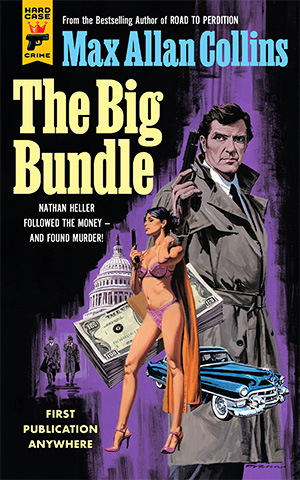
So while you may look to me to keep working as long as my noodle is functioning and I am above-ground, the pace is going to slow. I had to ask for an extension on the deadline for the new Nate Heller, The Big Bundle, after the unanticipated and most unwelcome return of kidney stones, which hadn’t reared their nasty, spiky little heads since 1998.

I have now begun The Big Bundle – one whole chapter is written (but also the research completed and the book worked up in chapter outline) – which is the first of a two-book RFK/Hoffa cycle (overall completing the Kennedy cycle begun by Bye Bye, Baby). Will these be the last Heller novels? Maybe. Right now my job is to complete these two. The Big Bundle will appear late this year, if all goes well.

* * *

A benefit of the Iowa City band job was that Barb and I were able to finish listening to the audio book of Fancy Anders Goes to War from Skyboat Media. (You can read about it here)

I’ve been blessed by having mostly really good readers of my books on audio. The head honcho at Skyboat, Stefan Rudnicki, has been doing both Quarry and Mike Hammer and knocking the ball out of the park; recently he’s embarked on Nolan, in his usual stellar manner. When we submitted Fancy Anders to Stefan, however, I requested that he use a female narrator, specifically Gabrielle de Cuir. He and she came through for me, and how.

If you haven’t read Fancy Anders Goes to War yet, this is an excellent way to do so. If you have read it, it’s still well worth the ride (and the price of admission), because Skyboat has done a fantastic job. They’ve used music and sound effects to really create Fancy’s world. Gabrielle does a lovely job, superbly differentiating the characters and (unlike some male narrators with female characters) nails the men, as well.

Skyboat will be doing the next two Fancy Anders books, as well – Fancy Anders For the Boys and Fancy Anders Goes Hollywood. Both are written (Fay Dalton is almost finished with the second book’s illustrations) and should be out next year as e-books, book-books, and audios.

* * *

Speaking of Fancy Anders Goes to War, here’s a great review of it at the Mostly Old Books and Rust review blog.

And the great James Reasoner likes Fancy, too – check this out!

Quarry’s Blood, not quite out yet, is already getting some swell reviews at Goodreads.

Finally, here’s a great look at the Nolan series.

M.A.C.

Happy Birthday, Mike Hammer – All Year!

January 11th, 2022 by Max Allan Collins

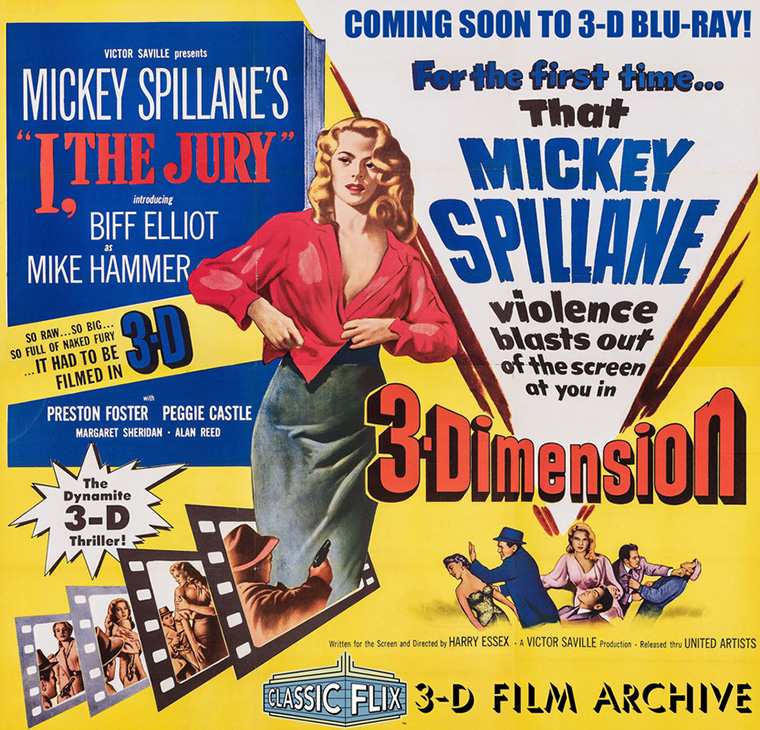
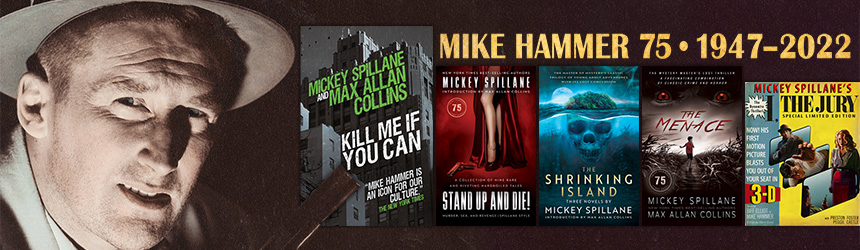
So it’s 2022 and that makes it the 75th anniversary of Mike Hammer.

More specifically, it’s the 75th anniversary of the publication of I, the Jury (1947), the first Hammer novel. The character, arguably, begins with Mike Lancer, who appeared in one story written by Spillane and drawn by Harry Sahle, “Mike Lancer and the Syndicate of Death,” in Harvey’s Green Hornet comic in 1942. Lancer became Mike Danger, although none of the comics stories were published till 1954.

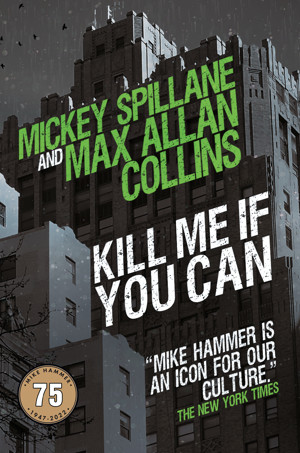
Kill Me If You Can cover
Hardcover:
E-Book: Google Play Kobo

If you’ve been following this update/blog, you may recall that we have a lot of special things in store this year for the Hammer birthday celebration. I have used several unproduced TV scripts by Mickey to write the 2022 novel, Kill Me If You Can, available in August (and for pre-order now). The book is the prequel to The Girl Hunters (1962) and deals with the missing period between it and Kiss Me, Deadly (1952), showing how Hammer dealt with Velda’s disappearance and apparent demise. (Hint: not well.)

But wait, there’s more: in addition to the full-length novel, we are including five short stories written by me from unpublished Spillane material; this includes two Hammer stories and three others in the Hammer-verse. These stories have appeared in The Strand, Ellery Queen’s Mystery Magazine and Mystery Tribune, and are collected here for the first time. I am very grateful to Titan publishers Vivian Cheung and Nick Landau and editor Andrew Sumner for giving me this opportunity to make the 2022 Mike Hammer book something really special.

Again, if you’ve been following these updates at all, you’re aware that Jim Traylor and I have completed Spillane – King of Pulp Fiction, the long-in-the-works biography of Mickey. It’s in the hands of Mysterious Press publisher Otto Penzler who, after some tweaks and minor rewrites, has sent the book into copyediting. In recent weeks I’ve compiled the photos for the book and written captions, all of which have been approved by Jim and which are now in the hands of my son Nate to prepare them for the book designer.

I don’t have an official pub date yet, but the idea is for the biography to be out toward the end of this birthday year.

Additionally, I am working with Wolfpack editors Paul Bishop and James Reasoner, as well as publisher Mike Bray, to bring out several major Spillane books during this celebratory year. First, a collection of Mickey’s YA adventures novels will for the first time gather all three of those books into one volume, The Shrinking Island, named for the previously unpublished final book in the Josh and Larry trilogy. Hardcore Spillane fans have been waiting for this for a long time.

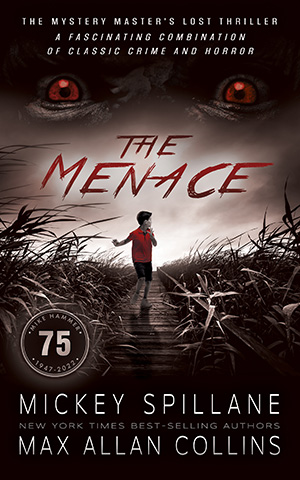
In addition, I have novelized and expanded Mickey’s unproduced screenplay, The Menace – the only work of his that was designed as a horror property – into a novel. Wolfpack will be bringing that out this year, possibly under their recently acquired Rough Edges Press imprint.

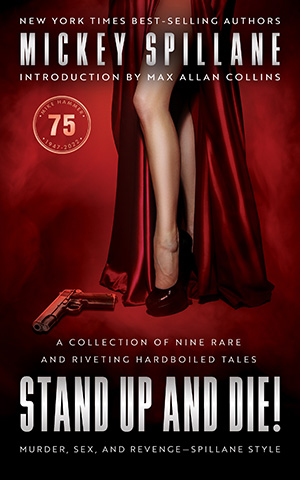
Finally, I am in the process of putting together a collection of Spillane’s short fiction – not all that short, because mostly this is novellas – plucked from two long out-of-print collections I edited (Tomorrow I Die and Together We Kill). This new book – Stand Up and Die! – will excise from previous two collections assorted non-fiction and non-mystery-fiction works and leave only vintage Spillane crime yarns.

Included will be a new edit by me of “The Night I Died,” the Mike Hammer short story that marked the only Hammer collaboration between Mickey and me during his lifetime (we of course worked on the revival of Mike Danger together). It is based on an unproduced radio play Mickey wrote around 1953. I am taking a new look at it because I now feel it was too literally a translation of the script.

The novellas, including the title one and the little-seen “Hot Cat” (aka “The Flier”), are particularly strong. This will be a fine addition to the books published in the Hammer birthday year.

In addition, I am working with Bob Deis, the mastermind behind Men’s Adventure Quarterly, to present a raft of other Spillane novellas in at least one collection including the original men’s adventure magazine illustrations.

We had great success with Mickey’s 100th birthday celebration a few years ago; this represents a new – and perhaps last – bite at the apple. I hope to do a few more Hammer novels for Titan, including Mickey Spillane’s The Time Machine (originally Mike Danger but now Mike Hammer) before wrapping up the saga. And if Wolfpack is successful with the Spillane publications above, I have one more unproduced Mickey screenplay to novelize and half a dozen novels he began that are waiting to be finished.

I’m sorry to report that Kensington has not requested a new Caleb York, but Wolfpack has been very successful with their western line, and – again, depending on how these Spillane titles to for them – we may see Caleb (and me) back in the saddle. I don’t have a pub date, but I think Kensington will still be bringing out Shoot-out at Sugar Creek in a mass market edition as yet another Spillane title in the Hammer anniversary year.

As usual, the success of all this is in your hands.

* * *

Here’s a very smart review of the new Hard Case Comics Ms. Tree collection from Titan, third in the series.

Check out this fabulous review of Fancy Anders Goes to War from Ron Fortier.

Some interesting thoughts about the film version of Road to Perdition here.

This list of the best mysteries of all time includes a number of my titles. Aw shucks, he said. About time, he thought.

M.A.C.

Astaire, the Past, the Ricardos and Nightmares

January 4th, 2022 by Max Allan Collins

In last week’s comments, I was scolded for speaking my mind in a way that might alienate my younger fans. I hope I have some, but if they like my work, surely they don’t want me to mimic their political and social points of view, just to curry favor.

I do read (or at least thumb through) Entertainment Weekly and Rolling Stone, and encounter mostly names of artists in film and music that mean nothing to me. Not that those names should. I am just trying, in a half-hearted, half-assed way, to keep up; but that’s a hopeless pursuit, really. We are so fragmented in our popular culture – we have so much streaming, so much popping up on social media platforms, so little Beatles-on-Ed-Sullivan shared experiences, that we are all our own little islands.

That has its pluses and minuses. More stuff can get out there, but fewer eyes and ears will share the same or even similar experiences. When I remark that a TV show or movie is “painfully diverse,” I don’t mean diversity is bad – I mean, forced, cynical diversity is at odds with good storytelling. The preview I saw recently of an upcoming new version of Cyrano features Peter Dinklage in the title role – and swapping the original’s big nose for the actor’s diminutive height seems to make sense. Casting a Black actor as Christian who woos white Roxanne jars. Why, because I hate Black people? No, because it’s (a) historically risible, and (b) the whole story is set up around Roxanne being courted by a conventionally boring socially acceptable superficial clod who (to successfully win her) requires the poetic touch of a man considered to be ugly.

I’m not bent out of shape about it – this new Cyrano is a musical, after all, and there wasn’t a lot of Broadway-style singing going on between sword fights in 17th century France, either. I won’t avoid the movie, as I like sword fights, musicals and Peter Dinklage. But must we pretend the past was ethnically diverse?

The other side of the coin is represented by old Hollywood’s shameful mistreatment of minorities, particularly Blacks. That, of course, is a more complicated, even nuanced thing to navigate. On New Year’s Eve, over champagne and party mix, Barb and I watched Swing Time with Fred Astaire and Ginger Rogers. The 1936 film has the usual trivial, even irritating weak comedy surrounding transcendent dance numbers.

Astaire’s solo number is “Bojangles of Harlem,” supposedly a tribute to Bill “Bojangles” Robinson, whose dancing style has little if anything to do with Astaire’s. It’s an uncomfortable watch, though at times exhilarating (it’s Astaire, after all). But it’s Astaire in black face, and one of the special features on the excellent Criterion disc has Imogen Sara Smith discussing Astaire’s dance routine in terms of minstrel shows and other racially denigrating trends in show business during the first half of the 20th Century (and beyond).

Smith is an excellent critic, whose work on film noir has been commendable, and her discussion here of the shameful history leading up to a moment like the Astaire routine is accurate, even astute…as far as it goes. When the young Black woman lays blame at the feet of the “white men” who ran the studios, she neglects to discuss that white men were in charge of everything back then, and also that these particular white men were Jewish, and the object of plenty of prejudice themselves.

In another Criterion special feature, Gary Giddens – Bing Crosby’s brilliant biographer (like me, an old white guy) – discussing Astaire in black face quotes novelist L.P. Hartley: “The past is a foreign country: they do things differently there.”

I recall vividly my young-person reaction to minstrel show segments in movies and on television shows (this lasted well into the fifties and even sixties) as something distasteful and stupid. My reactions then – and, frankly, now – to how (what-was-already-yesterday’s) Hollywood handled black talent was a combination of marveling at the artistry of a Mantan Moreland or Tim Moore – two incredibly funny comedians – and how sadly ironic it was that men this talented had to maneuver around white stupidity to work their magic.

But as a kid I already understood that when Al Jolson and Eddie Cantor “blacked up” they were part of a show-business tradition they did not invent; and that – this is key – as Jewish comedians black face allowed them to be cheeky in a way they might not risk otherwise. Jolson and Cantor performed in musicals where their “black” characters were the smartest and funniest and most interesting in the story/cast. They were also the stars.

True, Jolson sentimentalized the Old South in a way that now rather curdles the blood – nobody gets caught up in “Mammy” or “Swanee” anymore. But when Jerry Lewis, in the late ‘50s and early ‘60s, was doing “Jolie” songs (he actually remade The Jazz Singer for TV), he was not saluting the Old South or putting down Black people – he was paying tribute to old show business and his own father, who was a Jolson imitator.

The past is a foreign country.

Writing fiction set in the past has gotten tricky as hell, but it always has been. Since the beginning of writing Nate Heller, I’ve had to consider what Heller’s language should be – in dialogue somebody might be “colored,” but in the narration (presumably written by him years later) he would likely use “black” or even “African American” (although we are now back to Black, albeit capitalized).

I almost always like Aaron Sorkin’s work, and his current Amazon Prime movie Being the Ricardos has its merits, with great performers having a blast delivering the writer’s trademark witty-to-a-fault dialogue. But Sorkin stumbles badly in the writing-about-the-past department. Some of it seems uncharacteristically sloppy – he refers to the “taping” of a show in an era before video tape (shows were filmed, or performed live with kinescopes sent to the west coast), even though the revolutionary multi-camera 35mm film technique developed by Desi Arnaz and cinematographer Karl Freund is referred to later.

Sorkin has Lucille Ball up against Judy Holliday for the lead in The Big Street in 1942 when Holliday didn’t even make her screen debut till 1949. He uses the term “showrunner” when it wasn’t around till the ‘90s. Easy-to- avoid anachronisms litter the screenplay. Perhaps the most egregious instance of Sorkin making no attempt to stay in period has Lucy accusing Desi of “gaslighting” her – a form of the word that dates to 2016.

Sorkin has had his problems with “woke” criticism, and he seems to be trying to court forgiveness here through the characterization of the young Madelyn Pugh (played by Arrested Development’s Alia Shawkat), portraying Pugh as a modernday feminist somehow time-machined to 1952 to confront Lucille Ball about the infantilization of her performances as Lucy Ricardo.

This is exactly the kind of thing that turns my stomach – courting the good opinion of the predominant cultural arbiters and selling out in the process.

* * *

Guess who doesn’t sell out? While the new Reno 911!: The Hunt for Qanon is not exactly a great movie, it’s certainly great fun, if you’re already a fan. With Patton Oswalt along for the ride, we travel with the Reno 911 team as they infiltrate a Qanon cruise in hopes of serving Q with a subpoena. How they endure a thirty-day quarantine on the ship (not Covid –“extreme diarrhea”) and wind up on Jeffrey Epstein’s sex island can best be summed up thusly: Trudy has an affair with a potted plant. It’s on Paramount Plus.

* * *
Nightmare Alley, Criterion release

Among noir fans, I may be in the minority; but for me the Guillermo del Toro remake of Nightmare Alley misses badly.

I have pretty much universally liked del Toro’s other work, and have spoken here of how much I value Pacific Rim, Crimson Peak, and The Shape of Water. I sought out William Lindsay Gresham’s novel Nightmare Alley in high school after seeing the 1947 film version on TV, and it’s been on my shelf of favorite hardboiled literature ever since. I came to the film as a Tyrone Power fan – based upon such swashbuckling fare as The Mark of Zorro, Captain from Castille and Prince of Foxes – and was gobsmacked by his performance as Stan Carlisle, a carny who rises to prominence as a nightclub mentalist, a grifter who gets out-grifted and falls even lower than the lowly place he started.

It’s a haunting story and works best in its first film incarnation, where Tyrone Power’s handsome charmer makes us root for him at first and even continue caring about him when his flaws start bringing him down. The film is a noir buff’s dream, with Colleen Gray as innocent Molly, Joan Blondell as worldly Zeena, and the wonderful, unjustly forgotten Helen Walker (of Murder, He Says!) as a complex, chilling femme fatale, Lilith Ritter. Written by Jules Furthman (whose screenplays include everything from Mutiny on the Bounty to To Have and Have Not) and directed by Edmund Goulding (Grand Hotel, The Razor’s Edge), the film is gritty and uncompromising even while dancing around the Production Code. While the novel ends with Stan condemned to the worst job at the carnival, the film has him reunited with his wife in a superficially, censor-satisfying ending, but clearly doomed to reenact the shabby fate of Zeena and her now-dead drunken husband. (There’s an excellent Criterion edition of this, as well.)

Del Toro claims this is a return to the novel and not a remake; however, the last line of his film comes from Furthman’s screenplay, not the novel. The original film ran 111 minutes while the new Nightmare Alley is two hours and thirty minutes, the storytelling basking in itself and refusing to move along on what is, after all, a carnival ride – a story that is essentially an ironic eight-page EC Comics horror yarn.

The new Nightmare’s art direction is ridiculously lavish – the cheap carnival’s fun house set is a visual feast and at the same time all wrong, and psychiatrist Lilith Ritter’s office is an absurdly vast art deco chamber. It’s like a musical where you come away humming the sets. Meanwhile, the director misuses some of our best actors. Bradley Cooper wanders dazed through the proceedings, utterly lacking the charm and charisma that make Tyrone Power believable as a manipulative charlatan and a rogue at times worth sticking with. Toni Collette’s Zeena trades in Joan Blondell’s earth mother for a skank who immediately climbs into a bathtub with just-walked-in carny Cooper. Cate Blanchette may be sending up every femme fatale of real films noir, or she just may be struggling with a script that presents her as an immediate over-the-top cliche. Rooney Mara’s Molly does whatever the script bids her to do at any given moment, obediently going along.

I am usually not this tough on films. There’s a lot of artistry and talent on hand here, but so is a woeful misunderstanding of the source material. Nightmare Alley, both Gresham’s novel and the original film, utilize a technique I heartily approve of: a melodramatic tale with a gritty surface of realism. But Del Toro actually expands and overblows the melodrama, making Carlisle a patricidal sociopath, turning Lilith Ritter into a witchy parody, and evil kazillionaire Ezra Grindle (Richard Jenkins) into a homicidal maniac spouting the f-word as if it was already common parlance in 1941.

I saw this in a theater, wearing a mask, risking Covid – just another sucker taken for a ride at the carnival.

* * *

Ron Fortier has done a lovely review of the initial title in my so-called “disaster” series.

This is a Crusin’ performance from a few years ago that features our former guitar player Jim Van Winkle, his son Teddy on trombone (an impromptu sit-in), and our much missed bass player, the late Brian Van Winkle. This was a benefit performance at the River City Music Experience in Davenport, Iowa (we were one of a number appearing). Goes out of focus for a while but straightens itself out.

M.A.C.

Bad Reviews, Christmas Movies, and Gift Cards

December 28th, 2021 by Max Allan Collins

Five readers have added their positive reviews/ratings to No Time to Spy at Amazon, pulling our average up to four stars. This is much appreciated. Never too late to join in!

The notion that I’m thin-skinned about bad reviews is one I’m hit with now and then, understandably. But my frustration with bad reviews – specifically the mean-spirited ones like the attempt to sabotage No Time to Spy – has almost entirely to do with the impact it has on sales, because sales impact whether I can make a living or not. And in this case it will determine whether Matt Clemens and I get to write the John Sand novel we’ve been planning.

As for being thin-skinned, I am to a degree. I think all people who work in the creative arts, particularly those who make their living at it, are sensitive individuals, otherwise they wouldn’t be very creative. Most of us learn to take bad reviews in our stride, although writers (the same applies to actors, cartoonists, etc.) handle bad reviews differently – some avoid reading them, others sort through looking for the thoughtful, intelligent ones, ignoring the dumb and/or cruel ones, and genuinely try to learn from constructive criticism.

One of the basic things I’ve learned about writing fiction is its collaborative nature – it’s me plus the reader. I’ve often said words to the effect of, “Sometimes I play Broadway, other times the Three Mile Island Dinner Theater.” I’m only as good as my collaborator. Also, if my collaborator – however intelligent (including those more intelligent than me, which isn’t a small group) – does not share my world view, or at least doesn’t find my world view palatable or interesting, then we are simply not a good fit. Nothing wrong with that.

But few reviewers are wise enough to simply say, “This isn’t bad on its own terms, but it’s not my cup of tea.”

I am at a stage of my career where I am not in sync with several generations. Though I am a liberal democrat, my views are not progressive enough for those who haven’t lived as long as I have. And I will not live long enough to see karma catch up with these generations, but I smile when I think about how it will.

What specifically am I talking about? Here’s one example. It’s becoming more and more common for reviewers and social commentators and even actual readers to complain about characters in novels not having the right attitudes reflective of this cultural moment. I am coming to dread the term “politically correct” (and already dread “woke”), but please take my word for it – it’s just about impossible to write an interesting narrative when everybody in it is “nice.”
Then there’s the peculiar thing I’ve noted here several times. People complain about the explicit sex scenes in my Quarry novels and about the way he describes women, based upon their physicality in terms of sexual attractiveness. These same people never comment on the fact that Quarry is a murderer. Sometimes the explicitness of the violence gets a comment, but what book did they think they were picking up? The Hard Case Crime covers should be an indication. That the “hero” is a hired killer might be another one. Yet another would be that the books all take place decades ago (with the exception of the forthcoming Quarry’s Blood).

Similarly, Nate Heller – whose adventures take place in the mid-20th Century – is criticized for his attitudes toward women and I am scolded also for the occasional explicit sex scene. Yet not once has a reader in a comment section or a reviewer in a magazine or newspaper or on a blog commented on the fact that Heller – like Mike Hammer – often flat out kills the bad guy. Sex bad, murder good?

And when was it, exactly, that I presented Quarry or Nate Heller or for that matter Mike Hammer as a role model for enlightened males?

Watch your step, everybody. It’s getting dumb out there. Be careful you don’t trip over the falling IQ points.

* * *

We had a delightful Christmas here – both Christmas Eve, when we exchange presents, and Christmas Day, with stocking presents. In both cases, Barb – who proclaims proudly that she is a bad cook – proves this to be a charade by way of preparing delicious meals on both Christmas Eve and morn.

We have been lucky throughout the Covid period to be able to interact with our son Nate, his wife Abby and our two grandchildren, Sam (6) and Lucy (3). I hope you other grandparents are bearing up under the realization that yours are not as cute and bright as ours.

But Christmas arrived much too fast, and I never got around to presenting my revised Christmas movies list here. All Barb and I watched were what have become perennials for us: both Bad Santa movies, Christmas Vacation, Office Christmas Party, the original Miracle of 34th Street and the Alistair Sim Scrooge.

The one new Christmas movie was Love Actually, which of course isn’t new at all, having been released in 2003. But we hadn’t seen it. We enjoyed it a great deal, but were struck by how practically every romantic relationship in it would be considered inappropriate today. It’s a sweet movie with a good heart, and yet I wonder when someone will attack it. Maybe they already have. Otherwise, AV and Huff Post are asleep at the switch. They better get with it – otherwise, somebody might enjoy it with a clear conscience.

* * *

If you’re like me, you probably got Amazon and or Barnes and Noble gift cards as at least part of your Christmas haul. While it’s true I cashed my Amazon cards in late on Christmas Eve, not one to allow gift cards to burn a hole in my psyche, it’s possible you haven’t used yours yet.

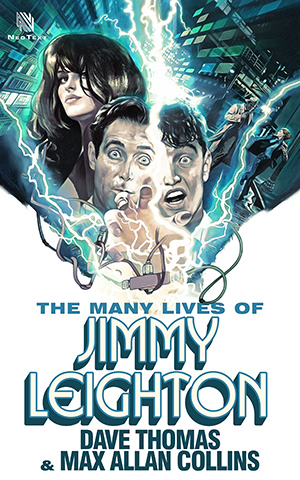
My top three suggestions are by me – Fancy Anders Goes to War, The Many Lives of Jimmy Leighton (with Dave Thomas), and No Time To Spy (with Matthew Clemens).


E-Book: Amazon Purchase Link
Paperback: Amazon Purchase Link
Digital Audiobook: Amazon Purchase Link

E-Book: Amazon Purchase Link
Paperback: Amazon Purchase Link

E-Book: Amazon
Paperback: Amazon

If you must use your gift cards on books I didn’t write, here are a few more suggestions:

Star Struck by Leonard Maltin. Full disclosure: Leonard is a pal, but I enjoyed this book immeasurably. It focuses on (as the secondary title tells us) his “unlikely road to Hollywood,” and his encounters with very famous people are shared in an intimate, fun, behind-the-scenes fashion. The way his love for movies, and how his fanzine led to greater things…much greater…is frankly inspiring.

Behind Bars: High-Class Cocktails Inspired by Lowlife Gangsters

Behind Bars: High-Class Cocktails Inspired by Lowlife Gangsters by Shawn McManus, Vincent Pollar and Paul Sloman. This is a sort of recipe book for cocktails, but each one is attached to a famous real or fictional gangster with lovely illustrations of those gangsters by McManus. Now, I’m not a big drinker, but this resonated with me. Why? Michael Sullivan Sr (AKA O’Sullivan) of Road to Perdition fame/infamy is not only included…he’s on the cover! I am highly complimented! (Although not at all compensated.)

The Art of Pulp Fiction: An Illustrated History of Vintage Paperbacks by Ed Hulse. This is a lovely, lavishly illustrated history of paperbacks with info on artists. However…the first paperback cover of I, the Jury was not by the great Lu Kimmel, who did the next version; the original (pictured in Art of Pulp Fiction) was by Tony Varaday. And the hardcover edition did invoke Mickey Spillane’s famous last scene, just the aftermath not the build-up. But this isn’t the kind of book you read for text.

* * *

My old friend Paul Kupperberg was nice enough to include the Jake and Maggie Starr trio of comics-related mysteries on his list of comic book histories and biographies. We don’t exactly fit, but who cares? It’s nice to be noticed.

Happy 2022!

M.A.C.