Posts Tagged ‘Reviews’

A Fair Hearing

Tuesday, August 4th, 2015

Barb and I visited our son Nate, his bride Abby and our new grandson (still unnamed at this writing) over the weekend in St. Louis. The little guy – he was early, and truly is little – is doing fine, and so are his parents. It was a fun visit and heartwarming, and I’ll stop right there before everybody gets sick.

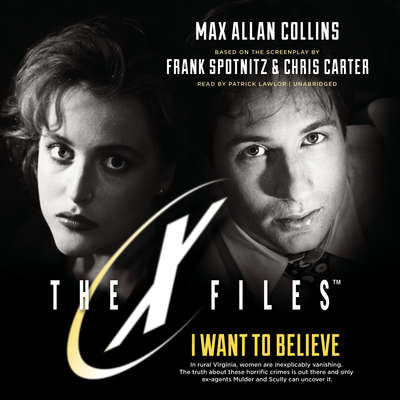
I mentioned last time that there’s a new audio out of my 2008 X-FILES movie novelization, I WANT TO BELIEVE. We listened to it on the ride down and back, and enjoyed it – the narrator, Patrick Lawlor, did a good job. I rarely revisit a movie novelization, and this proved interesting for a number of reasons.

First, as often happens when I listen to an audio of my work, I am in a best-of-times-worst-of-times mode. I usually have forgotten enough about the plot (whether my own or some screenwriter’s) to enjoy the novel as a narrative. But I also cringe at things that I will never get the chance to fix. In writing a novelization of a film, the work often goes fast and has to be handed in on a near-impossible deadline, and I WANT TO BELIEVE could definitely have benefitted from another pass where I tweaked and fixed things. On the whole, though, it came out pretty good. Or as Larry David would say, “Pretty, pretty good.”

When we got home, I decided to look at the film itself. I had it on blu-ray but hadn’t watched it since I saw it in the theater. I haven’t done a movie novelization in a long time (I WANT TO BELIEVE was one of the last), but my most vivid memory of those days is that seeing the film in a theater was always a weird experience for me. I had spent enough time writing the novel that the narrative on hand seemed my own (a delusion). A fact of life for the writer of a movie novel is that you work from a screenplay and do not get access to the film itself, though you are expected to mirror that film. Now and then, you get a few clips and the X-FILES people were generous with wardrobe sheets and cast lists, and were always there to answer questions (“What kind of car does Scully drive?” “What color?”). But mostly you’re flying blind, as screenplays are notoriously bare bones.

Seeing the movie after having just heard the novelization made me feel good about what I’d accomplished. I had definitely imagined, and recorded, a movie from that screenplay that tallied well the actual film. The biggest difference was an odd one. The main villain was described in the screenplay as having black stringy hair and craggy ugly features, and was frequently linked to the Russian madman, Rasputin. In the film itself, blond, rather handsome actor Callum Keith Rennie – who was a good guy co-star on one of my favorite TV series, DUE SOUTH – was the bad guy. So that change was startling.

Others were very minor. A couch turned into a folded-out day bed; bone marrow cancer became lung cancer. Otherwise, I pretty much conjured up the same movie, albeit on paper. Some of the character names – no doubt forced by the legal department on the filmmakers – I disliked. One tough African-American FBI agent was called “Wesley Drummy.” Horrible name, not at all suited to the character. In the film it gets used once or twice; in the book I had to use it all the time. A number of awkward character names made the book seem klutzy at times – this is not at all uncommon in the novelization game. You’re stuck with these stupid names.

I liked the film, which remains much maligned. I do think the X-FILES folks made a major mistake in having Scully and Mulder at odds and separated through much of the story. Nothing wrong with that story, but a crucial creative meeting was skipped – the one where everybody sat down and asked each other, “What do X-FILES fans want to see?” Not Dana Scully turning her back on the FBI and Mulder to tend to a little kid with a brain tumor.

The experience of hearing my books on audio is always gratifying and frustrating. I careen between thinking, “That was a really nice scene/line/description,” to, “Jesus, I wish I could fix that!” And you are the captive of the audio-book reader. I’ve had some great ones, quite a few good ones, and some terrible ones. One guy read DAMNED IN PARADISE in a bad Bogart impression. (I gave my freebie copies to friends as gag gifts.) On the other hand, the Hellers have all been read in recent years by the excellent Dan John Miller, who has virtually become Nate’s voice.

The day I’m writing this, Dan is in the studio reading FATE OF THE UNION. He did a fantastic job on the first book in the Reeder and Rogers series, SUPREME JUSTICE, and both Matt Clemens and I are thrilled to have him back for FATE. Dan also did a great job on THE WRONG QUARRY, but the new Quarry audio book publisher, Skyboat, features the QUARRY novels as read by the excellent Stefan Rudnicki. Rudnicki is an older, huskier Quarry, a deeper voice than the character usually receives but an excellent, expressive reader. He knocked the ball out of the park on QUARRY’S CHOICE.

* * *

My friend Mike Dennis campaigned long and hard to get to record an audio of I, THE JURY. Check out his story here.

And, finally, here’s a good if somewhat patronizing review of ANTIQUES SWAP.

M.A.C.

X-Files Is Out There

Tuesday, July 28th, 2015
The X-Files: Trust No One
Paperback:
Audio MP3 CD:

The surprising news of a new, six-episode season of THE X-FILES featuring the original cast caused me to reflect on just how much Barb, Nate and I enjoyed the series, back in (as they say) the day. How we never missed an episode, even when we were so frustrated we wanted to throw a brick through the screen (“All will be revealed!”), and binge watching our laser discs that allowed some of the fan favorite episodes to be viewed again and again at home (amazing).

The series ran nine seasons and a major, big-budget motion picture was part of the mix, as well. Toward the end of the run, I was well-established as a writer of tie-in novels, and was approached by Harper Collins (the publisher, not some obscure cousin of mine) to develop a proposal for an original X-FILES novel.

In the business of writing tie-ins, Fox TV was notorious for being hard to work with, especially on the X-FILES franchise. But I was such a fan, I wanted to do it anyway. So for a period of about a year, off and on, I worked under the guiding hand of a Harper Collins editor to produce a fifty-page story treatment for a novel. This was entirely on spec, something I rarely do – but remember, I was a fan.

I came up with something I thought was very, very good, and so did the editor – a kind of X-FILES MEETS AMITYVILLE. We sent it in. We never heard a word. No rejection, much less an acceptance. That’s the writing biz – you drop something down a well and don’t even hear a splash.

By this time the series was in its final season, and not only did my tie-in never happen, no other X-FILES novels by anybody happened, either.

Then in 2008, a second film was produced: THE X-FILES: I WANT TO BELIEVE. Out of the blue, I was approached to write the novelization. I was thrilled, although I was apprehensive, because the movie was being produced in great secrecy, and the reputation of the X-FILES people being impossible to work with was a less than distant memory.

As it happened, I WANT TO BELIEVE was the single best experience I ever had, writing movie novelizations. I was one of a small handful of people (something like five) who had a copy of the script. The actors, I understand, had only their own script pages. The cinematographer had to read the script in a bank vault. But it was on my desk in Muscatine, Iowa.

Both Chris Carter and especially co-writer/producer Frank Spotnitz were terrific; I was frequently on the phone with the latter. If I had questions about wardrobe, I was sent daily costume sheets. I had photos from the set when the Internet had next to nothing. In one case, the editor of the film (Richard A. Harris, Academy Award winning editor of TITANIC and TERMINATOR 2) sat at his computer in Canada and described an action scene to me, frame by frame, that was not in my script. We were on the phone for two wonderful hours. Incredible.

I think I WANT TO BELIEVE is one of my best movie novels, but the film itself disappointed a lot of people. I liked it. It was an intelligent monster-of-the-week episode with some daring themes. The mood was right and the two leads were typically stellar. I remain thrilled that, sort of at the last minute, I became a part of THE X-FILES.

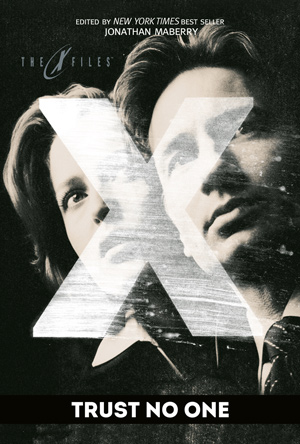
Now with the six-episode special-event series coming, a real push on X-FILES material is under way, particularly from IDW, with whom I have a long history. I was approached by the fine writer (also fine guy) Jonathan Maberry to contribute a story to an X-FILES anthology, TRUST NO ONE. I asked if I could do a novella and was given permission.

Now all will be revealed: I used my long-ago story treatment for the novel that never happened to write “The House on Hickory Hill.” Finally I got some money for writing it! Finally that story gets to be seen. And I think it’s a good one.

Also, a series of X-FILES audio books has been produced including the various vintage original tie-in novels and the two movie novelizations (also TRUST NO ONE). That means that suddenly a 2008 movie novel of mine has an audio book. I haven’t heard it yet, but admit I am pleased it exists and will delight at revisiting that underrated tale again, on some road trip to come.

The X Files: I Want To Believe

It’s hard to know if THE X-FILES will be a “thing” again or just be a nostalgic blip on the pop-culture radar. The early ‘90s is suddenly a very long time ago. But THE X-FILES is a series that had an incredible impact on everything that came after. CSI, for example, played off a similar flashlights-in-the-dark vibe. As frustrating as the serialized nature of X-FILES could be, it set the stage for so many novelistic series to follow. Of current series, ORPHAN BLACK is steeped in the X-FILES approach.

I, for one, can’t wait to once again be thrilled and frustrated by this seminal series.

* * *

I am pleased to find this review of BATMAN: SECOND CHANCES that likes and understands my run on the comic book. This is definitely worth checking out (scroll down some).

This somewhat ancient but lovely review of my novel SAVING PRIVATE RYAN has popped up on the Net.

Here’s an interesting article on the QUARRY TV series moving to Memphis for its last weeks of production on season one. Lots of mentions of the novels.

Finally, here’s a write-up on the Eclipse comic book company that includes a brief but very nice mention of MS. TREE.

M.A.C.

Go Sell A Watchman

Tuesday, July 21st, 2015
Go Set A Watchman

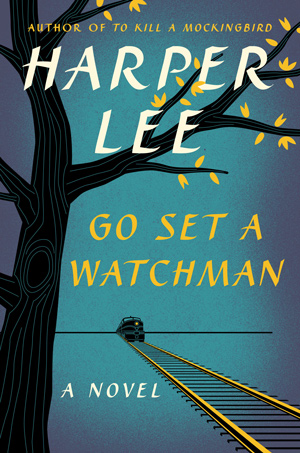
I have read around 100 pages of Harper Lee’s GO SET A WATCHMAN, and frankly don’t know if I’ll get any farther in it.

The writing certainly has at least occasional flair, though the use of point of view isn’t to my liking – suddenly jumping into another character’s POV for a while, and then back again, is an amateur ploy. The secondary characters aren’t particularly compelling, and the dialogue is often precious. But what’s really wrong with the novel is that it has no discernible plot. Unlike its famous predecessor, TO KILL A MOCKINGBIRD (like I had to tell you), there’s no murder trial to provide an engine to the small-town nostalgia set pieces.

MOCKINGBIRD is not a particular favorite of mine. I read it when it came out, in my youth, and have seen the fine film version a couple of times. But it’s not a novel that resonated with me so deeply that I named a child “Atticus” much less became expert in the prose style of its one-hit wonder author.

Mickey Spillane used to cite Lee and Margaret Mitchell as examples of “authors,” when explaining the difference between authors and writers, considering himself a prime example of the latter. An author wrote a book or two, a writer made a living at it and produced a shelf of work.

I take special interest in WATCHMAN because of my role as Mickey’s literary executor. I’m frankly surprised that there’s been as little fuss over just how much material Mickey left behind and just how much of it I’ve prepared for publication. But I do have a special context for seeing how reviewers and commentators have responded to WATCHMAN.

First of all, most of what has been written about the novel has been nonsense. Few have reviewed it on its own terms (the only way to review a novel properly). Many have speculated about whether or not Harper Lee truly gave permission for this early work to be published (though she clearly has). Many talk about the publishing industry in ways that reveal they know nothing about how publishing works, much less novel writing.

The biggest piece of misinformation is that WATCHMAN is a rough draft of MOCKINGBIRD. No. Not even close. It’s a different book about the more famous novel’s principal characters, set twenty years later. Its theme is finding out a beloved parent has feet of clay, and that’s valid enough. WATCHMAN has also been called a sequel or even a prequel. Here we’re getting warmer.

MOCKINGBIRD is the prequel to WATCHMAN. Some sources indicate that Lee and her publisher intended WATCHMAN to be published (and presumably somewhat rewritten) as the third book in a trilogy about these characters. Whether any real work was done on book two, and what that book would have been, is currently withheld. My guess, and it’s just a guess, is that Lee is one of those writers whose initial success sent her spiraling into a life-long writer’s block. Or in Mickey’s terms, an author’s block….

People seem terribly confused that the second book chronologically was written first. But writers (and even authors) know that’s ridiculous – that books in a series or saga can be written in whatever order the writer damn well chooses. My novels STOLEN AWAY and DAMNED IN PARADISE are chronologically the first in the Nathan Heller series; but they were published (and written) as books five and eight respectively.

On the other hand, WATCHMAN should have received a polish that brought it more in line with MOCKINGBIRD (there’s a major inconsistency about the murder trial in MOCKINGBIRD when referenced in WATCHMAN, for example). But the editors were too intimidated by Lee’s reputation to fix such things, and she is apparently not in any shape to do any writing or even editing herself (or if she is, isn’t interested).

Should the book have been published? Many say no. I say, “Hell, yes.” So far I don’t particularly care for the thing, but Harper Lee is a major author, and this is a second book about the famous characters in MOCKINGBIRD, and it makes a very interesting point about putting parents on pedestals.

But the book is a flawed, early work, apparently intended originally for revision so that it could be published after MOCKINGBIRD. So the bestseller approach that Harper (the publisher, not the author) has taken can be seen as at best inappropriate and at worst sleazy.

WATCHMAN deserved a publication that was more respectful of its history and the state it’s in – a scholarly introduction or after word, for example, to explain the context and the importance of the work, however flawed. To present it as just the “new” Harper Lee novel seems designed to make a lot of money while alienating the very readers who are pumping that money in.

Presented as more of an historical artifact, WATCHMAN still would have sold very well, and it would have received a more fair judgment by the public, the press and reviewers.

* * *

The Hon Company in my hometown of Muscatine, Iowa, is a very successful office-furniture manufacturer. My Dad worked for them for many decades, and I think he would have been proud of my appearance on this Hon-distributed piece on “7 Facts About Muscatine.”

There’s a Nate Heller story in the new anthology, CHICAGO NOIR, which recently got a starred review from Publisher’s Weekly.

Here’s a nice review of the Nolan novel, HUSH MONEY.

And here’s a nice bit about the “Nat” Heller novels.

M.A.C.

Mike Hammer Shoots .500

Tuesday, July 14th, 2015
Death Sentences

Actually, Mike Hammer probably has shot five-hundred in his career, but I refer not to bad guys but the fact that at the International Association of Media and Tie-in Writers “Scribe” Awards, KING OF THE WEEDS did not win Best Novel, while the Hammer short story, “It’s in the Book,” did win Best Short Story.

No complaints. The Scribes have been great to the Spillane/Collins collaboration – we’ve won once for Best Novel (KISS HER GOODBYE, twice for Best Short Story (“Book” and “So Long Chief”) and once for Best Audio (“Encore for Murder”).

I am particularly pleased to see “It’s in the Book” honored, because it’s my favorite of the Hammer short stories (and it was overlooked by the Edgars and Shamuses, which had both singled out “So Long, Chief”). Right now I have one more Hammer fragment that would work as a short story, and I may save it for an eventual collection.

“It’s in the Book” is available as a small book and has been collected in a book club collection (see Mike Doran’s comment last time) and in the UK in a collection called DEATH SENTENCES.

Here are all the Scribe nominees with winners in bold face:
BEST ORIGINAL NOVEL – GENERAL
24: Deadline by James Swallow
Murder She Wrote: Death of a Blue Blood by Don Bain
Mike Hammer: King of the Weeds by Mickey Spillane and Max Allan Collins
Homeland: Saul’s Game by Andrew Kaplan
The Killing: Uncommon Denominator by Karen Dionne

BEST ORIGINAL NOVEL – SPECULATIVE
Sleepy Hollow: Children of the Revolution by Keith R. A.
DeCandido
Grimm: Chopping Block by John Passarella
Star Trek: Disavowed by David Mack
Star Trek: Foul Deeds Will Rise by Greg Cox
Grimm: The Killing Time by Tim Waggoner
Pathfinder: The Redemption Engine by James Sutter
Fringe: Sins of the Father by Christa Faust

ADAPTED NOVEL – GENERAL AND SPECULATIVE
Dawn of the Planet of the Apes by Alex Irvine
Noah by Mark Morris
War of the Worlds: Goliath by Adam Whitlach

YOUNG ADULT – ALL GENRES, ORIGINAL AND ADAPTED
Spirit Animals: Blood Ties by Garth Nix and Sean Williams
Battletech: The Nellus Academy Incident by Jennifer Brozak
Penguins of Madagascar by Tracey West

SHORT STORIES
Pathfinder: Hunter’s Folly by Josh Vogt
Mike Hammer: It’s in the Book by Max Collins and Mickey Spillane
Stargate: Perceptions by Diana Botsford
Pathfinder: Queen Sacrifice by Steven Savile
Tales of Valdemar: Written in the Wind by Jennifer Brozek

AUDIO
Dark Shadows: The Darkest Shadow by Nev Fountain
Dark Shadows: The Devil Cat by Mark Thomas Passmore
Blake’s 7: Fortuitis by George Mann
Doctor Who: Iterations of I by John Dorney
Pathfinder Legends: The Skinsaw Murders by Cavan Scott
GRANDMASTER (“the Faust Award”): TERRANCE DICKS

* * *

I note with sadness the passing of writer Tom Piccirilli, a very gifted man who reviewed many of my novels, and always favorably. When a writer as fine as Tom likes your work, you figure you’re doing something right.

Many tributes have appeared, but I’ll provide just this link to my friend Jeff Pierce’s write-up at the Rap Sheet.

* * *

Here’s a lovely review of THE LEGEND OF CALEB YORK from James Reasoner, who – like my pal Bill Crider – is a real western writer. When I pass muster with guys like James and Bill, I breathe a sigh of relief.

M.A.C.