Archive for the ‘Uncategorized’ Category

The Amazing Colossal Gilbert

Tuesday, April 19th, 2022

Last week my son called me with the bad news – Gilbert Gottfried had passed at 67, an age that seems terribly young to me now. Nate was apologetic about having to share word of another death with me, but at my age that comes (as the Music Man said) with the territory.
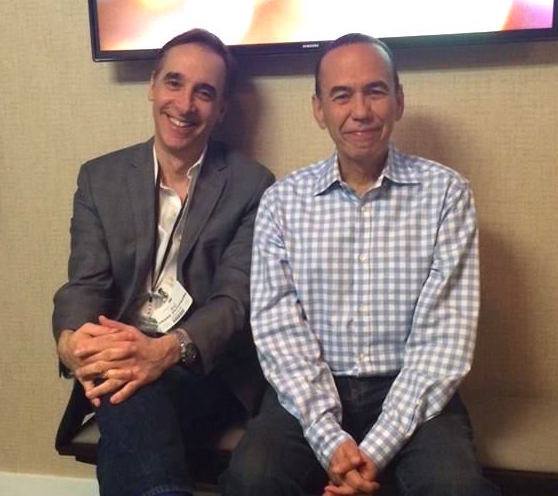
Frank Santopadre and Gilbert Gottfried

I hope Gilbert’s podcast partner, Frank Santopadre, will be able to continue their Amazing Colossal Podcast, which has been a glorious celebration and look back at all kinds of popular culture of the 20th Century, particularly film, but also TV and radio and even vaudeville. Gilbert was a master at impressions of obscure character actors, and a font of knowledge about show biz trivia (as is Frank).

When I did the show a few months ago, I was knocked out by Frank’s research, and his glee at being able to ask me, for example, why I liked the Ritz Brothers. Later, on the podcast, I explained myself – something I never expected to do in public, let alone in front of the smart, knowledgeable audience that had the sense to listen to this one-of-a-kind show.

The podcast, of course, is just one (if significant) part of Gilbert Gottfried’s contribution to popular culture. He laughed (and boy did he have a laugh) about me being a fan of his Saturday Night Live year (actually, twelve weeks); but I truly had been a fan (I liked Gail Matthius, too, and that Eddie Murphy kid showed promise). I have sympathy for that whole cast, who’d had the not enviable task of following in the original Not Ready for Primetime Players – after all, I followed Frank Miller into Batman, making me the Charles Rocket of Caped Crusader writers.

Gilbert’s character parts in various films were always funny stand-outs, from the Problem Child movies to Beverly Hills Cop II. Kids got to know that voice by the Aladdin movies and TV shows. But Gilbert’s bold adult delivery of the Aristocrats joke at the Friars’ Club roast of Hugh Hefner, less than three weeks after the 9/11 2001 terrorist attacks, was a shot across the bow at a humorless media. Perhaps the first victim of Cancel Culture – he lost his famous, lucrative Afflac duck gig after tweeting jokes about the 2011 Tōhoku earthquake and tsunami – Gilbert’s public exposure of the can-you-top-this backstage filthy private joke shared by comics became the subject of The Aristrocrats, an excellent 2005 documentary film by Paul Provenza and Penn Jillette.

If you’ve never seen it, track down Gilbert, the 2017 documentary that charts the life and some typical days and nights of a truly sweet, unique eccentric. More than any comedian in history, Gilbert Gottfried could make the punchline of a joke irrelevant – it was always about his delivery, the set-up, the commentary along the way. The journey, not the destination.

For those who are not faint of heart, I recommend Gilbert’s stand-up DVD, Dirty Jokes (2005); it’s also on Amazon Prime.

On the podcast, Gilbert always introduced his guests with long, elaborate, well-researched (thanks, Frank!) bios. I was stunned hearing Gilbert’s (shall we say) distinctive voice going on for several minutes detailing my accomplishments as well as a few embarrassing details.

Perhaps some of you will understand what a treat and frankly honor it was for me to be guesting with my co-author, Dave Thomas, on Gilbert’s show. It’s still unbelievable that as a stone SCTV freak I am now friends with Dave Thomas. And to have shared space with two of my comic heroes for a couple of hours – I will treasure the memory.

Dave said to me, recently, “You really love comedy, don’t you?”

Yes. Yes I do. But some of it died with Gilbert Gottfried, and we really could have used him sticking around in this horrific, humorless era, when people would rather take self-righteous offense than just fucking laugh.

* * *

Here, for your enjoyment, is the Amazon France translation to English of their description of my novel A Life in Red (aka Bait Money):

Among the thugs, quarantine is already the third age. It is still a matter of clinging to it. Nolan, an unlucky thug, tries to find a place in the sun. A nice combination, yes! With accomplices two inexperienced kids and a girl who has the fire in the buttocks and nothing in the cigar. And all for an old debt to the Mafia. What would it be like if he had to pay her to society!

I would love to read this novel!

* * *

Are you going to Bouchercon in Minneapolis this year? September 8-11, 2022? If so, and you’re registered, you’ve received an Anthony Awards ballot. The deadline for nominations is May 1st.

Here is a list of my books (some with Barb, one with Matt) that are eligible. If you haven’t voted yet, and liked any of these books, your vote would be appreciated. Here are the books (or in one a case a short story) that are eligible. You can vote for up to five in each category.

BEST HARDBACK NOVEL:

Antiques Carry On, Barbara Allan

BEST PAPERBACK ORIGINAL:

Skim Deep, Max Allan Collins

The Many Lives of Jimmy Leighton, Dave Thomas & M.A.C.

Fancy Anders Goes to War, M.A.C.

To Live and Spy in Berlin, M.A.C. & Matthew V. Clemens

BEST SHORT STORY:

“What’s Wrong with Harley Quinn,” Barbara Allan in EQMM July/August 2021

BEST ANTHOLOGY:

Suspense – His and Hers, M.A.C. & Barbara Collins

Reincarnal & Other Dark Tales, M.A.C.

Turning the Tied, Jonathan Maberry (editor) – includes a story by M.A.C. and Matthew V. Clemens

This voting is only open to registrants of Bouchercon.

* * *
To Live and Spy in Berlin Audiobook
Paperback: Indiebound Bookshop.org Amazon Books-A-Million (BAM) Barnes & Noble (B&N) Powell's
E-Book: Amazon
Digital Audiobook: Amazon

Speaking of To Live and Spy in Berlin, the audiobook is out now – which puts the entire trilogy on audio. A great Brit-inflected job by Brian J. Gill!

Check out an excerpt here:

* * *

The Menace by Mickey Spillane and me comes out next week. Read about it here.

M.A.C.
Fate of the Union and More Queen’s Gambit

Tuesday, January 12th, 2021

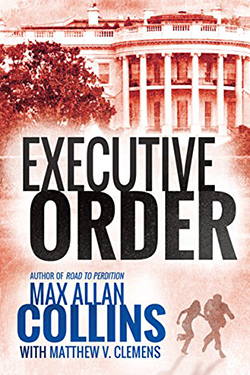
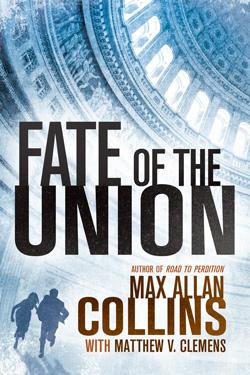
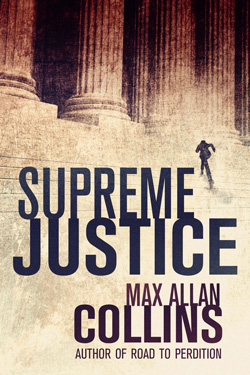
As many of you know, my friend and longtime collaborator, Matthew V. Clemens, and I wrote a trilogy of political thrillers a few years ago, with the three branches of our government represented by individual novels. They are Supreme Justice (the Supreme Court), Fate of the Union (Congress), and Executive Order (the Presidency).

Supreme Justice cover
Executive Order cover

Fate of the Union cover

As it happens – not really as part of any plan – all three deal with threats from within, essentially domestic terrorism. Somewhat chillingly, the second novel – Fate of the Union, published in 2015, posited a run for the Presidency by a billionaire populist as well as an attack on the United States Capitol building.

After the events of last Wednesday, January 6, occurred, I asked Matt, “Shall we sue Trump for plagiarizing us on Fate of the Union?” His response: “Can we? Can we please?”

Last week I neglected to announce that all three Reeder & Rogers titles are on sale on Kindle until the end of this month (January). Supreme Justice and Fate of the Union are $1.99 and Executive Order is 99 cents.

* * *

I’ve had many nice comments about my update last week, in which I talked about (among other things) my time at the Writers Workshop in Iowa City with Walter Tevis as my instructor. That included my thoughts on the wonderful Netflix mini-series based on his 1983 novel, The Queen’s Gambit.

Barb and I enjoyed that mini-series very much – we watched it twice – and I found myself compelled to take the novel off the shelf (it, and Walter Tevis’s other books, are in my office in one of two bookcases of honor) to read it for the first time. Years ago I had, wrongly, set it aside because of its chess theme, thinking that I needed to be intimate with the game to enjoy the novel.

I was stunned to discover how incredibly faithful the mini-series was to its source, perhaps the most faithful film adaptation of a novel I’ve encountered in years. Oh, they are out there – for example, you can follow The Maltese Falcon in the book while you watch the John Huston film, skipping only the scenes (and they are few) that didn’t make it into the movie.

The Queen’s Gambit, the mini-series, not only replicates almost all of the dialogue from the novel, it endeavors to turn interior monologue into speech and pays close attention to descriptions of clothing and particularly setting.

When Beth enters fellow chess player Benny’s basement apartment in New York, Tevis tells us, “There were plastic bags of garbage in the entryway,” and details the pump Beth must pedal with her foot to inflate a rubber mattress. Earlier, when Beth spends the night with a college boy and wakens to find herself alone in a post-party house, the note to her on the refrigerator is held by “a magnet in the shape of Mickey Mouse’s head.” And that’s what is depicted in the mini-series.

Countless details, including mannerisms of Beth’s chess opponents, are recounted, like a young man who brushes back his hair. Someone – or many someones – loved this book! It’s astounding.

Now, differences do crop up, though mostly it’s expansion of scenes. The major ones have to do with Beth’s mentally disturbed mother, a boy she loves who the mini makes gay, and a somewhat opened-up last few chapters, with an almost Capra-esque long-distance-call reunion of many of Beth’s chess-world friends when she can use some help with the big match. The scene is in the book, but only involves Benny and a couple of chess experts, not a reunion of characters – which is a good change, because it shows that this lonely girl has friends and needs friends. The gay (bisexual?) sort of love interest shows up in Moscow in the final section, also to be supportive, and it’s a good change. A less good one is having Beth’s black friend, Jolene, seek Beth out as an adult when the book shows our troubled protagonist reaching out to that old friend. Tevis shows Beth struggling to help herself and not just being rescued out of the blue.

These differences are well within the rights of the adaptors, and I generally feel that a film only has a responsibility to be faithful to the spirit of its source. I was fine with most of the liberties taken with Road to Perdition (and any writer who cashes the check should shut the hell up, anyway).

But seeing filmmakers who view the text as, if not sacred, something to be plumbed for inspiration and guidance, well…that is as refreshing as it is unusual.

Now, I’m going to shift gears but stay on the subject of Walter Tevis and The Queen’s Gambit.

If you’ve followed these updates or read interviews with me, you may be aware that I read little fiction. The reasons are numerous, but among them is avoiding being influenced by style. I’m enough of a natural mimic that I can get myself in trouble.

A major reason is that a book I am writing is, in a very real way, a book I am reading. And I’ve never been one to read two books at a time, going back and forth between them. Not my way. So, immersed in the narrative I’ve been trying to get down on paper, I avoid other people’s prose narratives.

Now, that does not include reading non-fiction, even biographies. Nor does it include listening to a book in the car on a trip, back when we took trips in cars. Remember that? And I watch a lot of movies and TV in the evenings, winding down.

But there’s another difficulty I have reading fiction. I don’t really believe in rules of fiction writing – to me, storytelling is mostly strategy. For example, is this a story better told in third-person or first-person? Where in the story should I begin? Should I end a dialogue scene when I get to a snappy, memorable line, or let it play out? And a million other things, or anyway thousands.

I have been writing professionally since 1971, but I was trying to write professionally starting in 1961 and worked at a newspaper in the summers of ‘66 and ‘67. So I’ve been at this a while, and though I studied at the Writers Workshop, and benefitted from it, I learned early on that you can’t be taught to write by anybody but yourself. You can get tips from a pro like me, but to learn to write you must do things: you read and you write. You read because you love it and, later, you read analytically; and you write by trial-by-error.

So in these many years, I have come up with those thousands of strategies that have become, in a way, my rules. Not your rules, not anybody else’s rules; but mine. Some of my approach has bled over into collaborators like Barbara Collins and Matthew Clemens, but they have developed their own rules/strategies, too…as well they should.

Okay, I said above that part of learning to be a writer is reading books. And for the years leading up to becoming a professional novelist, I did. So why don’t I read much fiction any more? (I do read some – mostly the people I read before becoming a pro, however, like Hammett, Chandler, Stout, Spillane, Christie, etc.).

Which brings me to The Queen’s Gambit again. Tevis is a wonderful writer, and I learned things from him then (and now), although probably more from The Hustler than his classroom teaching. I was struck by how beautifully Queen’s Gambit is written and came upon passages that I stopped and re-read aloud.

Not often.

A book that has you doing that all the time is a book by an effing show-off. Some highly respected writers in my genre, much more respected than me, are dedicated to making themselves and their readers feel important. Well, I already feel important enough, so to hell with that, and anyway I’m here to try to tell you a good story. Don Westlake told me, “Good writing is invisible.”

Tevis writes simply but is not afraid to use a word you may not know. He is clear and he is precise. I have been criticized by blog-type reviewers and even mainstream reviewers, as well as an editor (former editor), for writing about clothing and setting. Tevis does both and gives you not only a sense of place, but by doing so a sense of who those characters are. He wrote these detailed descriptions so thoroughly and well that they made it into the mini-series that everybody loves.

So I felt validated by that.

But I also stumbled on a writing strategy of his that began to bother me. He uses the “There is” and “It was” construction often. I find that passive, even lazy. It’s something that, in recent years, I’ve tried to avoid (though I didn’t in this sentence).

When Tevis would break one of my “rules,” it stopped me and I would find myself rewriting him, like Beth Harmon looking at the chess board on her ceiling and moving pieces around, replaying a famous game and looking for errors. It broke the spell.

Don’t get me wrong. I loved the novel. Tevis is a great writer and having books like The Hustler and The Queen’s Gambit on my list of credits would be a dream come true. But he had his strategies and I have mine, and as much as I enjoyed reading The Queen’s Gambit, it demonstrates why I rarely read fiction.

But please, please, everybody out there (both of you) – keeping reading stories. It’s what separates us from the apes.

That and opposable thumbs.

* * *

This is a fabulous review of Skim Deep, and I swear I didn’t write it myself.

I get mentioned on the great podcast Paperback Warrior again, but run into The Fanboy Gambit – the reader who won’t read the new book till he’s read all the others in the series!

M.A.C.

Barbara Allan Signing

Thursday, June 27th, 2019

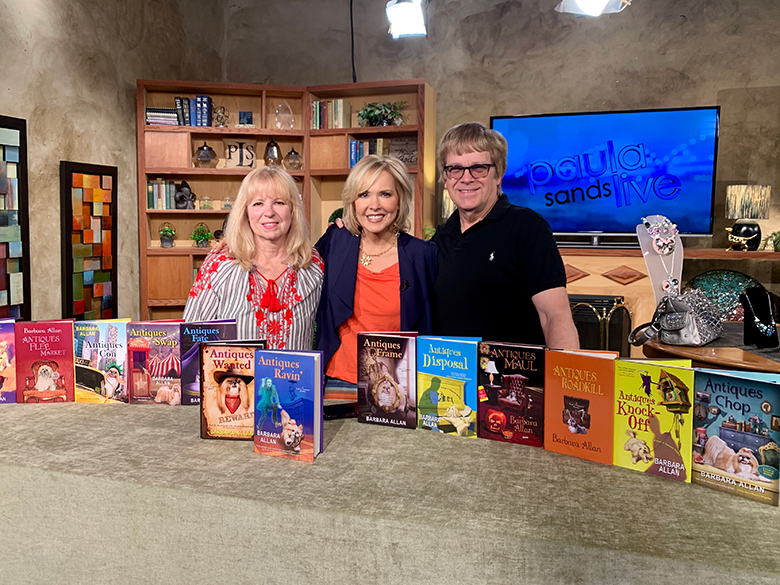
Barb and I made a “Barbara Allan” appearance, promoting the new Trash ‘n’ Treasures mystery Antiques Ravin’, on Paula Sands Live on KWQC-TV this past Monday.

We will be signing copies of the new book (and others, including Girl Most Likely, from 1 p.m. till 3 p.m. (or so) at Northpark Mall’s Barnes & Noble in Davenport, Iowa this Saturday, June 29.

M.A.C.

March Kindle Sale

Wednesday, March 1st, 2017

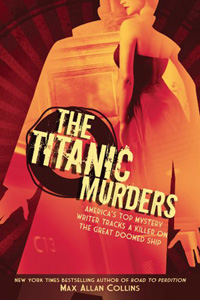
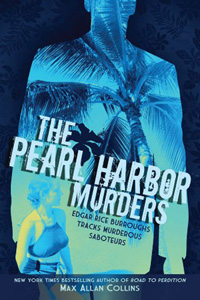
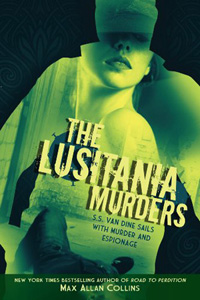
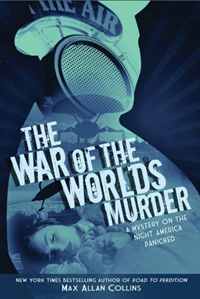
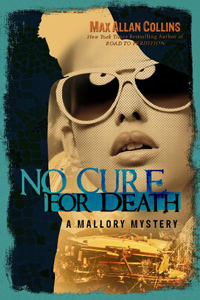
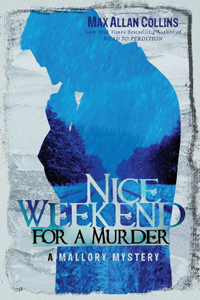
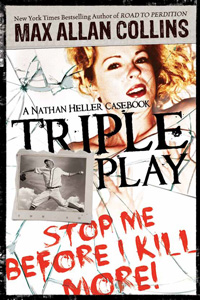
Now through the end of March, the “Disaster” series is available on the Kindle store for 99 cents each, along with two Mallory novels and Triple Play, a Nathan Heller casebook. Complete your collection, or stock up for some rainy day reading. The covers below link directly to each purchase page on Amazon.


The Titanic Murders

The Hindenburg Murders

The Pearl Harbor Murders

The Lusitania Murders

The London Blitz Murders

The War of the Worlds Murder

No Cure for Death

Nice Weekend for a Murder

Triple Play: A Nathan Heller Casebook