Posts Tagged ‘Reviews’

My Debt to Lone Wolf and Cub’s Genius Creator

Tuesday, April 23rd, 2019

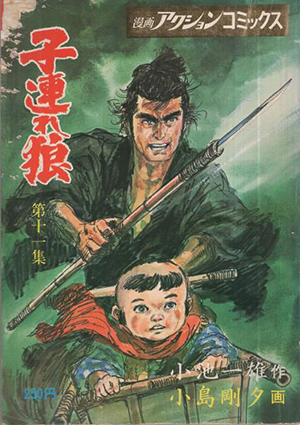
Kazuo Koike, the great creator of the manga classic, Lone Wolf and Cub, has died at age 82.

My name appears in many of his obits, along with Frank Miller and Quentin Tarantino, because of the influence he had on our individual work. Road to Perdition is often mentioned, of course, sometimes stating that it was an American version of Lone Wolf and Cub.

My interactions with this incredible writer were decidedly odd.

At one point, I received a very friendly e-mail from an associate of his saying Kazuo Koike would be in America soon and was an admirer of my work, and wanted to meet. This was perhaps a year after Road to Perdition, the film, came out. The meeting would have been in Los Angeles, if I recall, and I had to explain that I lived in Iowa, nowhere near L.A. I said I would have loved to meet with him, and that I was a great admirer of his work.

Then at the 2006 San Diego Comic Con, I attended a panel that was just Koike and a translator and someone from Dark Horse, his American publisher. During the question-and-answer session, Koike complained that his work had been plundered, and mentioned Road to Perdition as an example, complaining that these plunderers might at least have given him credit.

Afterward, I went up with my son Nate and caught Koike before he’d left the stage, and Nate startled the great man somewhat by introducing me in Japanese. (As many readers of these updates know, Nate is a translator of Japanese into English and has done novels, manga and video games.) Nate told him that I was a big fan and meant to pay homage to him, and would like to shake his hand. He shook my hand, and signed a book for Nate.
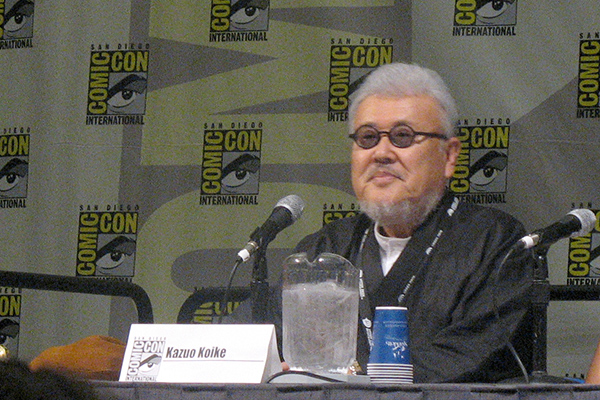

Kazuo Koike, SDCC 2006

A few years later, at another San Diego con, Koike was appearing again, and (Nate again with me) I approached the Dark Horse people about arranging a brief meeting between us. They checked with him. I was told he did not want to meet with me.

Lots of peculiarity here. First, why had I been approached for a friendly meeting earlier? Would it have been an ambush of some kind? Also, I have always gone out of my way to acknowledge Lone Wolf and Cub as one of the inspirations for Road to Perdition. Koike quotes serve as epigrams at the start of the graphic novel and the two prose sequels.

If anything, I have – and certainly others have – exaggerated Road’s debt to Lone Wolf. As I’ve mentioned in any of number of places, I was most of all drawing upon John Woo movies, including Heroes Shed No Tears (1986), a very overt (wholly uncredited) updating of Lone Wolf and Cub. In the ‘80s, I was watching a lot of Hong Kong crime movies, gray market VHS copies, when director/writer Woo was fairly unknown in America. I saw Heroes Shed No Tears before I saw any of the Lone Wolf movies.
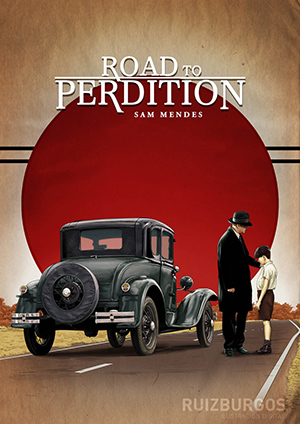
Further, in Road, I was drawing upon the real-life Rock Island gangster, John Looney, and his homicidal son Connor, and the falling out that several formerly loyal lieutenants had with Looney. In a more basic way, I was combining the movies about ‘30s bank robbers (Bonnie and Clyde, Gun Crazy) with gangster films (St. Valentine’s Day Massacre, Godfather). The notion was to bring the worlds of the rural outlaws and urban gangsters of the ‘30s together. And I’d already been doing Nate Heller for some time (Looney and son are mentioned in True Detective, 1983).

No question that Lone Wolf was in the mix. I specifically thought that the shogun and his assassin had parallels in a mob godfather and his chief enforcer. And the father and son seeking vengeance while they were being chased was an element, too, although my anti-hero’s son was an adolescent, not a baby in a cart. Robbing banks where the mob cached their cash came from the terrific Don Siegel-directed film, Charley Varrick (1973), and striking back at the mob for vengeance through their bank books was from John Boorman’s Point Blank (1967). The latter was also the start of what became my Nolan series

A lot of what I do draws from popular culture I like, but with a twist. Quarry has some of its roots in another Siegel film, The Killers (1964). Mommy is The Bad Seed flipped. Nate Heller is Philip Marlowe/Mike Hammer thrust into real unsolved crimes of the Twentieth Century. Girl Most Likely, to some degree, transposes the Nordic noir to the USA.

Lone Wolf did inspire the saga-like structure I originally had in mind. The idea was to have Michael O’Sullivan and his son on the road for 900 pages (in 100-page increments). But Road to Perdition (1998) was published as a single graphic novel (and not three 100-page “issues”) when Paradox Press (DC’s noir graphic novel line) went bust. After the film came out, I was able to go back to do another 300 pages of the father and son on the run (Road to Perdition 2: On the Road). The rest of the story was told in two prose novels – available from Brash Books – Road to Purgatory and Road to Paradise, and another graphic novel from DC, Return to Perdition.

My debt to Kazuo Koike is undeniable, if perhaps not as great as he imagined. What is great is his body of work, and his masterpiece, Lone Wolf and Cub. He might wince to know I turn up so often in his obits, but I am nonetheless honored to be in his company.

* * *

Another of my favorite manga creators, Monkey Punch (Kazuhiko Kato), also died recently, at 81. His Lupin III is a classic, and inspired perhaps the greatest anime, Cowboy Bebop. If you’ve never seen Monkey Punch’s thief in action, seek out the feature length Lupin III: The Castle of Cagliostro (1997), directed by the genius animator, Hayao Miyazaki.

* * *

Check out this write-up about Kazuo Koike’s passing.

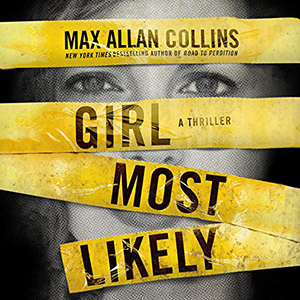
Here’s a top-notch review of Girl Most Likely from Criminal Element.

Here’s a short but sweet Girl Most Likely review.

Another decent Girl review can be seen here.

And this may be my favorite review of Girl Most Likely yet.

M.A.C.
Books on Sale at Amazon & The Last Word on Reviews

Tuesday, April 16th, 2019

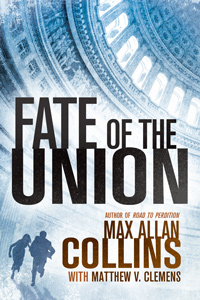
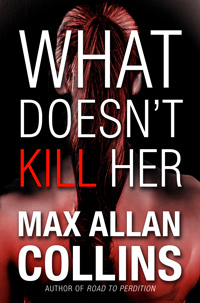
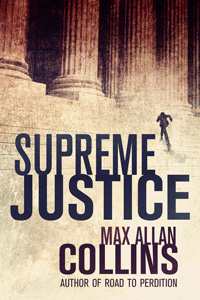
Perhaps to celebrate the release of Girl Most Likely – which is still on sale as a Kindle title and as a “real” book – Amazon is having a sale till the end of the month on my other thrillers for their Thomas & Mercer line. This includes What Doesn’t Kill Her and the Reeder and Rogers Trilogy, Supreme Justice, Fate of the Union and Executive Order.

For all the talk about Girl Most Likely being my take on Nordic Noir, the first attempt was What Doesn’t Kill Her, which was meant to be an American twist on The Girl With the Dragon Tattoo, minus the social comment.

Matt Clemens co-wrote all four of those, though he only got cover and title page credit on Fate and Order. I had to push for that, but you should know that he was fully the co-author of the other two.

A very astute reader of mine told me he thought some of the pushback against Girl Most Likely (more on that later) had to do with my describing it in terms of an American version of Nordic Noir. For what it’s worth, that was never the intention or the plan. It just came up in the first interview I did about the book and it kind of took hold.

Not that it wasn’t an aspect of how the book came to be. I really liked such Scandinavian TV series as The Bridge, Wallander, Varg Veum, and The Killing, and wanted to do something in that vein. No thought of tying my wagon to somebody else’s star was in the mix, although obviously the “Girl” in the title followed that particular trend. Attracting some female readers makes only sense in a marketplace where the fairer sex outnumbers us loutish male readers something like ten to one. That kind of math I can do.

So, reviews. I’ve talked about them here quite a bit, more than anybody wants me to, but I am going to take one last (hooray) swing at it. Let’s start with professional reviews.

Understand that I have been writing fiction a long time, and am rather set in my ways, and arrogantly feel that I know what I’m doing. But to be honest I never did pay much attention to the advice I was given in professional reviews. Almost from the beginning, I had enough faith in my work to believe in it, and me, more than the opinions of others. I mean, once you’ve been schooled by Donald E. Westlake, Mickey Spillane, Walter Tevis and Richard Yates, who cares what anybody else thinks?

No, to me the professional reviewers are all about marketing – about libraries and booksellers seeing good comments from Publisher’s Weekly, Library Journal, Booklist and the irascible Kirkus, and then ordering books. Editors and publishers like to have good reviews from those sources to blurb on covers, fore and aft, and on the first page or two of reprint editions. This is not to say I don’t enjoy reading a positive review from one of those sources. But for me, it’s strictly business. A marketing tool or, if a review is bad, a marketing obstacle.

Now and then, particularly in a newspaper or a really good blog (like The Rap Sheet), I get a glowing review that is really, really smart. Where the reviewer understands what I was up to. Now and then a positive criticism actually does take hold with me, too. Mostly, though, I love it when somebody gets it.

This is often true of the magazine reviews in Mystery Scene, Ellery Queen Mystery Magazine, Crimespree, and Deadly Pleasures, among others. These tend to be written by smart, knowledgeable people, and they are a great source for quotes, and often are positive and give me a nice little ego boost. When I do get criticism worth listening to, it’s frequently here. EQMM’s Jon Breen practically discovered me.

What’s interesting to me is how seldom reviewers notice the weaknesses in a book of mine that I knew were there. This may be because I know how to hide such things, through sleight of hand or sneaky execution. Let’s take Girl Most Likely. A major flaw about it drives me crazy – I did my best to figure out how to fix it or avoid it, and instead I merely had to finesse it largely through pace.

But the two things that the reviewers – mostly amateur ones – have complained about were done by me with full knowledge of the risks. It was absolutely intentional that I did a lot of clothing description, and the occasional brand names were on purpose, too (I’ve already said why in previous updates). The abrupt ending was a choice as well, very much in the Spillane tradition – story’s over, time to get out, let the credits roll. A good number of people hate that. I’m sorry – not really – but I felt it was called for. My book. My way.

Let’s get to the amateur reviewers, who specifically rule at Amazon, where a good deal of misbehavior is tolerated by Amazon itself, which ironically is the publisher of Girl Most Likely.

First, let me get this out of the way – the amateur reviews, overall, have been great. We are sitting at four-stars. The Associated Press review was, again overall, a fine one, and appeared all over God’s green earth. Of the pro publications, some of whom didn’t love it, Booklist was a near rave. So my difficulty with the reviews on Girl Most Likely has almost exclusively to do with the Amazon ones.

Now, if you follow this blog, you know that I encourage Amazon non-pro reviews – I give out books to readers specifically to increase the number of such reviews, and since people reading this weekly update tend to be longtime readers of mine, I can pretty much count on mostly decent reviews being generated by the book giveaways.

The negative reviews of Girl, among the many nice ones, fall into two camps. One appears to be young and female, and an unbiased reader named Barbara Collins thinks I am being punished for writing about a woman when I am apparently a man. (Lots of nice notices from the young women with book review blogs, though.) But I also see an occasional nastiness that reflects a certain breed of progressive that sees something sinister in a daughter who is a professional woman having respect for a father who is a longtime professional in that field himself. The worst of these criticized me for being “a white man.”

Now Amazon is supposed to reject reviews that are hate speech. Yet even the “white man” thing is okay with me. End of the day, it doesn’t bother me much because it’s the kind of review that reveals itself and its maker. Matt Clemens and I got a lot of those ugly reviews from alt-right nincompoops in regard to the Reeder and Rogers Trilogy. Certain early reviews of Supreme Justice were clearly written by people who had not read much if any of the book. Our sin? Of our two leads, one was a liberal, the other a conservative – and they got along!

The other negative reviews, and this reflects an almost surprisingly small number, are those from longtime readers of mine who don’t like the change of pace. For example, the book is billed as “a thriller,” although I have personally characterized it as a hybrid of thriller and mystery. And some have said that this novel – which includes three vicious butcher-knife murders, a street brawl, and the protagonists getting chased through the woods by a maniac – isn’t “thriller” enough. Perhaps this reaction comes from the world of Girl Most Likely not being the criminal one of Quarry, Nolan, Mike Hammer and Nate Heller. A new, more everyday milieu apparently jars some readers.

One particular review is a rather vicious attack on me by a self-professed longtime fan who claims to have read almost all of my stuff, some novels several times. But he is appalled by Girl Most Likely for all kinds of reasons. And you know what? That’s just fine. Everybody has a right to an opinion and to express it.

Of course, when he suggests I am selling out for “the sake of building a nest-egg to retire upon,” I have to wonder – does anybody who really follows my work think I look like I’m planning retirement soon?

Authors these days live and die on Amazon. Please support not just me, but all of your favorite authors – write positive reviews (again, even a line or two is fine), click on “helpful” on the more detailed reviews when you agree with whatever insights they provide.

Amazon is the biggest bookstore in the world. Go in there and support your favorite authors. If you read a book, particularly one you buy there, that you really like, tell the world about it, in a brief (or an extended) review. It’s a way to pay your favorites a favor, and to keep them in business.

Authors are real people, trying to make a living out of entertaining you. Any time you can express your satisfaction with a positive review at Amazon and other sites, you are helping the writers whose work you enjoy stay in business. If they disappoint you, you have every right to say so in a review.

Just don’t be a dick.

* * *

Check out this very smart review of Girl Most Likely.

This reviewer has an interesting take or two on the novel.

Finally, here’s a very nice look at the Nathan Heller series.

M.A.C.

Girl Most Likely – On Sale!

Tuesday, April 9th, 2019

Paperback:
E-Book: Amazon
MP3 CD: Amazon
Audio CD: Amazon

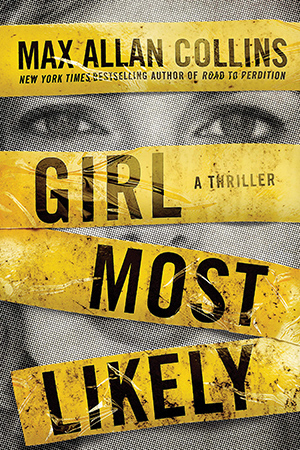
Girl Most Likely is on sale right now at Amazon – $4.99 on Kindle (regularly $15.95) and $10.97 for the trade paperback edition (again, regularly $15.95).

Signed copies of the book are available from vjbooks for $24.99.

Last week I did a TV appearance on Paula Sands Live, the very popular local show on KWQC-TV in Davenport. Some of you may remember Paula from Mommy’s Day, in which she played herself…sending herself up somewhat, and really delivering.

Then this past week – Thursday, April 4 – I made an appearance at the Dubuque Public Library, promoting Girl Most Likely (Galena is a short drive across the river from Dubuque). We had a very nice turn-out – sixty or so – and just about everybody bought books. Great people – fun and friendly, with lots of excellent questions. Among the crowd was my old pal Steve Moes, location manager on the two Mommy movies.

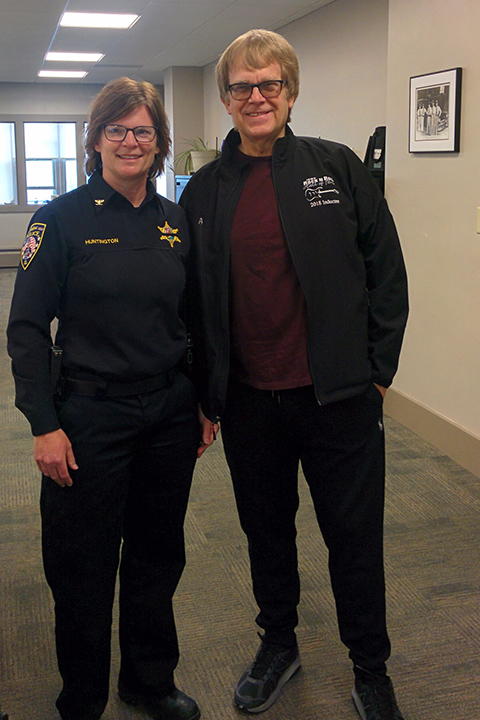
The next day we spent some time Galena, including dropping by the police station to deliver some signed copies of Girl Most Likely to Chief of Police Lori Huntington.

The reviews for Girl Most Likely have been largely favorable, with the exception of a couple of nasty ones at Amazon (which have largely been terrific). One reviewer from Seattle finds the idea that Millennials would even bother having a ten-year class reunion “unlikely” (untrue) and finds the book “definitely written by a white man.” Hmmm…was it the author’s photo that gave it away?

A review by someone who claims to be a big fan who has read all of my stuff, some of it multiple times, advises all fans of my work not to read Girl Most Likely: “What utter crap this book is!”

On the other hand, we had a very nice review – balanced but ultimately highly favorable – that was sent out by the Associated Press to papers all around the good ol’ USA. In the past week, the review has been appeared in 20 publications, at least, and probably many more (the 20 are just the ones that appear online).

And the blog reviews are even better. I’ll list some links later in this update. If you received a copy of Girl Most Likely in my recent giveaway, and don’t agree that it’s “utter crap,” be sure to post a review at Amazon and elsewhere. A review by one of the getaway winners that Amazon wouldn’t publish – for no good reason – was easily posted at Barnes & Noble.

* * *

Remember how I liked the Marvel Captain Marvel movie a while back? Well, I like the DC Captain Marvel movie even more, though the name “Captain Marvel” doesn’t appear anywhere in Shazam.

Don’t be put off by the somewhat deceptive advertising that might make you think this is a kid’s movie – it’s more the equivalent of a YA novel, with plenty of adult themes and scary villainy, perhaps a little too safely political correct, but what the hell – diversity is here to stay and a good thing to honor in a movie that will have a large teen audience.

What I like about it – beyond its acknowledged debt to Big (via a brief walking piano sequence) – is Shazam’s ability to be funny without completely sacrificing the darker elements expected these days. It’s kind of the anti-Deadpool, and I say this liking both of those films; but this has a good heart and the humor never walks the dark side – that’s left to the bad guys.

Zachary Levi is the unnamed Captain Marvel and Asher Angel is Billy Batson, the kid who can turn himself into a super-hero with a word.

The filmmakers go out of their way to honor the original source material – a comic book drummed out of business by DC in 1953! References to the C.C. Beck classic (Beck gets a co-creator screen credit with writer Bill Parker) are frequent, from the high school being named Fawcett (after the comic book’s original publisher) to setting up the most unlikely super-villain of all for a possible sequel. They even make a joke out of Billy Batson’s super alter-ego not having a name. Plus, we get appearances by Captain Marvel Jr. (also not named) and Mary Marvel.

For a rapidly ageing comics fan, this was bliss.

Do you want a plot summary? Just go to it, if nothing I’ve said here scares you off.

On the television front, Barb and I continue to adore Schitt’s Creek, which has done much to quietly normalize the notion of gay romance and now marriage. The show is reportedly wrapping up after one more season, which is a shame but what a run they’ve had – a post-SCTV triumph rivaled only by Christopher Guest’s films, which also starred Eugene Levy and Catherine O’Hara.

We also consumed the sixth season of the Morse prequel, Endeavor, and found it to be the strongest yet, and probably the best of the British crime series. A subtle aspect of these four movie-length episodes is the collision between the rough-and-tumble Sweeney style policing of the early ‘70s and the more cerebral Morse style policing of the late ‘80s-onward – both series having starred John Thaw, whose daughter Abigail is an Endeavor series regular.

* * *

Here’s a nifty review of Girl Most Likely from bookfan.

And a great one from Jonathan and Heather.

Plus this one from Mrs. Mommy Booknerd.

M.A.C.

Spending $50 at Amazon, and Not Everyone in the UK Loves Me

Tuesday, March 12th, 2019

The forthcoming audio read by Dan John Miller

A rumor is around that you can’t review a book for Amazon unless you buy it from them. That appears to be false. What seems to be true is that you have to occasionally buy things from Amazon to be able to review there – which is different. You need to have spent at least fifty bucks at Amazon during the last twelve months. That’s it.

I actually think that’s fair. Why should a business where you don’t do business put your opinions on its web site?

Girl Most Likely is an Amazon Prime “First Read” selection the UK, so reader reviews of the novel are starting to appear there. Some are very good. Others are snarky and even savage. A certain breed of nasty UK reviewer seems to really relish attacking books – including books like mine, which they got for free – rather viciously.

Some of these reviews are appearing now at Goodreads. By the way, if you have been participating in my book giveaways, I hope you will post your reviews at Goodreads. I can especially use your reviews on Girl Most Likely, as the UK ones have pulled down the star rating, despite some really nice write-ups.

Don’t forget Barnes & Noble, and other blogs, including your own, if you have one.

Also, if you participate in my book giveaways, and if you don’t like the book, you are not obligated to review it. I am not insisting on good reviews, mind you – even I would not sink that low (I did create Nate Heller and Quarry, however). But every book I send out to you costs me time and money, and if you don’t care for the book you got free from me, that’s what the wastebasket or the Half-Price Books “buy” counter is for.

Let’s take an ill-advised look at Goodreads. (Pause for my son Nate to roll his eyes and reach for the phone.) This is where those UK readers – possibly taking Brexit out on me – have had their say already, weeks before the book will be on sale here. While there have indeed been some excellent reviews from the UK, and some mixed but fair ones, we also get things like this from Ceecee:

“I understand this is a book in the tradition of a Scandi noir of which I have read many and enjoyed most. So here goes. Brace yourselves.”

Never a good sign when a review begins with “Brace yourselves.” And what follows is an attack on me for calling my characters Scandinavian (it’s pointed out that they are actually Americans, which was interesting to learn). Problem is, the word “Scandinavian” does not appear anywhere in the novel.

Here’s a paragraph from later in Ceecee’s review that manages to be lengthy without presenting any examples to back up her opinions, and also not to have much to do with the novel:

“Danes are Uber cool. Probably the coolest of the Scandinavian countries. Sorry if you’re Swedish. Or Norwegian. You are cool too. Just quite not as cool as the stylish Danes. I didn’t detect too much cool in this setting in Illinois apart from the weather. Sorry if you are cool and from Illinois. I’m sure there’s plenty of you.”

This negative review from Christopher Williams says:

“The perpetrator also turned out to be somebody I was completely unaware of through the whole of the book!”

But just above his review, Cathi Reynolds says, “The red herrings were fairly obvious too and I’d spotted the killer by half way.”

Sophie Andrews says, “The female characters are really badly written, and many characters behave in completely inexplicable or unexplained ways.”

What are Sophie’s choice examples of my bad writing and poor characterization? What from the book does she quote or even paraphrase to back up her opinions?

Nothing.

And that’s the problem with so many of these reviews, even some of the positive ones. Opinions backed up with nothing at all.

This fairly positive review from Dr R Gallow compares me to Agatha Christie (cool!), but then says, “It was like 10 little indians. Who was killing off the Class of 2009 and why?”

Problem with that is, only two members of the class of 2009 are killed off in the novel. That’s eight Indians short – even I can do that math.

Here, from Glen’s somewhat favorable review (an American, not from the UK or Scandinavia either for that matter), comes this:

“We get an awful lot of virtue signalling, just like in most Nordic Noir. There are also some of the usual MAC tics, like describing everyone’s clothes in minute detail…”

Much of this review is fine, but I had never heard of “virtue signaling.” I looked it up and this is what Wikipedia says: “Virtue signaling is a pejorative term that refers to the conspicuous expression of moral values….In recent years, the term has become more commonly used as a pejorative by commentators to criticize what they regard as empty or superficial support of certain political views.”

Hmmm.

I suspect the presence of a conservative reader who knows I am a liberal and believes I am spouting my dire views upon the unwitting public by putting words into characters’ mouths. Right. Like the way I do with that flaming liberal Mike Hammer. Or that bleeding heart Quarry. Or that oh so politically correct Nate Heller.

Bullshit says I. My characters, and I would say the characters of most proficient fiction writers, have views appropriate to said characters, and are designed to lend those characterizations weight and specificity.

Must we talk clothing again? How many times do I have to say that I describe clothing for characterization? And in Girl Most Likely, the brand names have to do with a very successful woman returning to her class reunion dressed to the nines, and (minor spoiler alert) revealing later that the designer fashions are on loan or rented, like the sports car she arrived in.

Look, all of these people have a right to their opinions. Obviously. Believe it or not, I appreciate the time they have taken to write about the book, no matter how they felt about it. A well-reasoned review with criticism is well within bounds and I have even learned from some – but for that to happen, the opinions have to be backed up with examples of what didn’t work and why.

I think brief reviews are fine. “Not my cup of tea” is perfectly acceptable. “I loved every page” is just fine – really fine! But if you go on at length, remember, it’s an essay. Points have to be proven. Examples provided – like I have here.

Also, and this is basic and if I’ve gone on about this before, my apologies…but the experience of reading fiction is collaborative. It’s the writer plus the reader. The experience is unique to that pairing. No two readers experience a novel the same way.

Where my fiction is concerned I am something of a control freak. I know you, the reader, will come to my novel with bag and baggage, with opinions and points of view, and that comes with the territory. But I want to come as close as I can in the words I put on the page to having you see in your brain what I saw in mine, as I was creating the story. I want my physical descriptions of people and places to create something close to what I saw. I want to clothe my characters, not send them naked into the world. I am not just the writer but the director, and the costumer and the set designer, and you will just have to live with it, or at least skim what doesn’t interest you.

I’ve said this before, in so many words – sometimes my little play (we’re a play now, not a movie, in metaphorical terms) is performed on Broadway by the finest actors in the world. Other times it’s performed at the Podunk Playhouse by a bunch of amateur gits (that was for you UK readers). How well performed my work is, to some degree, up to you and your skills.

Me? I’m just trying to help.

* * *

Here how’s it done in this lovely (but at times mildly critical) review of Girl Most Likely from Ron Fortier.

Mickey Spillane’s 101st birthday was last week (March 9) and there have been some nice remembrances, including this one from Paul Davison with a link to a piece of mine.

For all the Goodreads reviews and ratings of Girl Most Likely, you go here. There’s a book giveaway of Girl here, too.

And finally here, in full, because I don’t have a link, is the Booklist review:

Girl Most Likely.
By Max Allan Collins
Apr. 2019. 272p. Amazon/Thomas & Mercer, paper, $15.95 (9781542040587); e-book (9781542090582)

Someone is killing members of the Galena [Illinois] High School class of 2009. Six months before the 10-year reunion, class member Sue Logan is brutally stabbed in Florida, shortly after a tense meeting with her murderer. During the reunion weekend, the victim is attendee Astrid Lund, the “girl most likely to succeed,” who has become a well-known Chicago TV reporter. After trying to make amends for stealing her classmates’ boyfriends in high school, she too meets with her killer before being stabbed to death.

These murders—and a third, seemingly committed by the same person—land in the lap of another class member, Krista Larson, the country’s youngest female chief of police 28, who calls on her widowed father, Keith, a retired police detective, as a consultant. This is a change of pace for Collins, best known for his fact-based historical-mystery series starring Nate Heller, and he describes it as “an American take on Nordic noir.” As such, it’s a well-wrought tale, and, though it lacks the bite of the Heller novels, it will keep readers going through the suspenseful, if somewhat abrupt, climax.
— Michele Leber