As a writer, I often get asked what current books I’m reading, and my answer – part of which is that I read almost no contemporary crime fiction – always frustrates people. But I also mention the long list of classic mystery and crime writers whose work influenced me – Hammett, Chandler, Spillane and half a dozen more – which seems to salve the wound.
In my case, however, movies are as big a part of the mix as prose fiction. Television, too, since I’m part of the first TV generation. Someday I may write about the TV shows that really influenced me (I’ve often mentioned the private eye craze of the late ‘50s and its impact on my work) but today I want to be self-indulgent (what a shock) and list my favorite sixteen movies with a few words about each.
The Max Allan Collins Required Viewing List
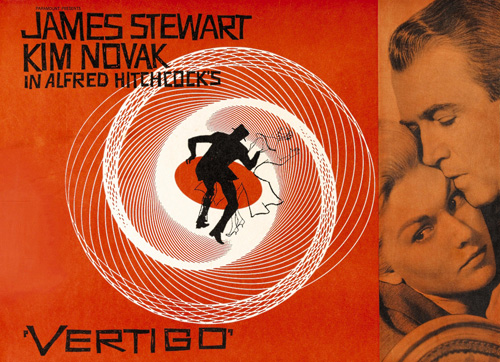
1. VERTIGO (1958). Hitchcock is my favorite director, but this is more than just my favorite film of his – it’s my favorite film period. Few people notice that it’s a private eye movie, but ex-cop James Stewart gets hired to investigate an old friend’s wife’s odd behavior, so that’s what it is. VERTIGO is romantic and tragic with two great performances at its center – Stewart is heart-breaking in his cruelty, and Novak has a painful vulnerability. Critics of the time almost always said she was a lousy actress…uh, what were their names again? Oh yeah, the critics are forgotten and she lives forever. Too bad she got in a miff lately about the re-use of the great Bernard Herrmann love theme in the current, wonderful THE ARTIST. The resonance of its use there brought tears to these sentimental eyes. By the way, I am convinced that my very real vertigo was caused by first seeing this movie at a tender age (I was in the fourth grade).
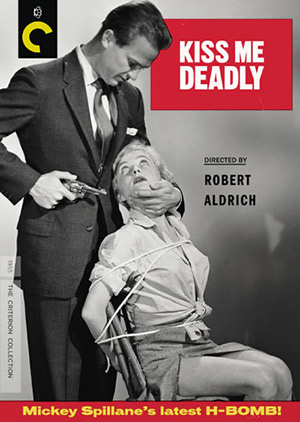
2. KISS ME DEADLY (1955). I’ve spoken elsewhere about this at length (I hope definitively in the forthcoming MICKEY SPILLANE ON FILM written with Jim Traylor), so I’ll be uncharacteristically brief on the subject here. What makes it my second favorite film (and not first) is its lack of heart. The terrible warmth of VERTIGO wins out over KISS ME DEADLY’s heartless meltdown. But I have watched no other movie as many times.
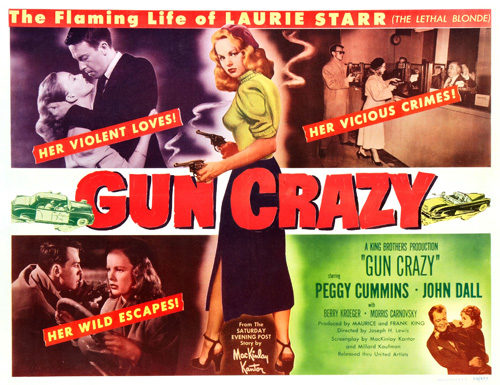
3. GUN CRAZY (1949). The greatest of all Bonnie and Clyde movies, which on a list that includes Arthur Penn’s classic is really saying something. It captures the tragic violence of a criminal couple in a manner rivaled only by James M. Cain at his best. Two little-known actors, Peggy Cummins and John Dall, give performances for the ages, and my second-favorite director, Joseph H. Lewis, does the same. The outrageous set-piece robberies have never bested nor matched.
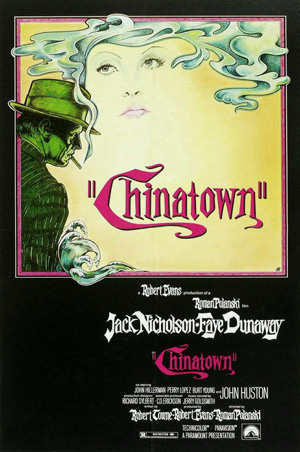
4. CHINATOWN (1974). This, more than any novel, established the private eye in the mid-twentieth century as a sub-genre, and is undoubtedly the greatest original private eye film – few of those derived from Hammett, Chandler and Spillane could rival it (probably only MURDER, MY SWEET, THE MALTESE FALCON and KISS ME DEADLY – the Hawks BIG SLEEP is too shambling and confusing an affair for all its attributes). Nicholson’s definitive performance as cocky Jake Gittes meets its match in Faye Dunaway’s apparent femme fatale and uber-villain John Huston. The script by Robert Towne and score by Jerry Goldsmith set the private eye gold standard. And CHINATOWN is the rare private eye film that, for all Jake’s worldly cynicism, has the VERTIGO-like heart and tragedy that the other great private eye movies cited above sorely lack. The sequel, THE TWO JAKES, is much better than its reputation, by the way.
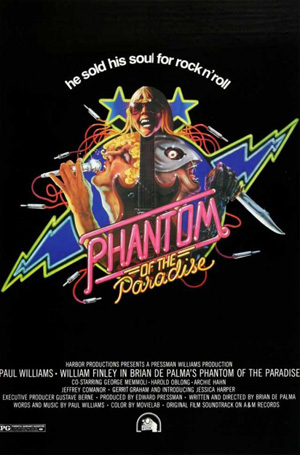
5. PHANTOM OF THE PARADISE (1974). How ironic that that steaming piece of cheese, Andrew Lloyd Webber’s stage musical PHANTOM OF THE OPERA, is so popular, and the great rock ‘n’ roll PHANTOM remains a cult item. Paul Williams delivers a fantastic performance and a score equal to it, parodying various rock styles and prescient about several fads to come (a Kiss-style group pre-dates Kiss here). Jessica Harper is charismatic and sings hauntingly well, and William Finley is the perfect sad, crippled, demented Phantom. For a long time Brian DePalma was my favorite contemporary director. He’s had some bad stumbles over the years, but at his best he’s hard to beat. This is the only time, however, that he perfectly merged his comic and melodramatic impulses (well, SISTERS also does it, even more blackly). I also like OBSESSION, which is a wonderful twist on VERTIGO, not the mere rip-off it’s often dismissed as.
6. HERE COMES MR. JORDAN (1941). I have loved this movie since childhood and it’s one I can watch again and again. Robert Montgomery was never better as the boxer whose soul is plucked too early from his body by an over-eager angel, and gets to earn another shot at the title. It has interesting crime and even noir elements, and the ending makes me tear up just thinking about it. Yes, I tear up at movies a lot. Not so much in real life. The remake, HEAVEN CAN WAIT, is excellent but very much the lesser of the two films.
7. MIRACLE ON 34th STREET (1947). This is a perfect piece of Hollywood filmmaking, funny and touching, and maybe a fantasy…we’re never quite sure, which is part of the delight. John Payne might have been a major star had he been given more roles like this, and Maureen O’Hara was never lovelier, at least not in black-and-white. And whatever happened to that delightful kid actor who played her daughter? Natalie something? Then there’s Edmund Gwenn, on loan-out from Hitchcock, transforming the oddly disturbing mythic figure of Santa Claus into a flesh-and-blood being. The courtroom scene is among the best ever filmed, and certainly the funniest, and the post-WW 2 location shooting (including the Macy’s parade) is a real time-machine ride. The other great Christmas films are Alistair Sim’s SCROOGE and Jean Shepherd’s A CHRISTMAS STORY. No other films need apply.
8. HOW TO SUCCEED IN BUSINESS WITHOUT REALLY TRYING (1967). Why weren’t more Broadway musicals transferred to film in a faithful fashion like this one? Robert Morse as J. Pierpont Finch is the most lovable bastard imaginable as he climbs to the top over one worthy body after another. His loveable charm – aided by outrageous mugging (he is essentially Jerry Lewis Goes to Grad School) – merges with a flawless Frank Loesser score in an eye-popping pop-art film by director David Swift (the sight gags were by cartoonist Virgil Partch). No other film captured Morse’s boyish charisma, but this single performance will see to it he lives forever. Big props to TV’s MAD MEN for including Morse in their cast.
9. MURDER, HE SAYS (1945). Simply the funniest murder crime movie ever made. Fred MacMurray is the census taker embroiled in mysterious backwoods doings (“It’s a lit-up dawg!”) and his homicidal hostess is Marjorie Main. Lovely Helen Walker (initially doing a cigar-smoking Bonnie Parker turn) is the love interest (she was wonderful in the excellent Tyrone Power noir NIGHTMARE ALLEY as well). “In town police is” indeed. This is finally out on DVD, available at TCM’s web site.
10. THE SEARCHERS (1956). When they tell you John Wayne couldn’t act, pop this one in the deck. John Ford is at his Monument Valley best here, offering up a revenge drama that deals with the cost. In an era where so much is blunt (said the author of the Quarry novels), the quiet way Ford and his screenwriters lay in back story is a revelation. We know that Wayne and his brother’s wife had been lovers, but are never told. Is Natalie Wood his daughter? Is Jeffrey Hunter his son? We are made to wonder, and work it out for ourselves.
11. GROUNDHOG DAY (1993). One of the few truly great traditional Hollywood movies of the last thirty years, and the best film Bill Murray ever made, making it sad that he insists on trying for respectability in precious indie twaddle (how could Wes Anderson begin with RUSHMORE and wind up where he is?). Harold Ramis, that notable SCTV grad, reworks IT’S A WONDERFUL LIFE in an imaginative manner that rivals that classic. Comedy and tragedy have seldom been juggled so effectively, nor have the joys and disappointments of living been depicted in such a seemingly offhanded yet devastating way.
12. LI’L ABNER (1959). Another faithfully recorded Broadway hit and a wonderful realization of Al Capp’s great comic strip – probably the greatest of all comic strips. Much underrated as a musical (lively, tuneful score by Johnny Mercer and Gene DePaul, fresh off SEVEN BRIDES FOR SEVEN BROTHERS) and as a satire (“What’s good for General Bullmoose is good for the USA”). Plus, it has Stella Stevens, Julie Newmar, Leslie Parrish and dozens of other ravishing starlets of the late 1950s, not that Peter Palmer’s wonderful lummox Abner ever notices.
13. THE GREAT RACE (1965). Yes, it’s bloated, but this is one of the rare Hollywood big-budget excesses that succeeds. The opening half hour or so is as funny as anything you will ever see (“I’d like to see the Great Leslie try that one!”), and this only re-teaming of SOME LIKE IT HOT’s Jack Lemmon and Tony Curtis satirizes various genres (the western, the swashbuckler) while launching a massive pie fight and one wonderful sight gag after another. Blake Edwards was an uneven director to be sure, and coming up with a list of five or six terrible films of his wouldn’t be tough. But this is the guy who created both Peter Gunn and Inspector Clouseau, so respect must be paid. Blu-ray, please!
14. ANATOMY OF A MURDER (1959). Possibly the greatest courtroom drama of all, this one has James Stewart at the top of his mature powers encountering the new breed of young method actor – Ben Gazzara, George C. Scott, Lee Remick – and besting them, barely breaking a sweat (yet they’re terrific, too). It’s a changing-of-the-guard movie, with Golden Age actors like Eve Arden and Arthur O’Connell rubbing shoulders with Orson Bean and Murray Hamilton, with traditional studio-bound filming traded in for location shooting in smalltown Michigan Shocking and sexy in its day, with an ending Hollywood wouldn’t have tried even a year before, the film still makes an impact, as does the Duke Ellington score – did Mancini’s PETER GUNN music for Blake Edwards pave the way for that? Otto Preminger is another uneven director, though seldom an uninteresting one, and it all came together for him here. Recently released on Blu-ray by Criterion.
15. EVIL UNDER THE SUN (1982). Bewilderingly underrated, this is probably the greatest Agatha Christie film derived from a novel (from a play, that would be WITNESS FOR THE PROSECUTION). While the definitive television Poirot is clearly David Suchet, the best of the big-screen Poirots is Peter Ustinov, who is funny and sly and shamelessly scene-stealing here. The all-star cast is as impeccable (Diana Rigg a standout) as the Cole Porter-derived score and the exotic vacation paradise. There are few better ways to while away a Sunday afternoon than watching this one, which is also a very clever, memorable mystery with a solution that is as fair as it is impossible to reach. Absolutely the best Poirot summation-to-the-suspects in any medium.
16. START THE REVOLUTION WITHOUT ME (1970). Let’s get this out of the way: this movie is a mess, really something of a shambles. But it is so goddamn funny. Gene Wilder and Donald Sutherland, doing a Corsican Brothers turn, might have been among the screen’s greatest comedy teams, had they ever worked together again. Wilder is at his manic best here, and this is a reminder of how funny he could be at the outset of his slightly disappointing career. I’ve always felt that YOUNG FRANKENSTEIN (worthy of being listed here) was the downfall of both Wilder and Mel Brooks. Together, they were Lennon and McCartney. Apart they were…Lennon and McCartney. Brooks without Wilder’s inherent sweetness became strident, and Wilder without Brooks’ cynical edge went soft. To see Wilder at his most hysterical in several senses of the word, you need to track down this French revolution farce. Another Wilder obscurity worth tracking down: QUACKSER FORTUNE HAS A COUSIN IN THE BRONX.
* * *
A nice review of BLOOD AND THUNDER has popped up, illustrated with the new Amazon Encore cover. Looks like the Amazon reprints are creating new interest in Nate Heller.
Here’s a nice mini-review of the Quarry short story “A Matter of Principal” in the new e-book anthology from Top Suspense, FAVORITE KILLS.
And a really nice write-up about Heller in general and BYE BYE, BABY in particular appears here.
Finally, my buddy Ed Gorman reprinted some of my diatribe about the use of the word “hack” at his great blog, and went on to write his own piece on the subject. Check it out!
M.A.C.