Posts Tagged ‘New Releases’

Inspiration, Perspiration and Exasperation

Tuesday, January 29th, 2019

Paperback:
E-Book: Amazon Google Play Nook Kobo iTunes

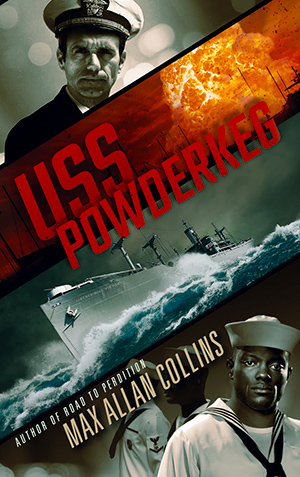
USS Powderkeg will be available on February 1. You are unlikely to find it in a bookstore, so go to Amazon or Barnes & Noble or BAM! iTunes has it, too – read about that here.

Info about the book itself is available at Brash Books.

We have used the cover before, but this book – finally under my preferred title with my revised text – is important to me and will require some effort on your part to lay hands on it. This is the novel based on my late father’s experiences in World War II as one of a handful of white officers on an ammunition ship whose crew was otherwise African-American.

After shrugging off our disappointment at Scarface and the Untouchable not getting nominated for an Edgar – my “shrugging off” included expressing how pissed off I was, on Facebook – my co-author, A. Brad Schwartz and I are digging in to make some corrections and additions to the upcoming trade paperback edition (June 4).

This will include a new preface as well as bonus material (in the style of DVD extras) that will focus on the newly discovered case file of one of the Untouchables, which serves to underscore and further verify our conclusions about Ness and how he and his team have been underestimated and short-changed by history.

We are also prepping for a visit to the Mob Museum in Las Vegas over Valentine’s Day, about which more will appear here next week. Brad has also been out on the stump by himself somewhat, as I have been burrowed in, here in very cold Iowa, working on novels. Yesterday day I completed the new Quarry novel, Killing Quarry – although I will be re-reading it and tweaking it and such for a few days this week.

Anyway, among Brad’s adventures in promoting our book (did I mention the criminal overlooking of this major tome by the MWA true crime committee?) included this fine interview.

Speaking of the MWA committee’s neglect, someone I trust has suggested the intimidating length of the book probably put some or all of the committee members off. I suspect some truth might be found in that opinion. Having served on MWA committees, I know it’s a fact of life that the committee members are swamped with books to read in full. On the other hand, the advance notices (particularly the fine mini-review from Grand Master Sara Paretsky) should have encouraged them to do so, anyway.

What can you do to help make the pain go away? Well, if you attend Bouchercon this year, you can vote for Scarface and the Untouchable in the non-fiction Anthony Awards category.

I know I plan to.

Hey, I realize this is undignified and sour grapes and boo-hoo-hoo. I have a love/hate relationship with awards, anyway (love to be nominated, hate not to be, and also losing). But awards as respected as the Edgars bring new readers to the nominated works and especially those that win. They have importance only in that regard, because otherwise it’s just a bunch of subjective nonsense.

I feel much the same way about reviews. I want good reviews not because I need validation, but because more readers will come to the books. I would be lying if I said bad reviews don’t matter to me, because they do, and not just in the sense that they discourage readers (sometimes, oddly enough, such reviews don’t always work that way). But it hurts to have something you’ve put hard work into savaged and/or dismissed, particularly when a smart reviewer nails you for something you’re guilty of.

What hurts about Scarface and the Untouchable is the work, and the years of research, that went into it. I am less angry about this for myself and more for my co-author, whose research (building on my original research in Heller and Ness novels) has upended conventional wisdom about Capone and his tax woes, and Ness and the lack of respect and credit he gets, from those who resent how Hollywood portrayed him. Brad did a stellar, mind-boggling job.

He deserved better.

* * *

As I mention, I finished Killing Quarry yesterday, and will dig into minor revisions throughout the rest of the week. I have a particularly full plate this year, which is why I have written three novels in four months – Murder, My Love with Mike Hammer; the Caleb York novel, now entitled Hot Lead, Cold Justice (my original title, The Big Die-Off, deemed too obscure); and now Killing Quarry. Very shortly I will begin serious work on Girl Can’t Help It, the prequel to the forthcoming Girl Most Likely, a task for which I’ve allowed several months. This will be followed by my draft of Antiques Fire Sale (Barb’s working on her draft now), which I have allowed another month for.

This is, of course, insane. Why do I work so hard? Why is somebody who has five doctor’s appointments with specialists this month behaving like this? Should I slow down? Barb thinks I should.

But I like doing this. I really do. And – while I feel fine and all my reports so far (the dentist today) have been positive – when you are 70 and in a month or so will be 71, you sense that maybe you don’t have all the time left in the world to tell your stories.

And I came here to tell stories.

All of which is prelude to what I want to discuss today. Would you agree that everybody has bad days? Various kinds of bad days, of course – from the simple out-of-sorts day to the depressed-about-bad-news day (not getting an Edgar nomination for a ground-breaking book, to just pull an example out of the air) to the nothing-is-going-right day to…you get the idea.

Now I’m not talking about a sick day (in my business, cold and flu generally don’t count – open-heart surgery does) or a day when tragedy has struck a loved one or friend. Nothing like that. Your favorite aunt dies? Take the day off with my blessing!

No, just that typical terrible, horrible, no good, very bad day.

When you are writing on a six-day-a-week schedule, with a deadline bearing down, you write anyway. Writer’s block is not allowed, and I never have it, anyway. Recently I thought I had finally encountered this mysterious, possibly mythical beast – I could not get a single workable thing on paper. I always start with a rough draft, knowing that I’m creating the clay for me to shape into sculpture. But this time, I couldn’t get anything on paper worth building on.

Why?

Well, turned out I was effing exhausted! Just flat-out fried. So I took a two-hour nap, as elderly folk are wont (and permitted) to do. When I got up from my snooze, the words flowed. Maybe not like wine, but definitely Coca Cola.

During the writing of Killing Quarry, I had perhaps three bad days – one of them Edgar-related, which of course I won’t go into. Ironically, one of that sorry trio was the last day of the process – the day on which the crucial last chapter was written.

Knowing I was facing a key part of my story, I considered taking the day off – it was Sunday, after all – and just letting my batteries recharge. But I hadn’t run this race to goof off just shy of the finish line. Plus, all of the plot stuff was filling my brain and assembled into good order – I knew exactly what needed doing.

So I did it.

It was something of a slog. I usually do three drafts of every chapter, then give it to Barb, who gives me notes, and I make minor corrections and revisions (sometimes they’re major – Barb has great story sense), and I’m done till the final read-through. Yesterday I did three drafts, took an hour nap, then came back and did another draft. Barb did her read-through and I made a few revisions and corrections from her notes. If you’re keeping score, that’s an additional draft or pass on the chapter.

Now, here is the lede I’m burying (why is it spelled “lede” not “lead”?) (and why don’t I just Google that and not bother you about it?): how does inspiration figure into a working fiction writer’s process?

I would imagine all of us have bursts of inspiration, sometimes entire work session-long ones. Maybe some writers feel inspired for days or even weeks – trust me, they don’t feel like that all the way through a project. Everybody has bad days, remember?

There are two kinds of writers – the ones who can only write on their inspired days, and who navel-gaze on their (many) off days; and the writers who are thankful for the inspired days that God or luck or somebody or some thing grants them, and who on their bad days soldier on. March through the mud to victory, or at least the end of the work day.

Now here is the real dirty little secret about inspiration – the inspired work and the struggle-to-get-through-it work are always of the same quality. When you go back and read through your story or novel, and recall the passages that came easily as if by automatic writing, those passages won’t be any better or worse than the stuff that came hard.

Or anyway those passages shouldn’t be.

Inspiration is just the days the work is going well. If you are any good at all as a writer, you will develop standards that you will not allow yourself to fall below, before you press on. You stay at it till the work you had to work hard at reads just as well as the work that came easy.

* * *

This story about Black Panther’s Oscar nominations mentions a certain other comics-derived film that once-upon-a-time received five nominations (hint: Road to Perdition).

A cry goes out to reprint the Marshall Rogers Batman comic strip. Who was it wrote that again? (Hint: me.)

Finally, Scarface and the Untouchable made Otto Penzler’s Mysterious Bookshop best of the year list, as chosen by the staff – see “Mike’s Picks” on page three.

M.A.C.

Pop the Clutch!

Tuesday, January 22nd, 2019

Hardcover:
Paperback:
E-Book: Amazon Nook Kobo

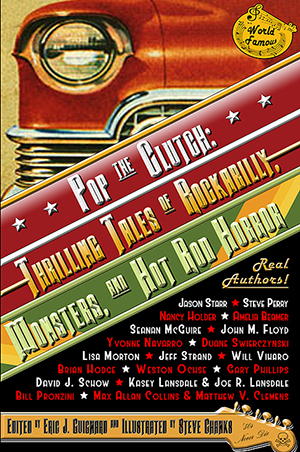
For those of you who might wonder whatever happened to the Max Allan Collins/Matthew Clemens writing team, this answer is…here’s a new story by us in a great new anthology with a killer line-up of writers.

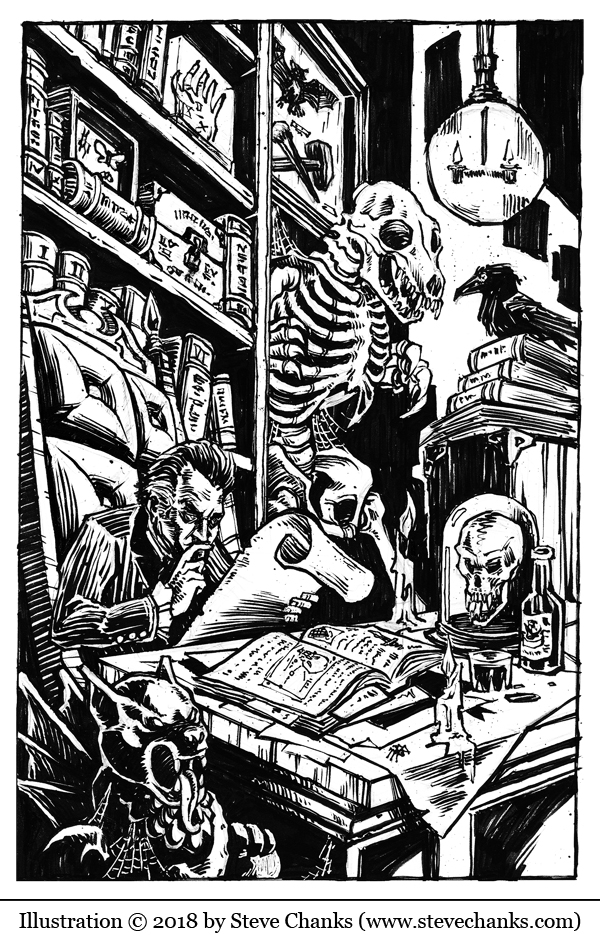
It’s a visual feast of a book, as the cover itself tells you. But every story has a great illustration, and that includes ours – Steve Chanks did a great job, and I’ve shared it here with you.

Here’s the press release:

Welcome to the cool side of the 1950s, where the fast cars and revved-up movie monsters peel out in the night. Where outlaw vixens and jukebox tramps square off with razorblades and lead pipes. Where rockers rock, cool cats strut, and hot rods roar. Where you howl to the moon as the tiki drums pound and the electric guitar shrieks and that spit-and-holler jamboree ain’t gonna stop for a long, long time . . . maybe never.

This is the ’50s where ghost shows still travel the back roads of the south, and rockabilly has a hold on the nation’s youth; where lucky hearts tell the tale, and maybe that fella in the Shriners’ fez ain’t so square after all. Where exist noir detectives of the supernatural, tattoo artists of another kind, Hollywood fix-it men, and a punk kid with grasshopper arms under his chain-studded jacket and an icy stare on his face.

This is the ’50s of Pop the Clutch: Thrilling Tales of Rockabilly, Monsters, and Hot Rod Horror. This is your ticket to the dark side of American kitsch . . . the fun and frightful side!

Table of Contents includes:

“The Golden Girls of Fall” by Seanan McGuire
“Sea Lords of the Columbia” by Weston Ochse
“Tremble” by Kasey Lansdale and Joe R. Lansdale
“The Demon of the Track” by Gary Phillips
“Outlawed Ink” by Jason Starr
“We Might Be Giants” by Nancy Holder
“Universal Monster” by Duane Swierczynski
“Draggers” by David J. Schow
“The Starlite Drive-In” by John M. Floyd
“Dr. Morbismo’s InsaniTERRORium Horror Show” by Lisa Morton
“Hot Babe” by Bill Pronzini
“The Prom Tree” by Yvonne Navarro
“I’m with the Band” by Steve Perry
“Mystery Train: An Arcane Investigation” by Max Allan Collins and Matthew V. Clemens
“Lab Experiment Turf War” by Jeff Strand
“The She-Creature” by Amelia Beamer
“Fish out of Water” by Will Viharo
“I Was a Teenage Shroom Fiend” by Brian Hodge

* * *

This is one of my shorter updates, because I am working on the new Quarry novel, Killing Quarry, and doing my best to get it done before the upcoming Mob Museum appearance in Vegas by Brad Schwartz and myself, having to do with celebrating a certain day in February (think about it). More, much more, about that very soon.

For now I’d just like to reflect on how interesting it is to me when I see which topics I explore cause a lot reaction and comments, while others – including ones I thought would spark controversy or at least talk – get no reactions at all. At least not in writing.

The two updates that really caught your attention lately were, first, the discussion of “Baby, It’s Cold Outside,” and second, my twelve favorite film directors. I get a real kick out of how my choices of the latter frustrated and irked some of you. As I said in my comments last week, there’s a big difference between a “favorites” list and a “best” list.

I would be remiss not to include, say, Kurosawa and Kubrick (to name a couple K’s) on a best directors list. But I have every right to prefer watching Don Siegel or Joseph H. Lewis movies over theirs. Favorite is personal taste – one would hope somewhat informed taste, but personal. My favorite color is green.

Wanna fight?

* * *

Getting back to Pop the Clutch, here’s a nice review of it.

And here, in addition to Amazon, is where you can order it.

M.A.C.

The Max and Brad Show Goes to Chicago

Tuesday, November 13th, 2018

My co-author, Brad A. Schwartz, and I will be appearing at the American Writers Museum in Chicago next Monday evening, from 6:30 till 8:30. The address is 180 N. Michigan Avenue, and we will give an informal talk and answer audience questions as well as sign (and, I hope, sell) copies of Scarface and the Untouchable: Al Capone, Eliot Ness, and the Battle for Chicago. For more info go here.

* * *

Paperback:
E-Book:Amazon

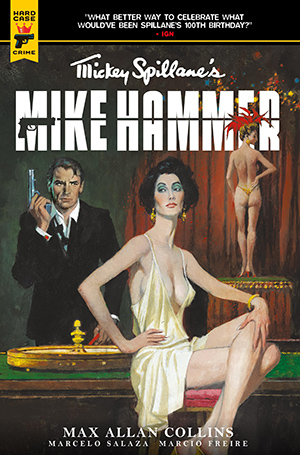
You can now advance order the graphic novel version of Mike Hammer: The Night I Died from Amazon. [Note from Nate: I’m also seeing pre-order pages at the usual suspects, and the collection is also available digitally through ComiXology/Kindle. Links are below the cover.]

You may be able to find this at your nearest Barnes & Noble store, but based on Quarry’s War, it looks like they only stock a copy or two. So an Internet order might be worth your trouble.

This is, of course, the collected version of the serialized comic book version that appear in four separate issues not long ago.

* * *

Barb and I have seen three worthwhile movies that you might also enjoy.

Hunter Killer, directed by Donovan Marsh from a screenplay by Arne Schmidt and Jamie Moss (adapted from a novel), is frankly something we settled on when the movie we went out to see wasn’t available yet. We took a chance on this one and it’s a very traditional (and very good) submarine movie crossed with a commando raid flick. The cast is strong – Gerard Butler, Gary Oldman, Common (a rapper I assume), Toby Stephens, Linda Cardellini, and in what must be his last role, the great Michael Nyqvist. It’s one of those Tom Clancy-like affairs that are believable enough due to the research to sell you on the ridiculous story itself.

The Girl in the Spider’s Web is a continuation of the Girl with the Dragon Tattoo series based on one of the sequels not written by Stieg Larsson, whose death stalled what had been projected as an ongoing series, with a new writer hired to take over when materials Larsson left behind became ensnared in estate battles. The reviews have been fairly terrible, but this is a state-of-the-art action film with Claire Foyle excellent as Lisbeth Salander, for whom a resonant back story is created. The excellent score by Roque Baños and cinematography by Pedro Luque serve director/co-screenwriter Fede Alvarez well in creating a 21st Century James Bond feel. The Rotten Tomatoes score is 44%, which is nonsense. Any suspense/action/espionage fan will enjoy this, and if the reviewers manage to sink this reboot, they should be ashamed.

The weakest – but still worthwhile – of the three films we saw recently is Overlord, which has an 81% score from Rotten Tomatoes, reflecting how poor movie criticism has become in this country. We saw it on Veteran’s Day, which got some dark laughter out of us, because this is a movie about how on D-Day a little ragtag group of GIs made the invasion possible by blowing up the place where a mad Nazi doctor (insane, not pissed) was creating super-soldiers by shooting up French villagers with super-serum. I can always have a good time watching Nazi soldiers get shot up (by bullets), and the GIs were well-portrayed. Beginning with the horror of war and segueing into horror film territory is something I can get behind, and the filmmakers largely pull it off. But there are problems of tone here. The unpleasantness of the violence could have used a touch of dark humor. Evil Dead minus humor is just a gore fest, after all. While I liked this movie with reservations, I came away with the opinion that Rotten Tomatoes has become a worthless resource. They give Hunter Killer a 38% Fresh score, by the way.

M.A.C.

Untouchable Letterman

Tuesday, November 6th, 2018

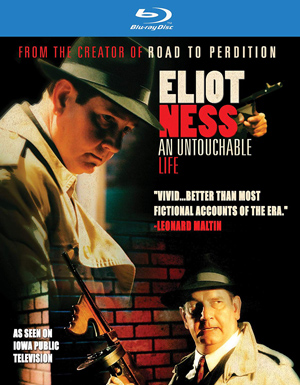
The Blu-ray of Eliot Ness: An Untouchable Life is out now. It’s available at any of the usual suspects among Internet retailers, but Amazon has it for about ten bucks off ($15.69).

I’m very proud of this one, which makes a good companion to Scarface and the Untouchable: Al Capone, Eliot Ness, and the Battle for Chicago by A. Brad Schwartz and me. It is, in fact, what brought Brad and me together – he went to the play in Des Moines and saw Mike Cornelison perform the one-man show in person.

Mike is gone, for several years now, and I am so grateful that we were able to have this one last, great project with the actor who was the backbone of all of my indie film projects. Mike starred in Mommy, Mommy’s Day and Real Time: Siege at Lucas Street Market. He narrated my two documentaries, Mike Hammer’s Mickey Spillane and Caveman: V.T. Hamlin and Alley Oop. He starred in two short films, one of which – “An Inconsequential Matter” – is a bonus feature on the Blu-ray. That short film was our last collaboration.

Whether, at my age, in the wake of some health issues, I can ever mount another film production is a question I can’t answer (Barb can – “NO!”). My other frequent collaborator, director of photography/editor Phil Dingeldein, is still raring to go. But I admit not having Mike on the team makes it tough to imagine.

For now, however, we have this fine Blu-ray, thanks to VCI Entertainment.

Treat yourself to this one, and it’s a perfect stocking stuffer….

* * *

For reasons I’ve never really understood, one of the questions I am most asked is, “What are you reading?” And, of course, a more general version: “What do you read?”

Regular readers of this update/blog know that I read little contemporary crime fiction, because of my desire not to be influenced by anyone working currently and also the busman’s holiday nature of it. Barb and I do watch a lot of British crime series, which slakes my thirst for mystery narrative – I generally find Brit TV crime more compelling and just, well, better than the American variety. Recently we watched the third season of The Forgotten and the first season of Bodyguard, and both were outstanding (I buy these from Amazon UK).

I also watch a lot of vintage noir, catching up with things I have never seen that have become suddenly available (the very interesting The Man Who Cheated Himself, for example, now on Blu-ray) and revisiting things I haven’t watched in ages.

My reading tends to be in bed, for a half hour or hour before I attempt sleep (not always a successful endeavor). I usually read books about film or other aspects of pop culture, including biographies. Recently I read a good book on Randolph Scott’s key director, The Films of Budd Boetticher by Robert Knott. I also gobbled up Christmas Movies by Jeremy Arnold (a TCM book), which looks at such movies with nice little well-illustrated articles combining making-of info and critical assessment, including my favorites – It’s a Wonderful Life, the Alastair Sim Scrooge and the original Miracle on 34th Street. (I skipped certain later films that I had no interest in, like Home Alone and Little Women. Not all of the author’s selections seem like real Christmas movies to me. Die Hard?) [note from Nate: It absolutely is!]

The only novel I’ve read lately is Night of Camp David by Fletcher Knebel, co-author of Seven Days in May. I dug this out of my basement storehouse of old paperbacks when I learned it was now a collector’s item. The subject is a president of the United States who goes mad.

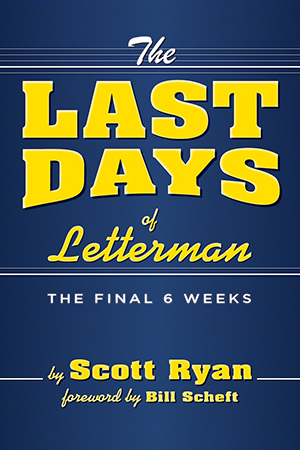
Now and then I read a book that serves to do more than just lull me to sleep in a pleasant way. Such a book is The Last Days of Letterman: The Final 6 Weeks. I would say it’s a book that I enjoyed more than any in my recent memory, and yet I’m not sure exactly what compelled me to pick it up.

I loved Letterman’s Late Night at NBC and am fairly sure I never missed an episode. Letterman’s wry, self-deprecating humor resonated with this Midwestern boy, and he peopled his show with guests ranging from oddball to brilliant. I could see Norm Macdonald one night and Andy Kaufmann the next. Pee Wee Herman (my pal Paul Reubens) was often a guest. Band leader Paul Shaffer, with his tongue-in-cheek show biz sensibility, was both funny and hip, an incredible musician who had hung out in Canada with SNL and SCTV stars-to-be. Dave showcased top-notch musical acts. For someone my age, this was the natural next step from Johnny Carson.

And I grew up on Carson, but also Jack Paar and even Steve Allen, the original Tonight Show host. Our house was set up with my bedroom adjacent to where my father watched television; he often fell asleep, while I couldn’t due to the blaring TV and frankly didn’t want to, because I was listening to Allen or Parr or Carson. Sometimes, knowing my dad was likely cutting zee’s, I would go out there and sit on the floor right in front of the tube and watch till he woke up and shooed me back to bed. (I learned to write dialogue listening to old Dragnet episodes that way, as if they were radio shows, and of course they had been – Jack Webb came on at midnight after Carson signed off.)

So late night TV was a part of the fabric of my life. I remember dreaming about being a Carson guest some day – he was a Midwestern boy, too – and later I hoped I might get successful enough to be invited onto Letterman’s Late Show. Didn’t happen. Well, it sort of did. Stay tuned through the rest of this essay.

The Last Days of Letterman, written by Scott Ryan, hit me surprisingly hard. I realized that Letterman, of all the great late-night hosts I’d grown up with, was the most intimately, intricately woven into the aforementioned fabric of my life. He was on air for over thirty years. And for a long time, I never missed a show, including when he moved to CBS with the Late Show. I saw it all, for a long while, from Drew Barrymore dancing topless on Dave’s desk to Stupid Human Tricks, from Darlene Love singing “Christmas (Baby Please Come Home)” every year to Chris Elliot’s ongoing insanity. I also met Larry “Bud” Melman, Dave’s mom and her pies, Rupert Jee, Biff Henderson, and so many and so much more. For me a particularly memorable thing about Letterman and Late Show was the host’s love for Warren Zevon’s work and the way he and Zevon dealt with the latter’s oncoming death. Zevon’s advice to the rest of us is something I think of frequently, and did even before I (like Dave) had open-heart surgery: “Enjoy every sandwich.”

But at some point, probably around fifteen years ago, I started missing episodes. It began when a guest was announced – usually a sports figure – that I had no interest in. At some point politics had Jon Stewart and Stephen Colbert tempting me away, now and then, and finally regularly. Things evolved into my having to know that someone I was a fan of (Elvis Costello, for example) was going to be on Letterman for me to watch. And I would tune back into Dave, and bask in the familiarity of Dave and Paul’s effortless banter, and slip back into that comfy shoe of Late Show.

Funny thing is, what made Letterman and his show so comfy was how uncomfortable Dave himself seemed. He was embarrassed by his success. He always seemed like somebody just waiting to get found out and hauled off the stage. He was anything but comfortable in his skin. In a way Johnny Carson only pretended to be, Dave Letterman was us – particularly Baby Boomer boys like myself.

The genius of Scott Ryan’s book is the writer’s decision to focus on the final six weeks of this long-running show (and, let’s face it, Late Night and Late Show were one show). It gives Ryan a framework to discuss all the frequent guests, the famous show business figures who were indebted to Dave and (to Dave’s embarrassment) loved him. Ryan can look at the Top Ten List and various other running gags and traditions, in between describing each individual episode of those last six weeks and who was on and what happened.

Because the show is coming to its conclusion, there’s a sort of suspense-novel engine at play. How will Dave handle the loss of the thing that has been his life? How will the staff around him deal with the pressures of expectation for one special episode after another? How will Letterman endure the love fest that is being flung at him and smothering him into full-throttle embarrassment? Did anyone in bigtime show business ever deal so poorly with praise?

The second stroke of genius in this fine book is Ryan’s decision to tell the story as an oral history. He gets interviews not from Dave and Paul (who would never cooperate, of course, but Ryan seems not to have bothered approaching them) but to the army those two generals commanded. We hear from the officers – directors and producers – and from the grunts – stagehands and bookers. We experience the war of those last six weeks from the trenches. And it’s fascinating. And strangely moving.

As I say, I had not been regularly watching Letterman. I didn’t see the final episode. I think I caught one or two of the shows during that last six weeks. But here’s the thing – as I read about these episodes that I had missed, they nonetheless played in my mind as if I had. I was so familiar, so much a part of the Letterman experience, that a few words could blossom in my imagination into the feeling that I had indeed seen them…or maybe I should say, knew them.

Letterman is my age, more or less. We are Midwestern boys. I’ve had a little success and am not at all embarrassed about it, though mixed in with my egotism is some of that self-deprecation that Letterman – a huge success and extremely embarrassed about it – is so successful at conveying. Again, he also had open-heart surgery. He seemed to like a lot of the same things I did – Elvis Costello, Warren Zevon, Darlene Love – and he introduced me to the pleasures of Norm Macdonald, Chris Elliott, and Amy Sedaris. He also gave us new sides of superstars like Bruce Willis, Steve Martin, Bill Murray and Tom Hanks.

Speaking of Tom Hanks.

This is the closest I ever got to being on Letterman, and frankly it was enough. Okay, almost enough. Dave made it clear, usually when Hanks was a guest but other times too, that he loved Road to Perdition. That got my attention. I talked to the TV and raised my hand like a kid in class.

“Dave! I wrote that! Not the movie, but the book – you could ask me what a graphic novel is! You could call it a ‘funny book’ and make me smile in embarrassment, because you are a Midwestern boy! And so am! Dave! I’m right here!”

As it happens, not long after, I began to leave the fold. I decided that watching talk shows (and I don’t watch any now, though I know Colbert, Fallon, Conan and others are worthwhile) was ultimately an ephemeral waste of time. I stopped watching Colbert when, at the Second City reunion, he refused to sign an autograph (I am a petty fucker). And even Stewart faded away for me, when some of his recurring players went off to have careers. I started watching a movie on DVD and later Blu-ray at night, in the talk-show time slot, wanting to catch up with old films noir and various terrible movies for which I have an inexplicable affection.

Reading The Last Days of Letterman gave the Late Show back to me. Those last six weeks, anyway. If you are or ever were a Letterman fan, you are in for a bittersweet treat.

* * *

This review of Scarface and the Untouchable has a peculiar headline, but the piece itself is fine.

Finally, here’s a great review of Kiss Her Goodbye, a Mike Hammer by Mickey and me.

M.A.C.