GONE GIRL is doing well at the box office, and many critics like it, but that doesn’t make it a good movie. It reflects a new trend – so very much at odds with Hollywood’s traditional approach – of filmmakers being extremely faithful to their bestselling-novel source, apparently out of fear of alienating the book’s enthusiastic fan base. This started with the HARRY POTTER films, and goes on through the TWILIGHT series among others. Traditionally, Hollywood has played fast and loose with even the most popular source material (GONE WITH THE WIND a famous exception), including even Peter Jackson’s Tolkien films.
Frequently I get asked about the changes Hollywood made to ROAD TO PERDITION, usually with the asker’s expectation that I’ll do a rant about what the filmmakers “did” to my book. While I don’t agree with every change made – I would have retained the adult narration and my ending – I fully understood the need to rework the material for the screen. Some of what they did was an improvement – more was done in the film with the Looney father-and-son relationship, for example, and the Jude Law character was created to be a single tracker, combining my ongoing, oncoming fleet of such hitmen into one nemesis.
Novels are not movies, and novelists rarely make good screenwriters. One of the exceptions – Donald E. Westlake – refused to adapt his own work to the screen, basically on the “fool for a client” theory. Certainly novelists have trouble killing their darlings when adapting their own work. But it has more to do with basic differences between the forms, novels being an interior telling of a story and films an exterior one. There’s a reason why many classic films come from short stories, not novels – it’s easier to expand a 40 page tale into a 100-page screenplay than to reduce and compress a 300- to 800-page novel into one. GUN CRAZY, REAR WINDOW and STAGECOACH began as short stories, for instance.
I don’t know if Gillian Flynn is a good novelist – I haven’t read GONE GIRL, but it’s certainly popular – because (as regular readers here know) I don’t often read contemporary crime fiction, for reasons I’ve stated plenty of times. Still, a couple of things seem apparent. First, GONE GIRL the novel would appear to be one of those big popular mystery thrillers read by mainstream readers who don’t regularly read in the genre. I say this because the big surprises such readers go on and on about are (in the film at least) very obvious to seasoned mystery fans.
Second, GONE GIRL – adapted to the screen by Flynn – has a structure designed for a novel. Without getting into spoiler territory, major characters are off screen for long stretches of time. There is no focus, no one to root for (or against), despite the best efforts of a strong director (David Fincher). Flynn has in interviews spoken of how many characters and scenes she dropped, and the painful process of doing so, but she didn’t drop enough – the film runs a bladder-busting three hours. VERTIGO runs a little over two hours. LAURA is 88 minutes. Both were adapted from novels, the latter from a novel with a structure similar to GONE GIRL’s, but dropped in the otherwise faithful film.
GONE GIRL is a well-directed mess, and the faults largely come from the script. I don’t know whether putting this story on film reveals flaws in the novel, or whether Flynn couldn’t figure out how to deal with character and plot weaknesses on screen. The number of plot holes are staggering (the married couple has money troubles, except that also have endless supplies of money and live in a five-million dollar home), and the characters who don’t come alive are near legion (Neil Patrick Harris, generally a good actor, is defeated by a character so unbelievable as to be laughable). Three hours just weren’t enough for Flynn. Well, for me they were.
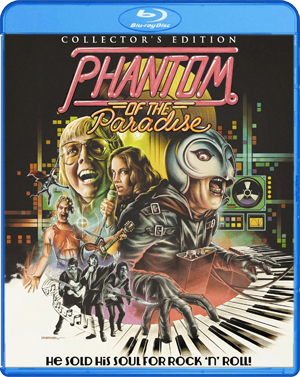
I was reminded of Brian DePalma’s THE FURY (1978), which I revisited on blu-ray recently. Some of you will recall that PHANTOM OF THE PARADISE is one of my favorite films, and that in the mid-‘70s I considered DePalma my favorite contemporary movie director (he’s still high on my list). SISTERS, OBSESSION, CARRIE – all blew me away. THE FURY, DePalma’s first big-budget film, was a stumble, filled with great set pieces but an unfocused narrative. The screenwriter was John Farris, who wrote the original, sprawling novel. Based on what’s on screen, he provided DePalma with a bewildering Cliff Notes version of his book, retaining a novelistic structure that put star Kirk Douglas on the bench for twenty or thirty minutes at a time.
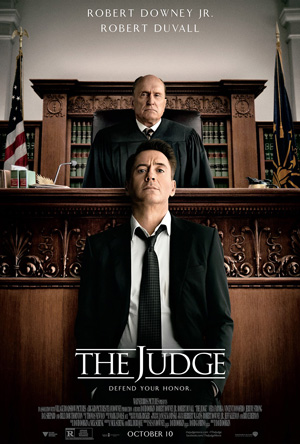
Ironically, one of the most novelistic recent films – in a good sense (rich characters, intertwining story elements, exploration of setting) – is the first-rate courtroom thriller, THE JUDGE. Chiefly the film is an acting showcase for Robert Downey Jr. and Robert Duvall, the former a big city amoral lawyer who returns to the small town he grew up in (and despises) to attend his mother’s funeral, and winds up defending his father, an idealistic judge with whom he’s been estranged for decades, on a murder charge. It’s a melodrama and a soap opera but a damn good one, and the supporting cast is rich with fine actors (Billy Bob Thornton, Vera Farminga, Vincent D’Onofrio) and interesting, fleshed-out characters. The focus is Downey. The film is leisurely at 148 minutes, but the characters and the narrative earn and use the time. The screenwriters are Nick Shenk (GRAN TORINO) and Bill Dubuque.
Of course, Rotten Tomatoes tells us that GONE GIRL is 87% fresh, and THE JUDGE only 46% fresh. Salon.com critic Andrew O’Hehir says of THE JUDGE: “It’s ‘what people want.’ Whereas I say the hell with people and what they want.” Well, guess what? I say to hell with jaded critics who have contempt for the moviegoers they are supposedly guiding. Oh, and O’Hehir loved GONE GIRL.
This is possibly another installment in my long-running AM I OUT OF TOUCH? series. But I don’t think so.
M.A.C.